By Olivia Parker
A jacket changes the outline of an outfit before anyone notices its smaller details. A short zip jacket brings attention to the waist; a longer coat creates an uninterrupted line; a blazer gives even a simple knit more structure. Choosing well starts with three questions: where are you going, what does the weather require, and how does the jacket sit over the clothes underneath?
From there, look at length, room through the body, and color. The aim is a combination that feels coherent and lets you move comfortably. You can often get there by changing the jacket or adjusting one layer, rather than replacing the whole outfit.
The quick approach: Choose the level of formality first, check weather protection, then try the jacket over your actual outfit. Look at the full silhouette—including your shoes—before deciding.
1. Start With the Occasion and Your Shoes
Think about what you will be doing after you take the jacket off. A waterproof shell can cover office clothes on the commute, while the outfit underneath still meets the workplace dress code. For dinner, your jacket may stay on for much of the evening, making its relationship with your trousers and shoes more noticeable.
Footwear offers a useful starting point. Canvas sneakers suggest a different direction from polished leather derbies, although neither determines the entire outfit. Look for a jacket that supports the balance you want.
| Jacket style | A useful outfit starting point | Where it can work |
|---|---|---|
| Denim trucker | Plain T-shirt, straight jeans or chinos, simple sneakers | Casual days and relaxed evenings |
| Chore jacket | Oxford shirt or tee, chinos, loafers or casual boots | Informal workdays and weekends |
| Harrington | Knit polo, neat trousers, loafers | Relaxed dinners and everyday smart casual |
| Soft blazer | Fine knit, tailored trousers, leather shoes | Smarter dinners and offices that permit it |
| Leather jacket | Plain knit, dark denim, boots | Casual evenings and concerts |
| Rain shell | Light layers, practical trousers, weather-appropriate shoes | Wet commutes and outdoor days |
These are starting points. A dark, restrained chore jacket can look quieter than a heavily embellished blazer. Fabric, finish, and the rest of the outfit matter as much as the label.

For invitations that leave room for interpretation, our guide to men’s smart casual outfits explains how to balance relaxed pieces with more structured clothes. Always follow an explicit dress code.
2. Balance Jacket Length With Trouser Shape
A jacket’s hem creates a strong horizontal line. Notice where that line falls relative to the waistband, shirt hem, and widest part of the trousers.
A short bomber or Harrington can make the trouser line more visible, especially with mid- or higher-rise pants. A hip-length chore jacket gives more coverage and a straighter outline. A longer coat changes the silhouette again, working as an outer frame around the layers beneath it.
Try a compact jacket with straight or gently wide trousers when you want a defined upper half. For a looser outfit, a roomy chore jacket and relaxed chinos can work together; give the trousers a clear hem and choose shoes substantial enough to feel connected to the silhouette.
There is no requirement to pair every oversized jacket with skinny pants. The useful question is whether the volume looks deliberate and feels comfortable.
Shirt hems deserve a second look. A little T-shirt showing beneath a casual jacket can feel easy. A long, curved office-shirt tail hanging far below a cropped jacket may create a layered effect you did not intend. Try a shorter casual shirt, a tuck, or a longer jacket.

3. Check the Fit Over the Layers You Will Wear
Trying a jacket over a thin tee tells you little about how it will feel over your usual sweater. Bring that layer into the fitting room, or try the combination at home before removing the tags.
Check four areas:
- Shoulders: On a conventional tailored jacket, look for a smooth transition into the sleeve without obvious pulling or collapsing. Proper Cloth’s shoulder-fit guide illustrates these signs. Dropped-shoulder and raglan designs need to be judged according to their intended construction.
- Chest and middle: Fasten the jacket as designed. The front should close without pronounced strain, and the pockets should sit comfortably. If the middle is tight while the shoulders fit, another cut may work better than a larger size.
- Sleeves: Bend your elbows and reach forward. Watch for sleeves that restrict movement or cover your hands unintentionally. Rainwear and tailored jackets serve different purposes, so they need not finish identically.
- Movement: Sit down, reach for a bag, and bring your arms forward. Some fabric folds are normal. Persistent pinching or a fastening that pulls sharply is a reason to reconsider the size or shape.
Room to move is different from excess fabric everywhere. Equally, a deliberately relaxed jacket can fit well without tracing the body. Choose the silhouette you want, then make sure it works in motion.

4. Use These Jacket-and-Outfit Combinations as Starting Points
Denim Jacket With Black Jeans
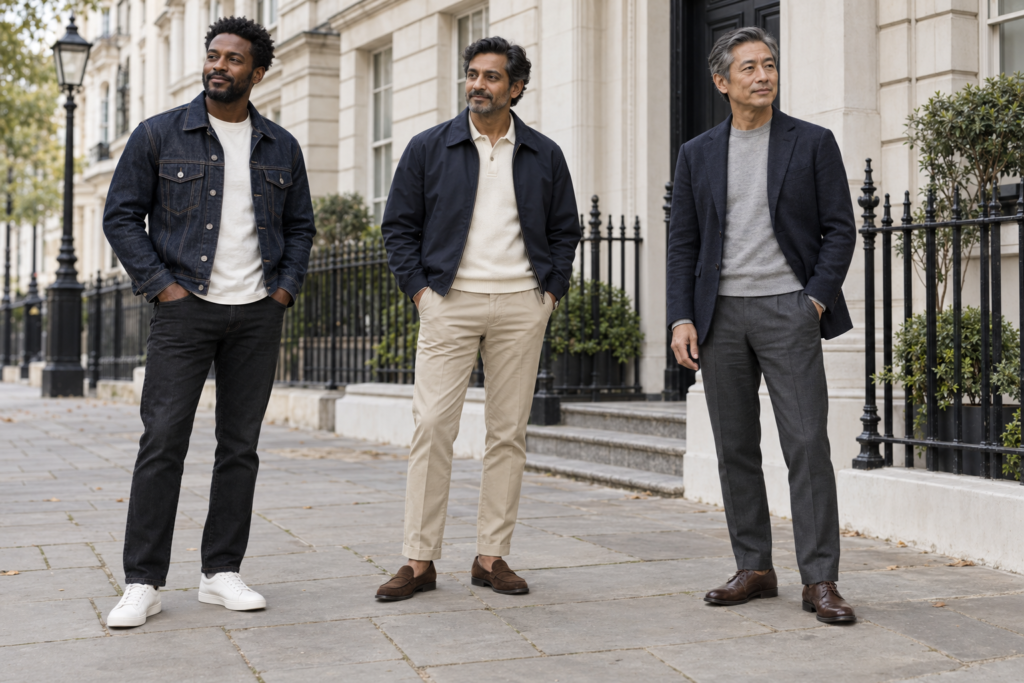
Wear a dark-indigo denim jacket over an off-white tee, then add even black straight-leg jeans and simple white sneakers. The change in denim color separates the jacket from the trousers, while the pale tee gives the darker pieces some breathing room.
If you prefer blue denim on both halves, try a noticeable wash difference. Matching denim can also work when it is intentional; you do not need to avoid it automatically.
Keep the tee relatively neat through the hem so the jacket’s shape stays visible. Our black-jeans outfit guide for men offers more ways to change the effect with shoes and knitwear.

Shop the inspiration — denim jacket: Levi’s Trucker Jacket in Wash It Out Rinse is a standard-fit, cotton-denim option for this direction. Compare the measurements with a jacket you already like.
View the Trucker Jacket at Levi’s
Chore Jacket With a Tee or Oxford Shirt
An olive chore jacket gives a plain outfit a little more shape through its collar and pockets. Try it over the same off-white tee and black jeans, or switch to a pale-blue Oxford shirt, stone chinos, and brown suede loafers.
The second combination feels more considered because the shirt collar, cleaner trouser line, and loafers carry some structure. The jacket keeps that structure from becoming overly formal.
If you already have a shirt collar, avoid crowding the neckline with a thick scarf and another bulky collar unless the weather calls for them. Let the layers sit naturally rather than forcing them flat.
Shop the inspiration — chore jacket: Alex Mill’s Garment Dyed Chore Jacket in Canvas in Dusty Olive offers a lightweight cotton option with practical pockets. Check its length against your preferred shirt hems.
View the Chore Jacket at Alex Mill
Harrington With a Knit Polo and Chinos
A navy Harrington, cream knit polo, stone chinos, and brown loafers make a useful relaxed-dinner combination. The shorter jacket keeps the waistband area clear, while the polo’s texture softens the contrast between dark outerwear and pale trousers.
Try the jacket partly open to show the knit. If the ribbed hem rides up repeatedly or the polo bunches beneath it, check the jacket’s length and room through the body.
Shop the inspiration — Harrington: Baracuta’s G9 Harrington Jacket in Dark Navy is one option. The brand describes this version as close-fitting, so consult its size guide if you plan to wear knitwear underneath.
View the G9 Harrington at Baracuta UK
Soft Blazer With a Fine Knit and Tailored Trousers
For a smarter setting, try a navy blazer with a cream fine-knit polo, medium-gray tailored trousers, and brown leather loafers. The lighter knit makes the neckline feel less formal than a shirt and tie, while the trousers give the blazer a clear partner.
Look at the fabric surfaces together. A relaxed blazer generally sits more comfortably in this combination than a shiny, strongly structured suit jacket that appears separated from its matching trousers.
If you add outerwear over the blazer, choose enough length and room to cover it without compressing the shoulders. A cropped jacket that exposes the blazer’s lower half creates a much more pronounced layered look.

Shop the inspiration — tailored jacket: UNIQLO’s AirSense Jacket, product 475404, is a navy, three-button option listed with a regular fit and polyester fabric. It offers a different fabric feel from wool tailoring; compare the composition and measurements with your needs.
View the AirSense Jacket at UNIQLO US
Leather Jacket With Quiet Supporting Pieces
A plain dark-brown leather jacket can work with a charcoal crewneck, dark jeans, and brown boots. Keep the underlayer relatively simple if the jacket already has prominent zips, pockets, or a contrasting collar.
Smooth leather often creates a sharper visual edge than brushed cotton; suede gives a softer surface. Neither needs a matching belt and shoes in precisely the same shade. A related color family is usually enough for a coordinated effect.
5. Choose Color by Looking at the Whole Outfit
Start with the colors in the clothes and shoes you wear most. Navy, charcoal, olive, brown, and stone each offer useful possibilities, but none goes with everything automatically.
Navy outerwear works easily with cream, gray, and stone. Olive adds a muted contrast to indigo, ecru, and black. A brown jacket can bring warmth to charcoal trousers or dark-blue denim.
For a quieter result, repeat a color family in different depths: charcoal outerwear over a gray knit, for example. For more separation, place a pale knit between a dark jacket and dark trousers.
If navy pants and a navy jacket are almost—but not quite—the same shade, try a more noticeable difference in texture or switch the jacket to olive or gray. Small color differences can look intentional; a clearer contrast is simply easier to assess.

Our guide to matching clothing colors offers a broader framework. You can use those principles without limiting yourself to a fixed number of colors.
6. Let Fabric and Weather Change the Decision
A jacket can look right and still be wrong for the day’s conditions. Think about how long you will be outside, how active you will be, and what you can carry if the temperature changes.
For mild days, consider a lighter overshirt, cotton jacket, or lightly lined blazer. Check the actual lining and fabric weight: a jacket’s style name alone does not tell you how warm it will feel.
In cooler conditions, leave room for a knit or insulating layer. For persistent rain, prioritize a jacket specifically designed for waterproof protection. REI’s guide to choosing rainwear distinguishes that from water resistance, which suits lighter, shorter exposure. An uninsulated rain shell also needs layers beneath it when warmth is required.
A black rain shell over a gray fleece, navy trousers, and weather-appropriate boots can still look coordinated. Choose a shape that accommodates the fleece, then keep the rest of the palette straightforward.
Dress for your local forecast rather than the season named in an outfit photograph. October conditions differ between Sydney and Montreal, and between a short car journey and an hour on foot.

Shop the inspiration — rain shell: Patagonia’s Men’s Torrentshell 3L Rain Jacket is listed as a regular-fit waterproof/breathable shell. Treat it as the weather-protection layer and plan insulation separately.
View at Patagonia US · View at Patagonia Canada · View at Patagonia Australia
Shopping suggestions throughout this guide help recreate the styling direction. They do not identify exact garments in editorial images. Check the retailer’s current colors, measurements, availability, and delivery terms before ordering.
7. Make One Adjustment Before Changing Everything
If an outfit feels unsettled, identify the specific point of friction:
- Too much bulk at the neck: Try a lighter knit or remove an unnecessary layer.
- The top half feels crowded: Check jacket length and shirt hem before changing the trousers.
- A casual jacket looks disconnected from formal shoes: Try a cleaner underlayer and trousers, or change the shoes to suit the setting.
- A close-fitting jacket strains over a sweater: Try a different cut or a less bulky layer; leaving it open will not resolve restricted movement.
- Everything blends into one dark shape: Add a lighter underlayer or a different surface texture if you want more definition.
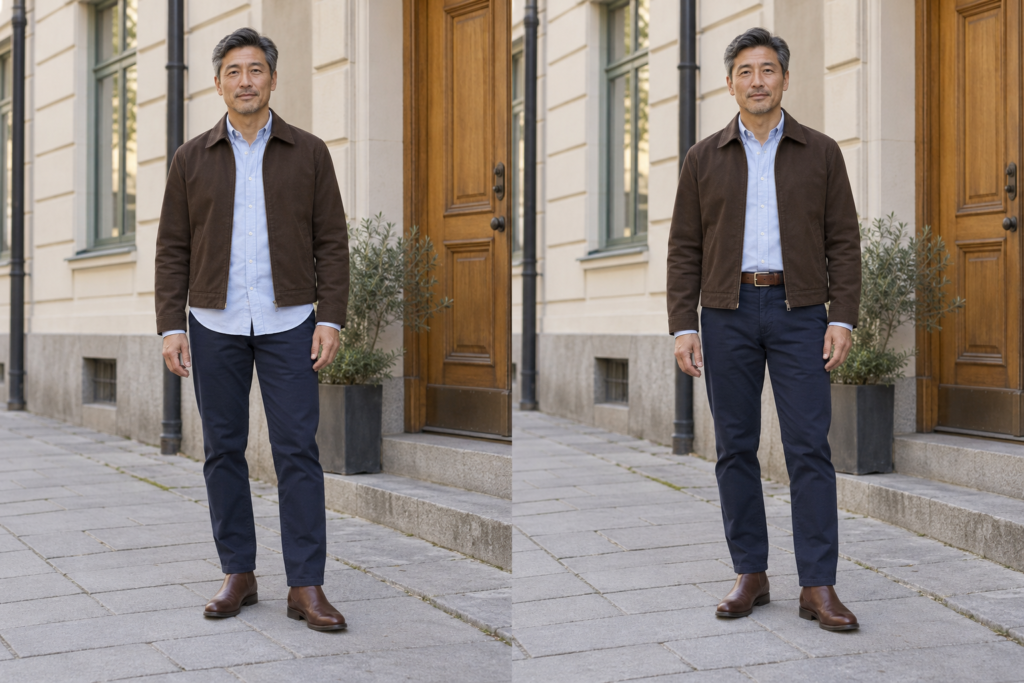
These adjustments are worth trying with clothes you already own. A new jacket is most useful when it solves a recurring problem that styling changes cannot.
Frequently Asked Questions
What is the most versatile jacket color for men?
Navy, charcoal, olive, and brown can all be useful. Choose the color that works with your most-worn trousers and shoes. If your wardrobe is mostly black and gray, charcoal may be easier than a warm tan; if it centers on blue denim and stone chinos, navy or olive is worth trying.
Should a jacket be longer than your shirt?
It depends on the effect you want. A small amount of tee showing can suit a casual outfit. A long shirt tail beneath a cropped jacket creates a more obvious layered silhouette. For a cleaner outline, tuck the shirt, choose a shorter one, or wear a longer jacket.
Can you wear a casual jacket with tailored trousers?
Yes. Try a restrained Harrington or chore jacket with a fine knit and trousers that are not dramatically more formal than the rest of the outfit. Footwear can help connect the pieces. Check the occasion’s dress code before choosing this combination.
How should a jacket fit over a sweater?
It should close as intended without pronounced strain and allow comfortable sitting and reaching. Try it over the sweater you expect to wear. If sizing up fixes the chest but leaves the sleeves and shoulders unsuitable, look for a roomier cut.
Is a bomber jacket suitable for smart casual?
A simple bomber can suit some relaxed smart casual settings when paired with neat trousers, a knit polo, and clean shoes. Prominent graphics, sporty shine, and heavy embellishment change the effect. For a setting that explicitly requires tailoring, choose the appropriate tailored jacket instead.
Choose the Jacket That Makes the Rest Easier
Try two jackets over the same outfit and compare them in a full-length mirror. Look at the hem, the neckline, and the relationship with your shoes. Then sit down and reach forward. The stronger choice should make sense visually and feel comfortable in use.
If you are building a smaller wardrobe, start with the situations you dress for most often. Our guide to essential clothes every man should own can help you see where outerwear fits among the pieces you already wear.