
By Olivia Parker
A jacket that works at breakfast can feel unnecessary by lunch. Bare ankles look reasonable until the wind picks up. The most useful spring capsule wardrobe essentials solve those small, recurring problems: layers you can remove, shoes suited to the forecast, and clothes that still look considered when the coat comes off.
You probably own several already. Start with the jeans that fit, the shirt you reach for, and the shoes you can walk in. This guide builds a seasonal rotation around those reliable pieces. If you need help editing your entire closet first, our guide to building a capsule wardrobe from scratch covers the broader process.
The quick answer: Begin with a small mix of everyday tops, one light knit, jeans, trousers, removable outer layers, and practical shoes. The 18-piece example below includes bags and accessories; use it as a working template, with replacements for your climate, dress code, and laundry routine.
Start with your week, then choose a color palette
Look at the next seven days before looking at a shopping page. Three office days require different clothes from a week of school runs, remote work, or standing shifts. Note what you actually need to dress for, including the journey there.
Then choose a palette using clothes you already enjoy wearing. A useful starting point is one dark anchor, one light neutral, and one or two colors that sit comfortably with both:
- Navy, ivory, and faded blue: Add a tomato-red scarf or cardigan.
- Chocolate, cream, and olive: Introduce pale blue through a shirt.
- Black, white, and stone: Use cobalt or rose as an accent.

These are examples, not color rules. A colorful capsule works when several pieces share a background color, print color, or similar depth of shade. Our guide to matching clothing colors offers more combinations if beige and black do little for you.
Before buying anything, assemble three complete outfits from the proposed pieces. Check shoes and outerwear too. A skirt that matches every top but none of your comfortable shoes still leaves a gap.
The 18 spring capsule wardrobe essentials
This example includes 11 garments, three pairs of shoes, and four accessories. Underwear, socks, hosiery, sleepwear, workout gear, and specialist occasionwear sit outside the count. The cardigan counts once, although it works as both a top and a layer.
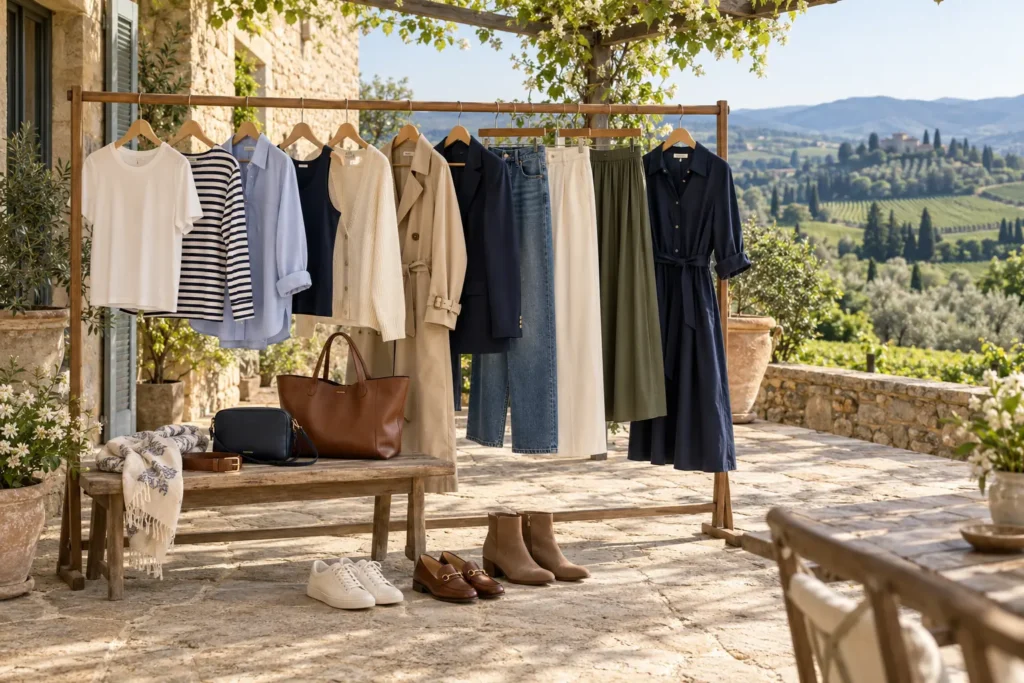
Five tops with different jobs
- An everyday T-shirt. White, cream, gray, or a favorite color all work. Check opacity in daylight and choose a hem that behaves the way you wear it: tucked, loose, or somewhere between.
- A long-sleeve striped or solid top. This gives you a warmer alternative without requiring a sweater. Narrow sleeves slide more easily under a blazer; a roomier cut works alone.
- A button-front shirt. Cotton poplin gives a crisp outline, while an Oxford weave offers more visible texture. Try it buttoned, tucked, and open over the tee before deciding on length.
- A refined tank or sleeveless shell. Choose a neckline and armholes that work with your preferred undergarments. If you dislike sleeveless clothes, substitute a short-sleeve knit or another tee.
- A lightweight cardigan. Look for enough room over the shirt without excess fabric gathering under your coat. A smooth, fine knit is easier to layer than a thick cable knit.
A shirt becomes more useful when its proportions suit several bottoms. Our white button-down outfit ideas show ways to vary the tuck, sleeve, and layer without needing several versions of the same shirt.
Shop the inspiration — verified product page: Everlane’s The Boxy Oxford in White has a relaxed shape, dropped shoulders, and organic cotton fabric. Consider it if you want a roomy shirt; compare its garment measurements with a shirt you own before ordering.
Similar alternative for cooler days: Quince’s 100% Organic Cotton Fisherman Collared Cardigan offers a textured, slightly cropped option. Its fisherman stitch serves a different purpose from a fine knit: try it with jeans or trousers, and allow more room in the jacket worn over it.
Shop the Quince cardigan inspiration →
Three bottoms and a day dress
- Everyday jeans. Straight-leg denim is an easy starting point, but keep your preferred wide, tapered, or slim shape if it works with your shoes. Comfort at the waist and seat matters more than adopting another silhouette.
- Tailored trousers. Choose a fabric weight appropriate to your spring and a waistband that stays comfortable when seated. Try the length with the shoes you expect to wear most.
- An easy midi skirt. An A-line cotton skirt adds shape; a fluid version gives softer movement. Walk and sit in it to check stride, lining, and transparency. Replace it with a second pair of trousers if skirts rarely leave your closet.
- A simple day dress. A shirtdress or uncomplicated midi can cover lunch, errands, and a casual dinner. Check that its sleeves fit beneath your layers. A second button-front shirt can replace this slot if you do not wear dresses.
Two outer layers
- A light coat or rain shell. Choose a trench for its shape, or a waterproof shell when wet-weather protection is the priority. They are alternatives within this slot; a trench silhouette alone says nothing about waterproof performance.
- A relaxed blazer or overshirt. A blazer suits a more tailored week; an overshirt works well for casual routines. Check shoulder movement over both your tee and long-sleeve top.
Three pairs of shoes
- Everyday sneakers. White is useful with a light palette, but cream, navy, or an existing favorite can do the same job. Prioritize a secure heel and comfortable toe room over a particular color.
- Loafers or flats. Choose the shape, fastening, and support you prefer. Try them with your trouser hem; fabric pooling around a low shoe can make an otherwise tidy outfit look unfinished.
- A pair for your local weather. That might mean ankle boots for wet, chilly days or secure sandals for warm ones. Check the manufacturer’s performance claims if water protection matters.
Four accessories you will actually use
- A daily bag that holds your real load, whether that means a tote, backpack, or shoulder bag.
- A smaller crossbody for lighter outings. Omit this slot if your daily bag already covers them.
- A belt suited to your trouser loops and preferred waist position.
- A light scarf for an extra layer at the neck or a small change of color.
There is no prize for keeping all 18. A redundant bag can leave; an extra washable top may be more useful if laundry happens once a week.
Eight spring capsule outfits to put on repeat
Use these combinations as dressing options, then adjust the details that affect your comfort. Each draws from the checklist above.

1. A workday with a casual dress code
Wear the button-front shirt with tailored trousers, loafers, and the daily bag. Tuck enough fabric to keep the waistband clear without pulling the shirt tight across your back. Add the blazer when needed. For a formal office, follow the actual dress code rather than relying on this casual formula.
2. A weekend spent walking
Combine the striped top, jeans, sneakers, and light coat. A coat left open shows the stripe and denim as separate layers. If your jeans are long, hem them for these shoes instead of repeatedly folding a bulky cuff.
3. Lunch that turns into an afternoon out
Pair the tee with the midi skirt and loafers or flats. A small front tuck gives the skirt’s waistband definition while leaving movement through the back. Wear the cardigan if the temperature drops, and carry the crossbody to keep your hands free.
4. A relaxed dinner
Try the sleeveless shell, tailored trousers, blazer, and flats. The softer base layer keeps the tailoring from feeling too formal. If the trouser leg is wide, check that the hem clears the floor. Our guide to wearing a blazer casually explores more ways to balance a structured jacket with everyday pieces.
5. A warmer afternoon
Wear the day dress with sneakers and the smaller bag. If the dress has a full skirt, shoes with a relatively neat profile keep the hem area visually simple. Prefer a substantial sneaker for support? Keep it, and judge the outfit as a whole.
Shop the inspiration — verified product page: The adidas Stan Smith in Cloud White / Cloud White / Cloud White, product code LA6639, is one option for this clean-lined sneaker look. Choose footwear around your own fit needs; this suggestion is based on the listing, not a wear test.
Shop adidas Stan Smith sneakers →
6. A travel day
Wear the tee, trousers, cardigan, sneakers, and daily bag. An elastic or partly elastic waistband can be useful for a long seated journey. Choose the cardigan you can comfortably carry or pack once you remove it.
7. A cooler morning
Layer the shirt over the shell, then add jeans and your light coat. Keep the shirt cuffs inside the coat sleeves so they do not bunch at your wrists. If the forecast demands insulation, use your warmer coat instead.
8. A creative or casual workplace
Wear the striped top with trousers, the blazer, and loafers. Repeating a color from the stripe in either the jacket or trousers connects the pieces. For a less tailored version, replace the blazer with the checklist’s overshirt.
Shopping links in this guide use US storefronts. Check local size charts, delivery, returns, and current stock. “Shop the inspiration” identifies a styling option, not an exact match to an editorial image.
Adjust the capsule for cold, rainy, or warm spring days
For lingering cold: Keep a useful winter coat and warmer knit in rotation. Replace the lightest pieces until conditions change; a seasonal checklist does not require you to be cold. Closed shoes and socks may be more useful than sandals and bare ankles.
For regular rain: Choose outerwear for the commute you make. REI’s rainwear guide distinguishes water-resistant garments suited to brief, light rain from waterproof options intended for more demanding conditions. Check the actual product specification, including construction, rather than assuming a beige trench will keep you dry.
For warm days and cool interiors: Use a light shirt over a tank or tee, with the cardigan available indoors. If heavy denim feels uncomfortable, substitute lighter trousers. In Australia and other Southern Hemisphere locations, build around your local spring rather than the timing of Northern Hemisphere collections.

Shop the inspiration — verified product page: The UNIQLO Premium Linen Shirt is a warm-weather alternative to the Oxford shirt. The brand lists 100% linen and a relaxed fit, and notes that the white version is slightly sheer. Check the care instructions and whether that transparency suits how you plan to wear it.
Shop UNIQLO’s Premium Linen Shirt →
Check fit, fabric, and care before you buy
A capsule earns its place through repeated wear. Small irritations become more noticeable when you keep reaching for the same clothes.
Test movement, not just the mirror. Sit in the trousers, reach forward in the blazer, and walk at your normal pace in the skirt. If a shirt pulls between buttons, compare cuts with more room through that area. Sizing up is one option, but it may also change the shoulders and sleeve length.
Fit hems to your actual shoes. A trouser length that works with a chunky sneaker may drag with a flat. If you alternate between very different sole heights, a slightly shorter hem or separate trouser lengths can be more practical. For denim, our guide to jeans and body proportions explains differences in rise, leg shape, and waist-to-hip fit without prescribing one shape for everyone.
Judge the whole fabric, not only the fiber name. Weave, thickness, lining, and garment shape affect how a piece feels and hangs. Hold pale fabrics to the light, check whether pockets show through, and consider how much wrinkling you are comfortable seeing after sitting.

Read the care label before paying. GINETEX’s care-label guidance explains that care symbols indicate permitted treatments and account for details such as finishes and trims. A shirt that requires a routine you cannot maintain may be a poor everyday choice.
Follow each garment’s instructions. For washable wool knitwear, Woolmark recommends drying flat unless the care label permits tumble drying; hanging a wet sweater can stretch it. For shoes, use a method suited to the upper material: our guide to cleaning white sneakers separates leather, canvas, mesh, and suede care.
Build a spring capsule wardrobe on a budget
Wear your proposed rotation for a week before filling its gaps. Note what stopped an outfit working: a missing layer, uncomfortable shoes, an awkward hem, or simply a top in the wash. Each problem calls for a different solution.
Put money toward the change that creates the most usable outfits. Hemming trousers you already like may help more than buying another pair. A replacement tee may be urgent; a second bag probably is not.
Secondhand shirts, jackets, and bags can be worth considering when you can inspect their condition. Check underarms, cuffs, closures, lining, and alterations. For online purchases, compare measurements and include delivery, returns, and any tailoring in the total cost.

Avoid buying several nearly identical basics before testing one. Wear and wash the first according to its label, then decide whether another color would earn enough use.
Spring capsule wardrobe FAQs

How many pieces should a spring capsule wardrobe have?
Enough to cover your normal activities between laundry days. This 18-piece example is a starting point, not an ideal number. If you need extra tops, uniforms, or separate work shoes, allow for them rather than forcing an impractical limit.
Can a spring capsule wardrobe include bright colors and prints?
Yes. Repeat a color from a printed piece elsewhere in the capsule, or use a familiar neutral alongside it. Try the combinations on: colors that seem compatible on hangers can look different when their proportions change on the body.
Do I need a trench coat?
Only if it suits your weather and the way you dress. A rain shell, light utility jacket, or existing coat may be more useful. If rain protection matters, check the garment’s stated performance rather than judging by its style.
What if I do not wear skirts or dresses?
Replace the skirt with a second trouser shape and the dress with another shirt or knit. Keep the same test: each replacement should work with several pieces you already use. The core approach also works for a men’s spring capsule wardrobe.
Can these pieces cover a spring wedding or a formal event?
Sometimes, but the invitation’s dress code decides. A casual day dress or everyday blazer will not cover every event. Keep specialist occasionwear outside the capsule when needed rather than asking daily basics to do an unsuitable job.
How do I turn the capsule into a spring travel wardrobe?
Select complete outfits for the itinerary, including shoes, then remove duplicated functions. Account for laundry access and drying time. Wear your bulkiest useful layer in transit, and leave space for the items your specific trip requires.
Make the next week of outfits easier

Put together three outfits tonight: one for a normal weekday, one for a cooler day, and one for time off. Include the bag and shoes, then check whether removing the outer layer still leaves an outfit you want to wear.
That exercise will tell you more than adding another item to a shopping list. Keep the pieces that make those mornings easier, adjust what feels awkward, and buy only when you can name the gap a purchase will fill.