

You have a dinner reservation, a relaxed office day, or an invitation that says “smart casual.” A suit feels excessive, but your everyday T-shirt and running shoes seem too relaxed. The difficult part is finding the right level of polish.
Men’s smart casual outfits combine well-fitting everyday clothes with more structured pieces. Start with chinos or neat trousers, add an Oxford shirt or fine-knit polo, and finish with loafers, simple boots, or clean minimal sneakers when the setting allows them. A relaxed blazer is useful, but it is optional.
The strongest outfit is one that suits the venue, feels comfortable in motion, and looks considered from the collar to the shoes. These six formulas make that easier to achieve with clothes you may already own.
The essentials at a glance
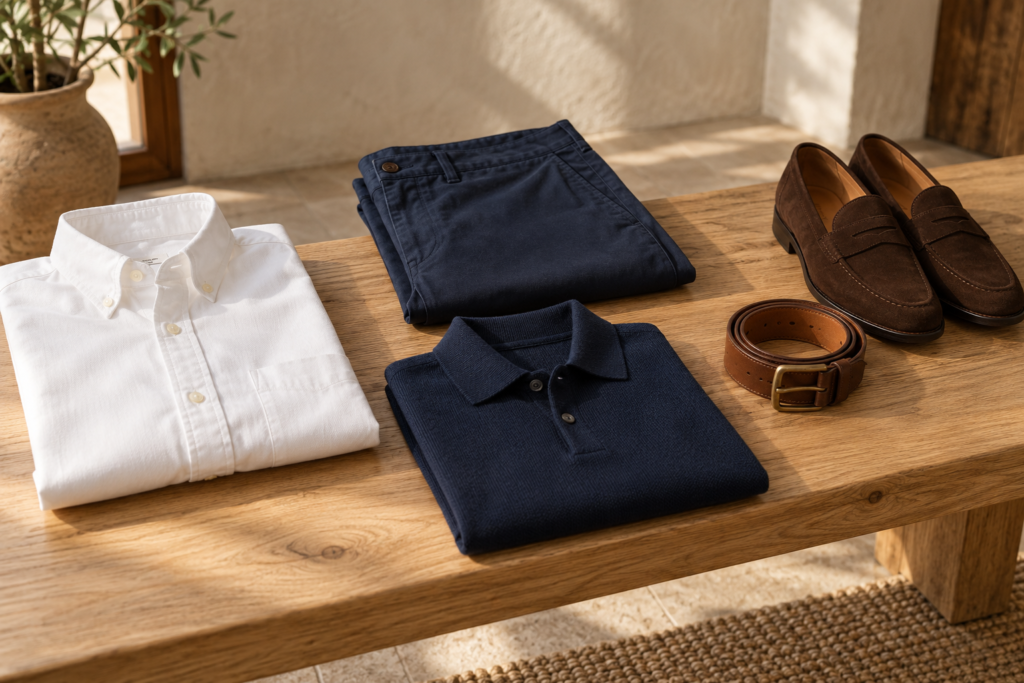
- Check the invitation, workplace guidance, or venue policy before choosing denim or sneakers.
- Prioritize comfortable fit, clean shoes, and clothes in good condition.
- Build around one structured piece, such as a collared shirt, tailored trousers, or a blazer.
- Use fabric texture and a coordinated palette to make simple outfits feel finished.
- Buy a missing piece only after checking which outfits your current wardrobe can make.
What does smart casual mean for men?
Smart casual sits between everyday casual clothing and more formal dressing. It usually allows more freedom than a traditional office dress code, but the boundaries depend on the setting.

An Oxford shirt with chinos and suede loafers might work for a restaurant, a social event, or a relaxed workplace. The same outfit could be too casual for a conservative client meeting. “Smart casual” on a wedding invitation also needs the couple’s interpretation, rather than an assumption that jeans will be welcome.
| Dress code | A useful starting outfit | What to check |
|---|---|---|
| Casual | T-shirt, jeans, everyday sneakers | Activity and weather |
| Smart casual | Collared shirt or refined knit, chinos, neat shoes | Whether denim, sneakers, or shorts are permitted |
| Business casual | Collared shirt, tailored trousers, dress shoes; optional blazer | Your employer’s expectations and client-facing requirements |
These are starting points, not universal definitions. When instructions are unclear, ask the host or choose the slightly dressier version of an outfit you already wear comfortably.
Get the fit right before adding more clothes
A low-cost shirt that sits comfortably can look more considered than an expensive one pulling across the chest. Look at how the whole silhouette works rather than relying on labels such as slim, regular, or relaxed.
For shirts and jackets: check that the collar feels comfortable, the shoulders hang as intended, and the fastening lies flat. A blazer should close without an obvious X-shaped pull. Try it over the layer you actually plan to wear.
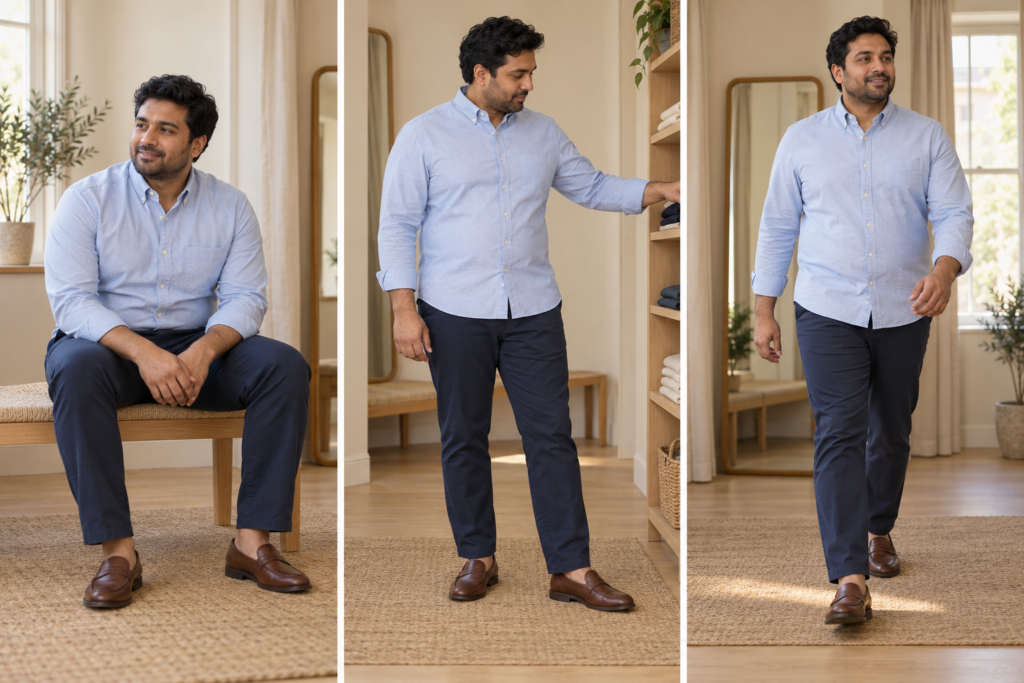
For trousers: the waistband should stay in place without a tightly cinched belt. Look for enough room through the seat and thighs to sit naturally. A full-length hem should meet the shoe cleanly; an ankle-length style can finish higher if that is the intended cut.
For proportions: a roomy shirt often works well with straight or gently tapered trousers. Wide trousers can also look polished when their length is deliberate and the top has a clear shape. No body type requires one fixed silhouette.
Before keeping an outfit, do a quick sit–reach–walk check: sit for a minute, reach forward, and walk across the room. Notice collar pressure, a rising waistband, restricted thighs, or shoes that slip. Fix the discomfort before worrying about accessories.
Choose colors and fabrics that work together
Navy, stone, white, gray, olive, and brown make a flexible starting palette. You can repeat two colors across an outfit and use a third in a smaller amount, such as a burgundy knit under a navy jacket.

For example, navy trousers and a white shirt look crisp; stone chinos and a navy polo feel softer. If combinations are your sticking point, our guide to matching clothing colors explains practical ways to build a coordinated palette.
Texture keeps these combinations interesting. Try an Oxford weave with smooth chinos, a fine knit beneath a softly structured jacket, or a linen shirt with cotton trousers. In hot weather, pay attention to fabric weight, weave, lining, and room for air to circulate; a fiber name alone does not tell you how cool a garment will feel.
Six men’s smart casual outfits to try
1. White Oxford shirt, navy chinos, and brown loafers
This is a useful first outfit because every piece has a clear purpose. The shirt supplies structure, the chinos soften the formality, and the loafers finish the combination without requiring a suit.
Choose a straight or gently tapered trouser shape. Tuck the shirt in for a more defined waistline, or wear it untucked if its hem was designed for that. Add a brown belt when you want one; its shade can coordinate with your shoes without matching perfectly.
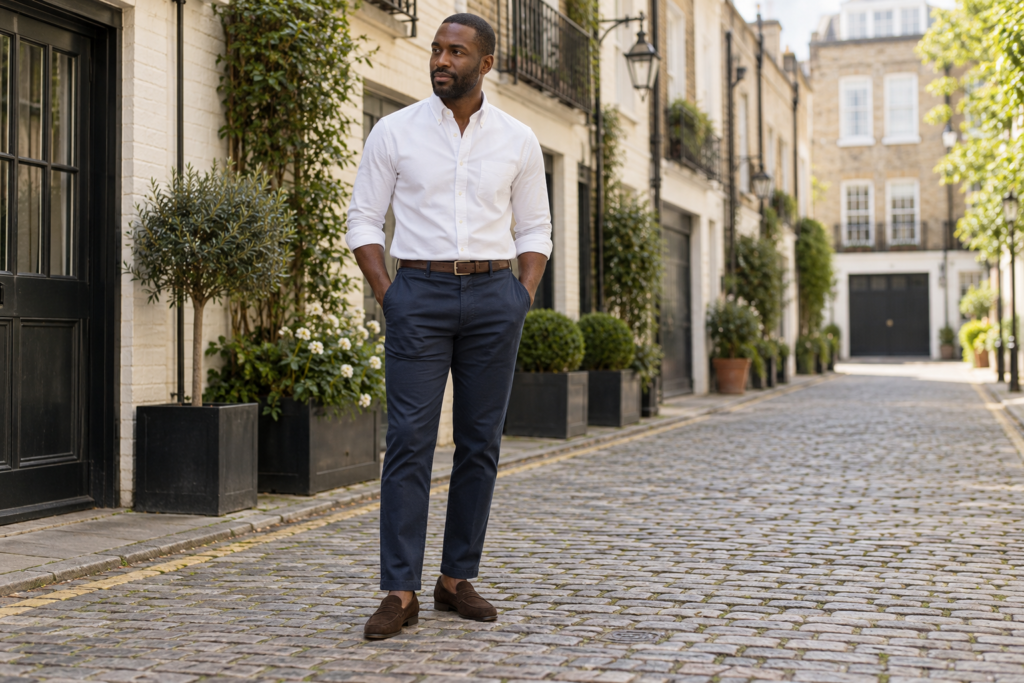
Wear this for a relaxed office, lunch meeting, or family gathering when it fits the stated dress code. In a more conservative workplace, switch to tailored trousers and dress shoes.
Shop the inspiration
White Oxford shirt and navy chinos
Style suggestions, not verified items pictured. Direct retailer links without affiliate tracking. Regional selection and size availability may vary.
White Oxford shirt
Charles Tyrwhitt · Stretch Washed Oxford Shirt — WhiteView the Oxford shirt at Charles Tyrwhitt
Navy chinos
Charles Tyrwhitt · Ultimate Non-Iron Chinos — NavyView navy chinos at Charles Tyrwhitt
Chocolate-brown suede loafers
Charles Tyrwhitt · Suede Penny LoafersView suede loafers at Charles Tyrwhitt
Regional navy-chino listings: Canada, United Kingdom, Australia. Confirm local delivery and your preferred size before ordering.
2. Unstructured blazer, white T-shirt, and dark jeans
A soft navy blazer brings shape to a simple T-shirt and jeans. Look for restrained details and a fabric that feels appropriate beside denim. A shiny suit jacket can create a sharper formality mismatch.
Keep the T-shirt opaque, with a neckline that sits flat. Choose dark jeans with an even wash and no deliberate distressing when you want the smarter version of this outfit. Straight legs or a comfortable taper both work; the important detail is how the hem falls over your shoes.
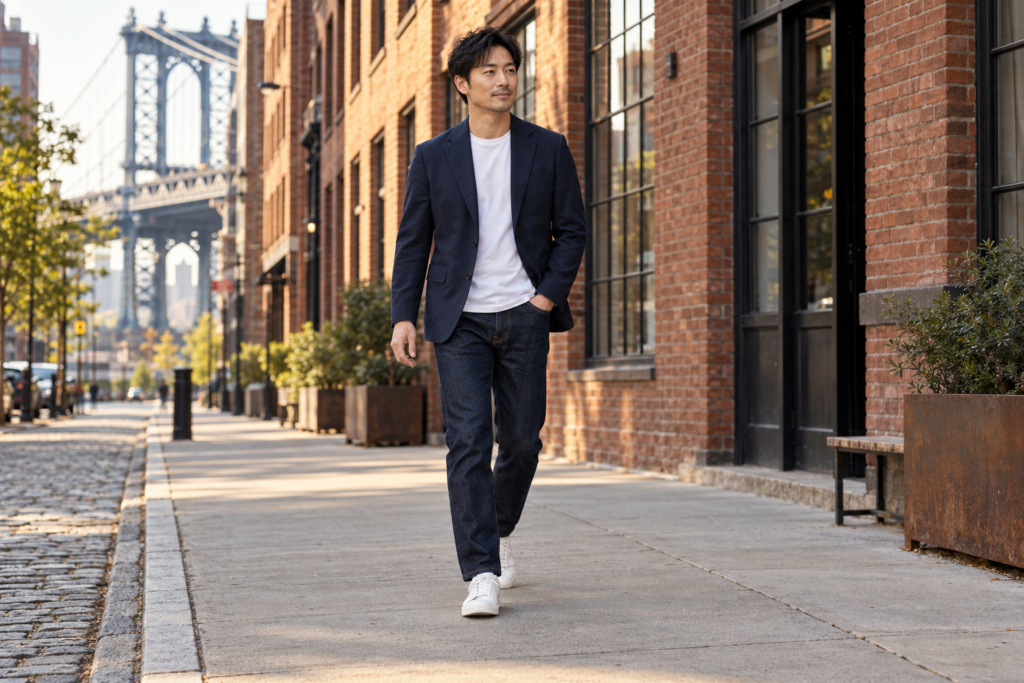
Finish with loafers for dinner or low-profile sneakers for a venue that allows them. This combination is useful for creative workplaces and informal evenings, but denim rules still come first.
Shop the inspiration
Navy blazer and dark denim
Style suggestions, not verified items pictured. Regional selection and size availability may vary.
Soft navy jacket
Charles Tyrwhitt · Unstructured Jacket — NavyView the navy jacket at Charles Tyrwhitt
White crewneck T-shirt
UNIQLO · Crew Neck T-Shirt. Select white from the listed colors.View the crewneck T-shirt at UNIQLO
Dark-wash straight jeans
Levi’s · 501 Original Men’s Jeans — Rinse/Dark WashView dark-wash 501 jeans at Levi’s
3. Navy knit polo, stone chinos, and suede loafers
A fine-knit polo offers an alternative when a button-down shirt feels too formal. The collar gives the neckline definition while the knit creates a softer finish. Charles Tyrwhitt’s polo styling guide also illustrates how polos can move between chinos, sneakers, and tailoring.
Pair navy with stone trousers and chocolate-brown shoes for a straightforward dinner outfit. Check that the polo’s hem sits comfortably around your hips rather than gripping tightly or hanging much longer than intended.

You can wear it alone or add a relaxed blazer. Choose a knit weight that suits the temperature; a long-sleeve wool polo is a different proposition from a lightweight short-sleeve cotton version.
Shop the inspiration
Navy knit polo and suede loafers
Style suggestions, not verified items pictured. Regional selection and size availability may vary.
Navy knit polo
Charles Tyrwhitt · Pure Merino Wool Button Neck PoloView the knit polo at Charles Tyrwhitt
Chocolate-brown suede loafers
Charles Tyrwhitt · Suede Penny LoafersView suede loafers at Charles Tyrwhitt
4. Pale-blue linen shirt, stone trousers, and loafers
For warm weather, try a relaxed linen shirt with lightweight trousers and simple slip-on shoes. The pale blue and stone palette looks fresh without requiring bright colors.
Allow enough room through the shirt’s body for comfortable movement. Roll the sleeves evenly if you prefer, and accept some natural creasing as part of the fabric’s appearance. A half-lined or unlined jacket can be an optional layer, but check its actual weight before adding it on a hot day.

Stone and beige trousers work with more than blue. Explore our guide to colors that go with beige clothes for alternatives such as olive, cream, and chocolate brown.
This outfit can suit a warm-weather lunch or relaxed terrace dinner. A wedding, private club, or formal restaurant may require a jacket, different shoes, or a more specific dress code.
Shop the inspiration
Sky-blue linen shirt and stone trousers
Style suggestions, not verified items pictured. Regional selection and size availability may vary.
Sky-blue linen shirt
Charles Tyrwhitt · Pure Linen Shirt — Sky BlueView the linen shirt at Charles Tyrwhitt
Stone chinos
Charles Tyrwhitt · Ultimate Non-Iron Chinos. Check the weight suits your weather.View stone chinos at Charles Tyrwhitt
5. Gray sweater, navy trousers, and brown boots
For cooler days, build around a gray crewneck sweater and navy trousers. Add brown boots and a coat that leaves enough room for the knit beneath it. A shirt collar can show above the neckline if you want more definition.
Use layers you can remove indoors. A lightweight sweater beneath a suitable coat often gives you more flexibility than a single bulky layer that becomes uncomfortable in heated rooms.

For snow, ice, or persistent rain, prioritize appropriate weather protection and traction. The classic leather desert boot linked below is an outfit inspiration, not a verified waterproof winter boot.
Care matters here, too. Follow the garment’s own washing instructions. Woolmark’s sweater-care guidance recommends checking the care label and generally drying wool sweaters flat unless their label permits another method.
Shop the inspiration
Gray knitwear and brown boots
Style suggestions, not verified items pictured. Regional selection and size availability may vary.
Gray merino sweater
UNIQLO · Merino Sweater. Select gray from the listed colors.View the merino sweater at UNIQLO
Brown leather desert boots
Clarks · Desert Boot — Beeswax. Not verified as waterproof winter footwear.View the Desert Boot at Clarks
6. Olive overshirt, white T-shirt, and dark jeans
An overshirt gives a weekend outfit a little structure without the feeling of tailoring. Wear it open over a plain T-shirt with dark jeans and clean, low-profile sneakers.
Keep the fabrics distinct enough to read clearly: cotton twill over a simple jersey T-shirt, for example. Check that the overshirt’s sleeves accommodate the layer beneath it and that the hem does not feel crowded by an excessively long T-shirt.
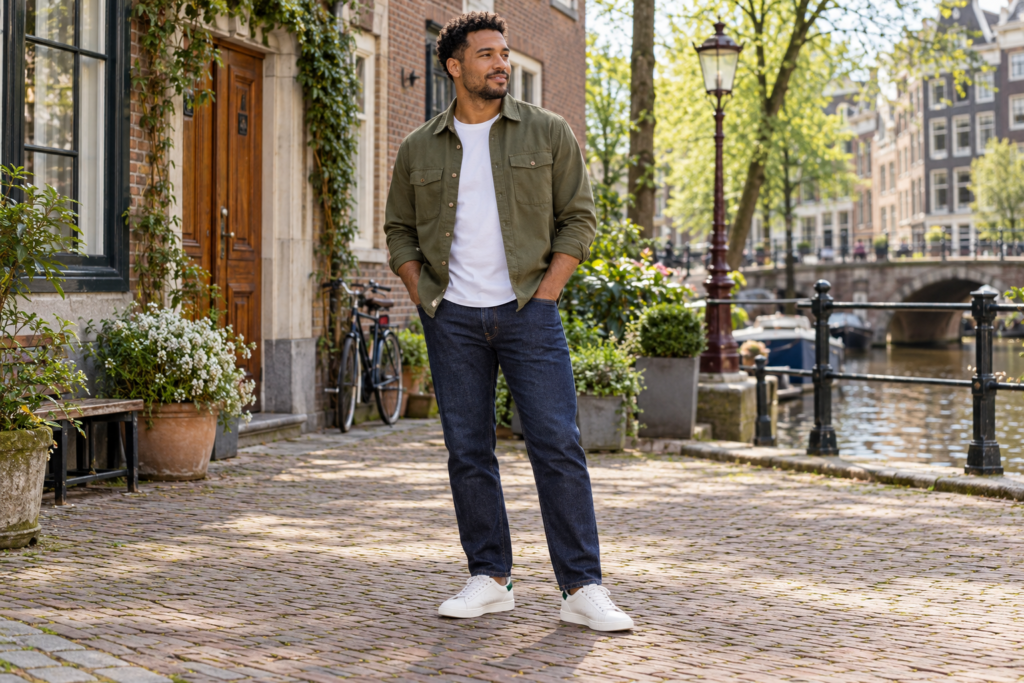
This is the relaxed end of smart casual. It works best for informal social plans and workplaces that permit it. For a dressier restaurant, swap the sneakers for loafers and the jeans for chinos.
Shop the inspiration
Olive overshirt and clean sneakers
Style suggestions, not verified items pictured. Regional selection and size availability may vary.
Olive twill overshirt
UNIQLO · Twill Overshirt, olive optionView the twill overshirt at UNIQLO
White and green sneakers
adidas · Stan Smith Shoes — M20324View Stan Smith shoes at adidas
Adapt the outfit to the occasion
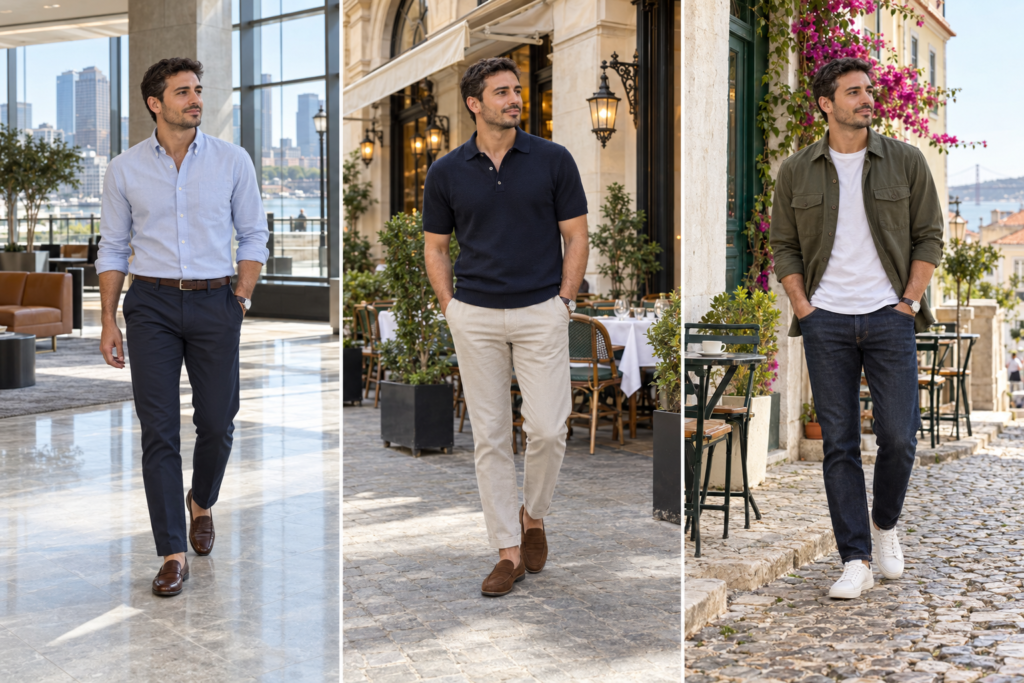
Before starting again with a completely different outfit, identify what needs changing. Often, one considered swap is enough.
| Situation | Start here | A useful adjustment |
|---|---|---|
| Relaxed office | Oxford shirt and chinos | Replace sneakers with loafers if your workplace expects smarter shoes |
| Dinner reservation | Knit polo and stone trousers | Add a soft blazer when the venue calls for more polish |
| Creative workplace | Blazer, T-shirt, dark jeans | Replace denim with trousers for a client-facing meeting |
| Informal weekend plans | Overshirt, T-shirt, dark jeans | Swap jeans for chinos when the venue is less relaxed |
| Wedding invitation | Ask for the couple’s interpretation | Follow their guidance on tailoring, footwear, and denim |
Dress for the actual forecast rather than the month. Summer in Australia falls at a different time from summer in the US, Canada, and UK, and conditions vary within each country. Choose lighter layers for heat, a practical outer layer for rain, and suitable footwear for cold or slippery weather.
Build the wardrobe gradually, whatever your budget
Start with a shirt, two useful bottoms, one knit, one layer, and shoes suited to your routine. Add other pieces only when you have a clear use for them. Our guide to building a capsule wardrobe from scratch offers a practical way to audit what you already own.
If your budget is tight: clean and repair the shoes you wear most, try existing combinations, and price a simple trouser alteration before replacing the garment. Secondhand shirts and jackets can be useful when their fit and condition work for you.
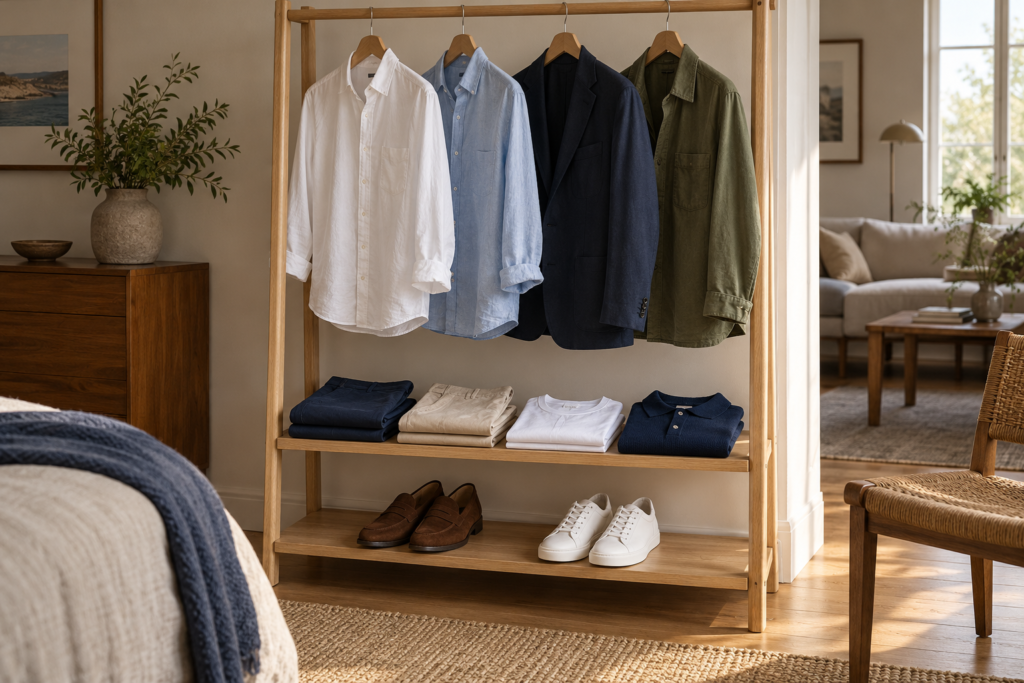
If you are buying one new piece: solve the most frequent problem. Someone with plenty of shirts but no comfortable trousers will gain more from the right pair of chinos than another top.
If you are considering a premium purchase: examine the fit, fabric, lining, care requirements, and repair options. A higher price does not by itself establish better comfort or greater usefulness.
Before buying, name three outfits you can make with the item. If the combinations require several further purchases, pause and try an alternative.
Common smart casual mistakes to avoid

- Letting one piece do all the work. A blazer cannot resolve a badly fitting T-shirt, dragging hems, or shoes that need cleaning.
- Assuming denim is always acceptable. Its suitability depends on the invitation or workplace, even when the wash is dark.
- Choosing a tighter size to look sharper. Pulling fabric usually makes an outfit feel less comfortable and less settled.
- Ignoring weather and walking plans. Footwear and outerwear need to suit the day you will actually have.
- Adding every accessory at once. A watch, a belt when needed, and one optional personal detail can be enough.
Frequently asked questions

Can men wear jeans for smart casual?
Yes, when the dress code allows denim. Dark, even-wash jeans without distressing are a useful starting point. Add a collared shirt, fine knit, or relaxed blazer, and choose chinos or tailored trousers whenever the venue excludes jeans.
Are sneakers smart casual?
They can be in relaxed settings. Clean, understated sneakers usually sit more easily with chinos or dark denim than visibly technical running shoes. If the venue requires dress shoes, follow that policy.
Do you need a blazer?
No. An Oxford shirt with chinos and loafers, or a refined polo with neat trousers, can work without one. A blazer is useful when you need an additional structured layer or the occasion calls for it.
Can you wear a T-shirt?
Sometimes. A plain, opaque T-shirt beneath an unstructured blazer can work in a relaxed setting. When the dress code is unclear, a collared shirt or polo is a more cautious starting point.
Are shorts smart casual for men?
Only where they are welcome. Tailored shorts with a collared shirt may suit some informal warm-weather venues, but workplaces, clubs, restaurants, and weddings can exclude them. Check rather than treating heat as permission.
Should a smart casual shirt be tucked in?
It depends on the shirt’s length and intended cut. Longer dress-shirt tails usually sit better tucked in. A shorter casual hem can work untucked. Try both with the trousers and shoes you will wear, then check the proportions in a mirror.
What is the easiest first smart casual outfit?
Try a white or pale-blue Oxford shirt, navy or stone chinos, and comfortable loafers. Check the venue’s requirements, adjust the fit, and add a suitable outer layer for the weather.
Make the formula your own
Choose one outfit that fits your routine, try it with clothes you already have, and change the piece that feels least comfortable or least appropriate. You do not need to rebuild your wardrobe to dress with more intention.
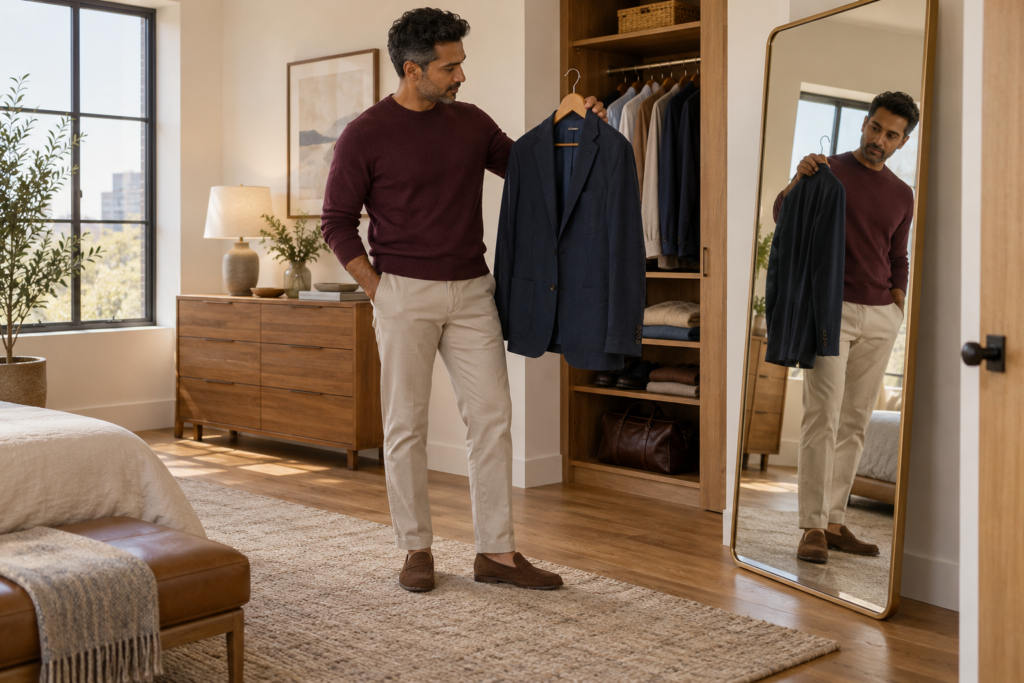
Use these combinations as starting points, then adjust the colors, shapes, and details to your preferences. Our guide to finding your personal style can help you recognize what you enjoy wearing repeatedly.
Related reading: How to match clothing colors · How to build a capsule wardrobe



3 thoughts on “Men’s Smart Casual Outfits: A Complete Guide”