

Style Guides | WhatsMyTrend
You open your closet, look at a collection of perfectly good clothes, and somehow feel like you have nothing to wear. Some pieces were bought because they were trending. Others looked beautiful on someone else. A few still have their tags attached.
The problem might not be a lack of clothes. It might be that your wardrobe doesn’t yet reflect the way you actually want to dress.
Learning how to find your personal style isn’t about choosing one fashion aesthetic and following it forever. It’s about understanding the colors, shapes, fabrics, and outfit combinations that make you feel comfortable, confident, and like yourself.
And the best place to start is probably your existing closet.
In this guide, you’ll learn how to recognize your style preferences, experiment with different looks, build reliable outfit formulas, and make smarter clothing decisions without replacing your entire wardrobe.
The Quick Answer: How Do You Find Your Personal Style?
Start by identifying the clothes you already enjoy wearing. Look for patterns in their colors, silhouettes, fabrics, and overall mood. Collect outfit inspiration, test different combinations with your existing wardrobe, and gradually create a small collection of looks that suit your lifestyle.
Your personal style should reflect three things:
- Your personality: How you want your clothing to express you.
- Your lifestyle: Where you go, what you do, and what you need from your clothes.
- Your preferences: The fits, colors, materials, and details you genuinely enjoy.
You don’t need a designer wardrobe, a particular body type, or an expensive stylist to get started.
1. Start With the Clothes You Already Love
Before creating a mood board or shopping for new pieces, take a closer look at what you already wear.
Pull out five outfits or individual garments that consistently make you feel good.
They might include your favorite jeans, a beautifully fitting blazer, a soft knit sweater, a dress you reach for repeatedly, or the sneakers you wear almost everywhere.

Lay them out and look for similarities.
Ask yourself:
- Do I prefer fitted or relaxed silhouettes?
- Am I drawn to neutrals, bright colors, or soft pastels?
- Do I enjoy structured clothing or flowing fabrics?
- Do I feel most comfortable in sneakers, boots, flats, or heels?
- Do my favorite outfits look polished, sporty, romantic, creative, or understated?
You might notice that your favorite outfits combine loose trousers with fitted tops. Or perhaps you consistently choose classic shirts, straight-leg jeans, and simple accessories.
These recurring preferences are valuable clues.
Try this: Photograph three outfits you love and write one sentence explaining what works about each. Focus on details you can repeat, not just how the outfit looks in a picture.
2. Find Your Fashion Inspiration Without Copying Someone Else
Fashion inspiration is useful, but copying an entire outfit isn’t always the best way to develop a personal style.
An outfit might look incredible in a photograph but feel uncomfortable, impractical, or completely unlike you.
Instead, use inspiration to discover patterns.

Create a personal style mood board
Save approximately 15–20 outfits from fashion editorials, street-style photography, Pinterest, or clothing collections.
Choose outfits you would genuinely consider wearing, rather than simply images you find beautiful.
Once you’ve collected enough inspiration, look for repeated elements:
- Similar color combinations
- Recurring jeans or trouser silhouettes
- Favorite jacket lengths
- Particular shoe styles
- Minimal or statement accessories
- Relaxed versus tailored proportions
Now narrow your collection to five outfits that best represent how you’d like to dress in real life.
The three-word style exercise
Choose three descriptive words that capture your ideal wardrobe.
For example:
Relaxed + Polished + Minimal
This might translate into straight-leg jeans, crisp shirts, comfortable tailoring, and understated jewelry.
Romantic + Soft + Feminine
Think flowing skirts, delicate blouses, soft knits, and gentle color combinations.
Modern + Bold + Creative
Consider architectural shapes, interesting textures, distinctive accessories, and unexpected color pairings.
Your three words aren’t strict rules. They’re a helpful filter when deciding what to wear or buy.
3. Explore Different Fashion Styles
You don’t need to belong to a single fashion category. Many memorable wardrobes combine elements from several aesthetics.
Here are six accessible starting points.
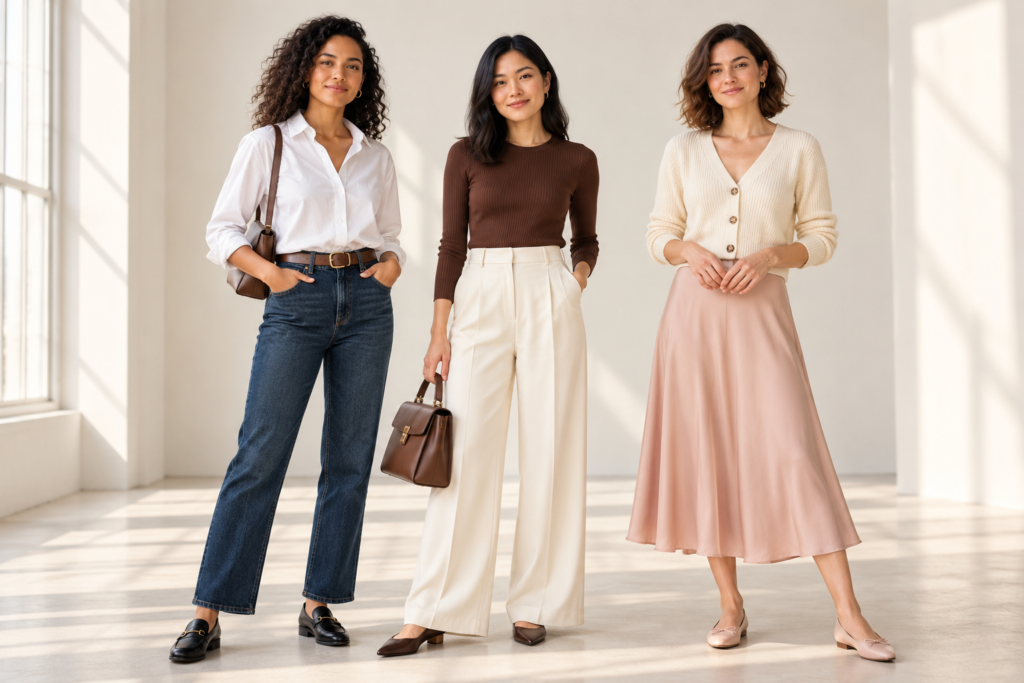
Classic and Timeless
Classic style emphasizes simple silhouettes, thoughtful tailoring, and pieces that remain useful beyond a single season.
Think white button-down shirts, straight-leg denim, tailored trousers, trench coats, and loafers.
Outfit formula: White shirt + dark straight-leg jeans + leather loafers + structured handbag.
Why it works: Clean lines and familiar proportions create an outfit that can move between casual and slightly dressier settings.
Shop the inspiration: Browse classic shirts at Uniqlo.
Minimalist and Modern
Minimalist fashion focuses on deliberate combinations, restrained details, and an edited color palette.
Typical pieces include wide-leg trousers, fitted knit tops, simple coats, and sleek shoes.
Outfit formula: Cream tailored trousers + chocolate-brown knit + pointed flats.
Why it works: The limited color palette lets the shapes and fabric textures become the focus.
Minimalism doesn’t require wearing only black, white, or beige. A minimalist wardrobe can include color while still feeling cohesive.
Casual and Relaxed
Casual style prioritizes ease of movement and clothing that feels natural throughout the day.
Consider comfortable denim, cotton T-shirts, relaxed shirts, lightweight jackets, and sneakers.
Outfit formula: Relaxed jeans + fitted white T-shirt + casual jacket + retro sneakers.
Why it works: A simple fitted top balances the volume of relaxed denim, while the jacket adds an intentional finishing layer.
Romantic and Feminine
Romantic style often features soft silhouettes, delicate textures, flowing fabrics, and expressive details.
You might gravitate toward midi skirts, ballet flats, lightweight cardigans, subtle prints, and soft blouses.
Outfit formula: Flowing midi skirt + fine-knit cardigan + ballet flats + small shoulder bag.
Why it works: Soft fabric movement and delicate accessories create a gentle, coordinated look.
Shop the inspiration: Explore Uniqlo’s cardigan collection.
Edgy and Contemporary
Edgy style uses contrast, interesting textures, darker colors, and distinctive accessories.
Think leather-look jackets, dark denim, chunky boots, fitted tops, and silver-tone jewelry.
Outfit formula: Black straight-leg jeans + fitted top + biker-style jacket + ankle boots.
Why it works: The strong jacket silhouette gives simple everyday basics a more expressive character.
Smart Casual and Polished
Smart casual combines relaxed pieces with more structured clothing.
A blazer over jeans, tailored trousers with sneakers, or a fine-knit top with loafers can all work.
Outfit formula: Beige blazer + white T-shirt + dark jeans + black loafers.
Why it works: Tailoring creates structure, while denim and a simple tee keep the outfit approachable.
Shop the inspiration: Explore H&M’s office and tailored clothing collection.
Which personal style feels most like you?
| Style | Key pieces | Overall feeling |
|---|---|---|
| Classic | Shirts, tailored trousers, loafers | Timeless and refined |
| Minimalist | Simple knits, clean silhouettes | Modern and understated |
| Casual | Denim, T-shirts, sneakers | Comfortable and effortless |
| Romantic | Midi skirts, cardigans, ballet flats | Soft and expressive |
| Edgy | Dark denim, statement jackets, boots | Bold and distinctive |
| Smart casual | Blazers, jeans, polished shoes | Relaxed but put-together |
You can blend two or three styles. A classic wardrobe with romantic accessories, for example, can feel more personal than following either aesthetic exactly.
4. Discover the Colors You Actually Enjoy Wearing
Color can make a wardrobe feel cohesive, but you don’t need to restrict yourself to a rigid seasonal color system.
Start with the colors you already wear frequently and feel comfortable in.

A practical wardrobe palette can include:
Base colors: Black, navy, cream, charcoal, white, or beige.
Supporting colors: Olive, chocolate brown, soft blue, burgundy, or muted green.
Accent colors: Red, cobalt, lavender, emerald, or any shade you personally love.
For example, someone who enjoys a relaxed, polished look might build around cream, navy, and chocolate brown, then introduce burgundy accessories.
Another person might prefer black and charcoal with bold red or silver accents.
Try the natural-light color test
Hold different colored garments near your face in natural daylight.
Notice which colors you enjoy wearing and how they coordinate with your existing clothing.
You don’t need to declare certain shades completely off-limits. Personal preference, lighting, makeup, and styling all influence how a color feels.
A color palette should simplify getting dressed, not make fashion restrictive.
5. Understand Fit and Proportions
Finding your personal style becomes much easier when you recognize which clothing proportions you enjoy.
Two people can wear the same basic outfit and create entirely different impressions by changing the fit.
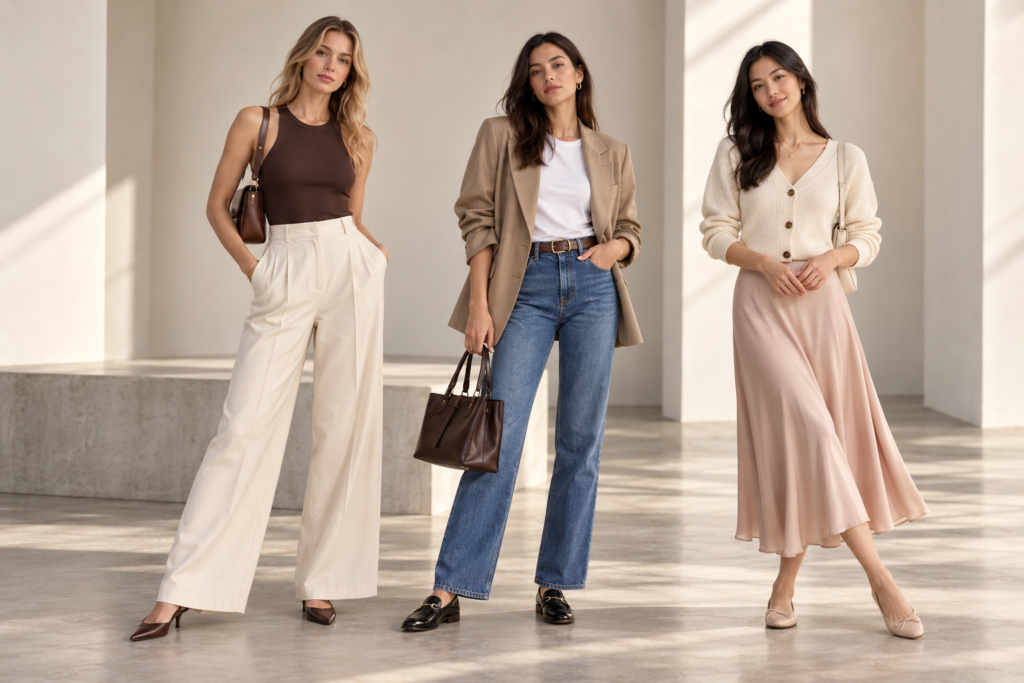
Experiment with volume
Try pairing:
- Wide-leg trousers with a fitted knit top
- Straight-leg jeans with an oversized blazer
- A flowing midi skirt with a shorter cardigan
- Relaxed trousers with a tucked-in shirt
These combinations create visual contrast between fitted and relaxed elements.
ways to style wide-leg jeans
But balanced proportions aren’t a requirement. Oversized clothing from head to toe can also look intentional when the lengths, fabric weights, and layering work together.
Pay attention to garment length
Notice where your jackets, shirts, skirts, and trousers end.
A cropped jacket may emphasize the waistline of high-rise trousers. A longer blazer can create a relaxed, tailored silhouette.
The best choice depends on the overall effect you want.
Comfort is part of good style
If a garment restricts your movement, needs constant adjustment, or feels uncomfortable after an hour, it may not deserve a permanent place in your wardrobe.
Fit isn’t about changing your body to suit clothing. It’s about choosing clothing that works for your body and preferences.
6. Build Your Own Outfit Formulas
An outfit formula is a reliable combination of clothing categories you can repeat with different pieces.
It takes some of the guesswork out of getting dressed.
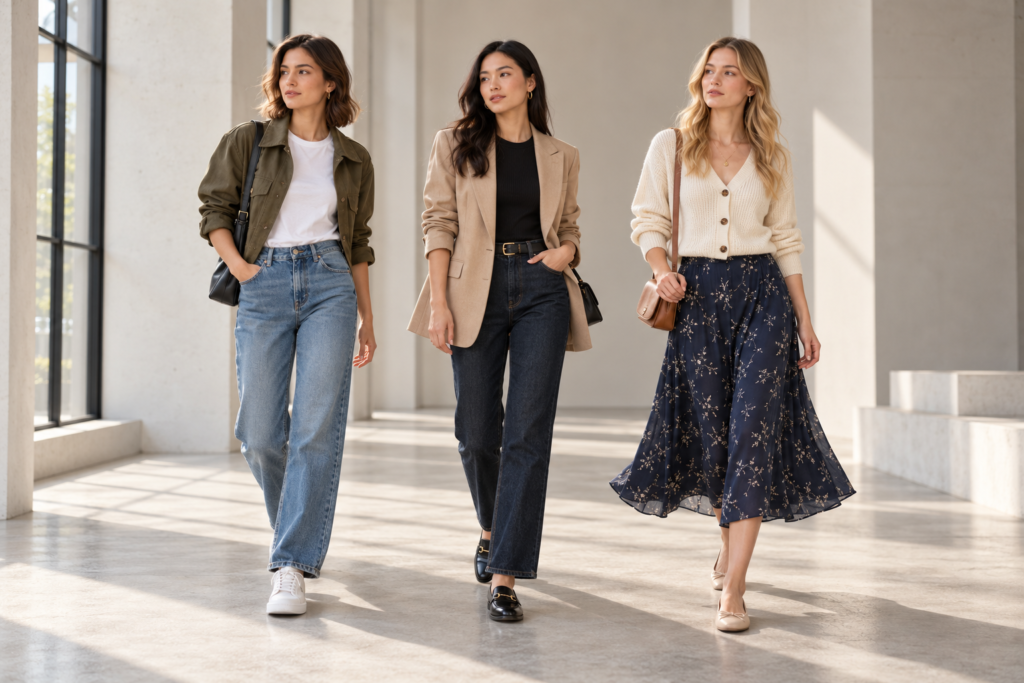
Here are five versatile examples.
Formula 1: Relaxed everyday
Straight-leg jeans + fitted T-shirt + lightweight jacket + sneakers.
Ideal for errands, casual lunches, and relaxed weekends.
Formula 2: Polished everyday
Tailored trousers + fine-knit top + loafers + structured bag.
A useful choice for casual offices, appointments, or lunch meetings.
Formula 3: Soft and feminine
Midi skirt + cardigan + ballet flats + simple jewelry.
Suitable for brunch, daytime gatherings, or casual dates.
Formula 4: Creative and contemporary
Dark jeans + statement jacket + ankle boots + distinctive accessories.
A good starting point for concerts, evening plans, and creative workplaces.
Formula 5: Easy warm-weather style
Linen trousers + sleeveless top + flat sandals + woven tote.
Comfortable for warm days when breathable clothing is a priority.
The goal isn’t to wear the same outfit every day. It’s to recognize combinations that consistently work for you.
7. Build a Wardrobe Around Your Real Lifestyle
A beautiful wardrobe is only useful if it supports your daily life.
Consider how you spend a typical week.
Someone working in a formal office may need tailored separates, polished shoes, and practical layering pieces.
Someone working from home might prioritize comfortable trousers, soft knits, and a few versatile outfits for meetings or outings.
If you spend much of your time walking or commuting, footwear comfort and weather-appropriate layers may matter more than statement accessories.

A simple wardrobe-planning exercise
Write down your five most common activities.
For each activity, identify an outfit you already own or could assemble from existing pieces.
This helps reveal genuine wardrobe gaps.
You may discover that you don’t need more evening dresses. You need comfortable everyday shoes that coordinate with several outfits.
That’s a much more useful insight than buying whatever is trending.
8. Find Your Personal Style on a Budget
Developing your style doesn’t require a shopping spree.
In fact, experimenting with existing clothes before purchasing anything can help you avoid expensive mistakes.
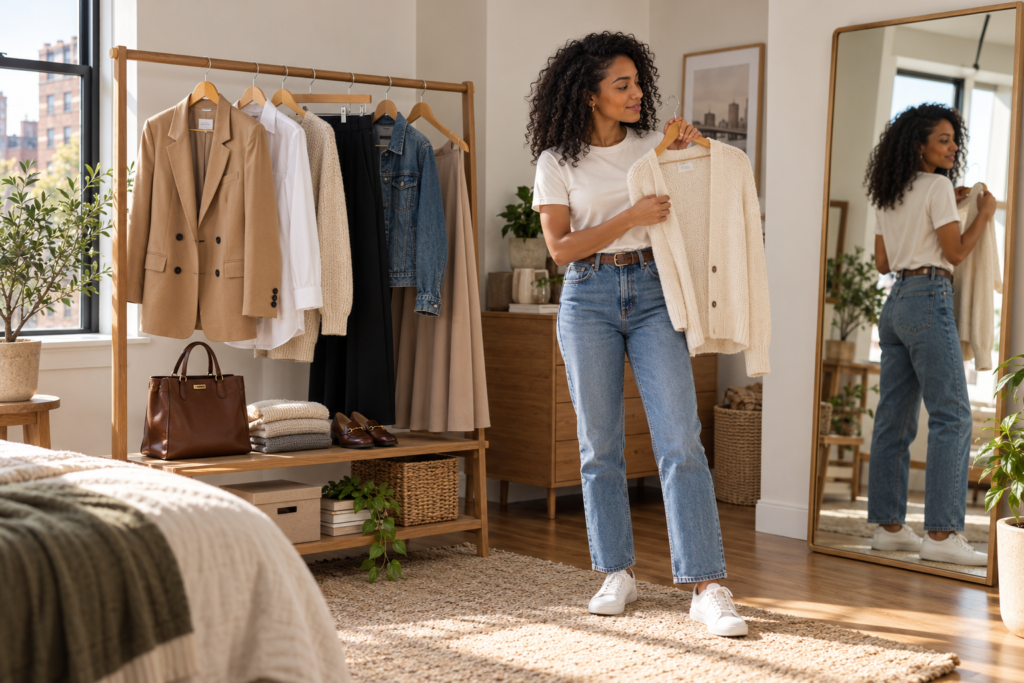
Shop your own closet first
Try wearing familiar pieces in unfamiliar combinations.
Layer a button-down over a fitted tank. Pair dress trousers with sneakers. Wear a blazer with jeans instead of matching trousers.
You may find that your wardrobe already contains more possibilities than you realized.
Identify genuine gaps
Before buying something, ask:
- Can I wear this with at least three items I already own?
- Does it suit my actual lifestyle?
- Am I comfortable in its fit and fabric?
- Would I still want it without a discount?
- Am I buying it because I love it or because I’ve seen it repeatedly online?
These aren’t absolute rules, but they can make shopping more intentional.
Consider secondhand clothing and alterations
Thrift stores, resale platforms, clothing swaps, and local tailors can offer useful alternatives to buying everything new.
Sometimes adjusting the hem of trousers or improving the fit of a jacket makes a greater difference than purchasing another item.
9. Create a Signature Style Without Looking Repetitive
A signature style is a collection of recognizable preferences that appear consistently in your outfits.
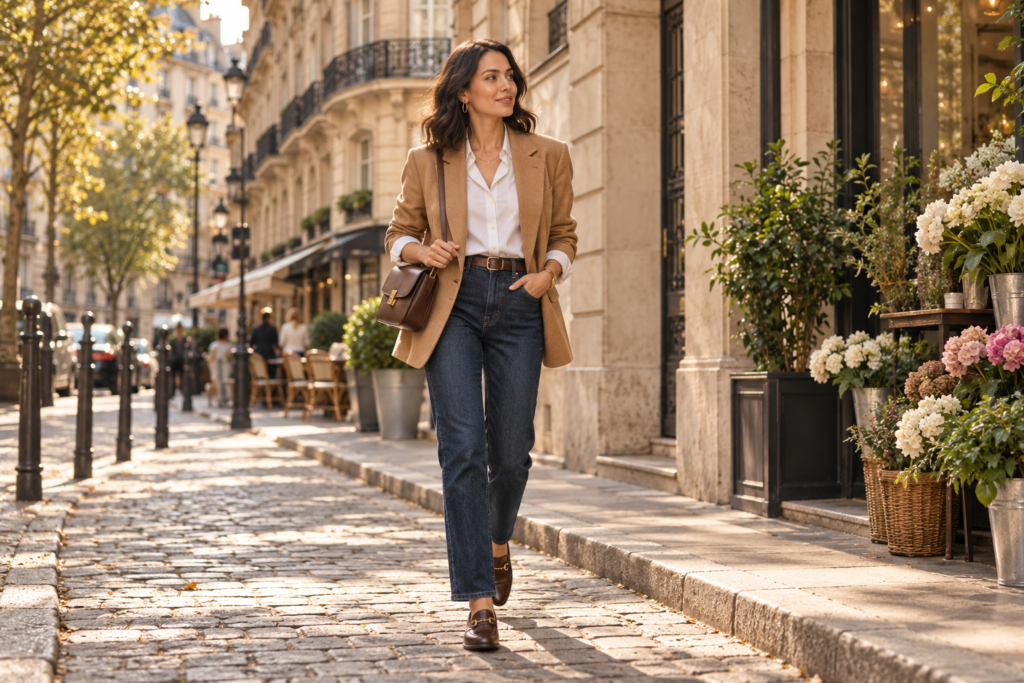
It might be:
- Gold-tone jewelry with neutral clothing
- Oversized blazers and straight-leg denim
- Colorful scarves with simple outfits
- Tailored trousers and comfortable flats
- Monochromatic outfits with interesting textures
You don’t need a signature accessory or a uniform.
The point is to identify details you genuinely enjoy repeating.
Over time, those choices can make your wardrobe feel more cohesive.
10. Adjust Your Personal Style for Every Season
Your core style can remain consistent even as the weather changes.

Spring
Experiment with lightweight jackets, cotton shirts, breathable trousers, and comfortable flats.
Summer
Choose fabrics and silhouettes suited to the temperature, such as linen blends, loose cotton pieces, lightweight dresses, and sandals.
Fall
Introduce knitwear, denim, loafers, ankle boots, and layering pieces.
Winter
Adapt your preferred silhouettes with insulating coats, sweaters, weather-appropriate footwear, and practical accessories.
Climate matters more than the calendar. A winter wardrobe in Toronto may need substantial insulation, while winter dressing in parts of Australia can call for much lighter layers.
The key is to maintain the colors, shapes, and details you enjoy while changing fabric weights and layering.
11. Avoid These Common Personal Style Mistakes
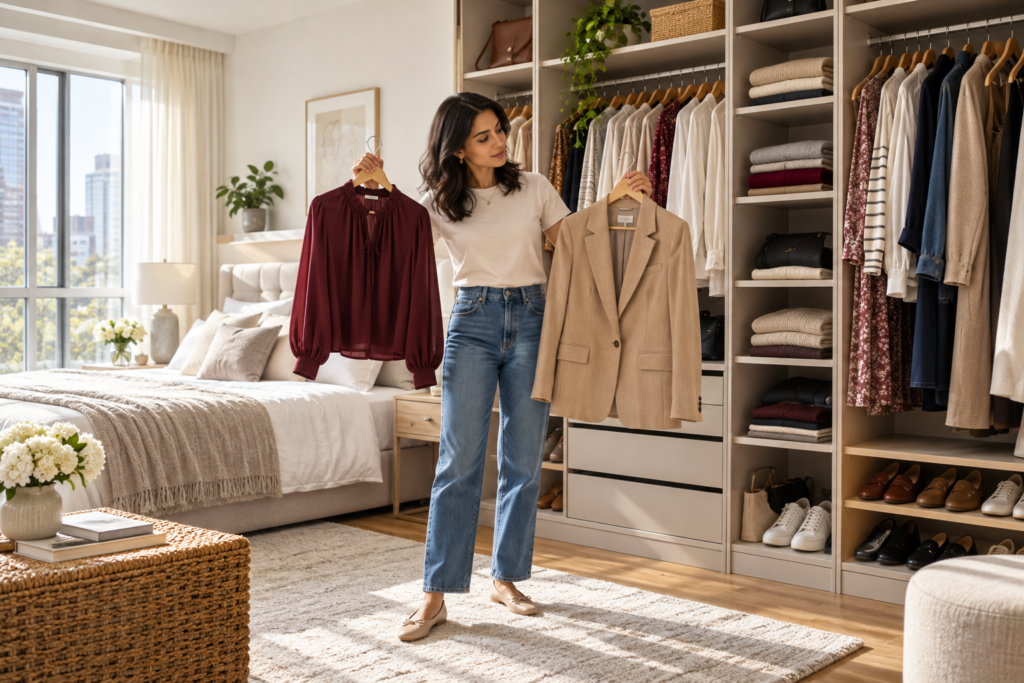
Buying an entire aesthetic at once. You may love the appearance of a trend without enjoying how it feels in everyday life. Experiment first.
Ignoring your routine. A closet filled with beautiful occasionwear won’t help much if most of your week requires casual clothing.
Keeping uncomfortable clothes out of obligation. Price, brand, and popularity don’t automatically make a garment right for you.
Copying influencers exactly. Their climate, lifestyle, body proportions, and preferences may be different from yours.
Treating style rules as permanent laws. You can mix metals, combine loose silhouettes, wear unexpected colors, and change your preferences over time.
Buying too many basics without a plan. A wardrobe full of nearly identical essentials can still feel uninspiring. Choose basics that support outfits you genuinely want to wear.
12. The Seven-Day Personal Style Challenge
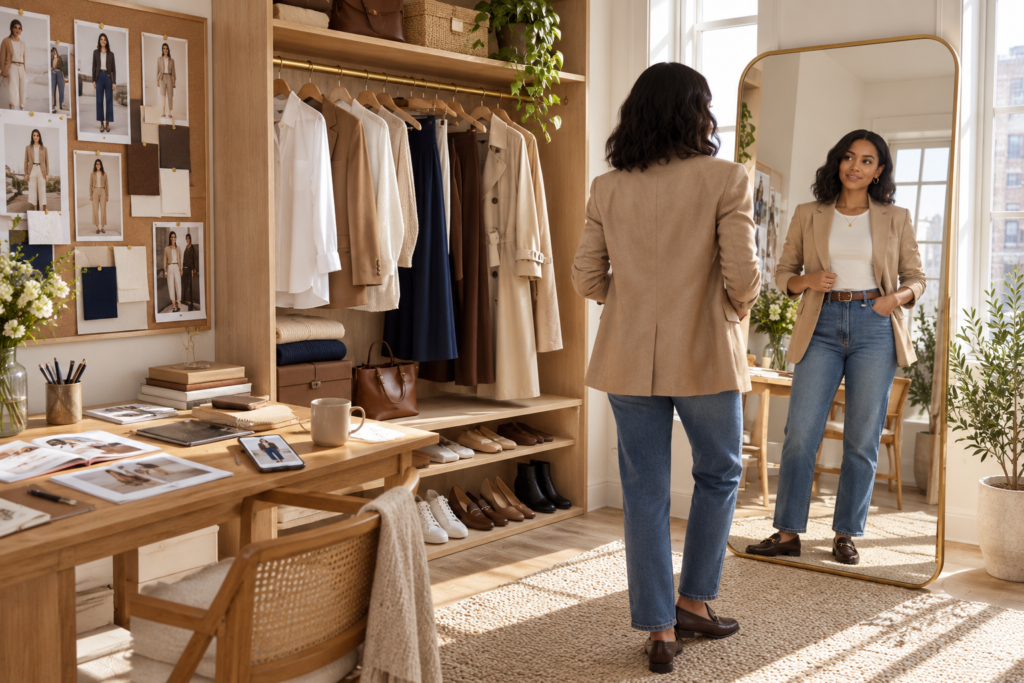
If you’re unsure where to begin, try this practical exercise using your existing wardrobe.
| Day | Your task | What you’ll learn |
|---|---|---|
| Day 1 | Select five favorite garments | Your existing preferences |
| Day 2 | Create a 15-image mood board | Your visual inspiration |
| Day 3 | Choose three style words | Your preferred aesthetic |
| Day 4 | Experiment with five outfits | Your favorite combinations |
| Day 5 | Test colors and silhouettes | Your comfort and fit preferences |
| Day 6 | Photograph three successful looks | Your repeatable outfit formulas |
| Day 7 | Write a short wardrobe wish list | Your actual clothing gaps |
At the end of the week, save your favorite outfit photographs in a dedicated album.
The next time you’re unsure what to wear, you’ll have a personal reference library based on real outfits rather than idealized inspiration.
Frequently Asked Questions
How do I find my personal style if I have no idea where to start?
Begin with three outfits you already enjoy wearing. Identify their common colors, shapes, and overall mood. Use those observations to guide small experiments with your existing clothes before shopping.
Can I have more than one fashion aesthetic?
Absolutely. Personal style often combines several influences. You might prefer minimalist outfits during the week and romantic or edgy looks on weekends. Consistency isn’t the same as wearing one aesthetic exclusively.
How long does it take to develop a personal style?
There is no fixed timeline. A week of focused experimentation can reveal useful preferences, but your style will continue to develop as your lifestyle, tastes, and needs change.
How can I find my style without buying new clothes?
Create new combinations from existing pieces, experiment with tucking and layering, change accessories, and photograph your favorite results. Focus on understanding your preferences before purchasing anything.
Does personal style change with age?
It can, but it doesn’t have to follow age-based rules. Your preferences may evolve with your career, lifestyle, comfort needs, or interests. Wear what feels appropriate to you rather than following arbitrary age restrictions.
What if I like every fashion style?
Look for the elements that repeat across different aesthetics. You might love the colors of romantic fashion, the silhouettes of minimalism, and the accessories of edgy style. Combine those elements into outfits that feel natural to you.
Do I need a capsule wardrobe to have personal style?
No. A capsule wardrobe can help some people simplify clothing choices, but personal style doesn’t require a limited number of garments. You can enjoy a varied, expressive wardrobe and still have a recognizable sense of style.
Final Thoughts: Your Style Should Feel Like You
Finding your personal fashion style isn’t about becoming the best-dressed person in the room or recreating every outfit you save online.
It’s about making clothing decisions that feel more natural, useful, and expressive.
Start with the pieces you love. Notice the details you repeat. Experiment with combinations that suit your daily life. Build around comfort, fit, and personal preference rather than pressure to follow every new trend.
Most importantly, allow your style to evolve.
The best personal style isn’t the one that follows the most rules. It’s the one that helps you feel comfortable being yourself.
WhatsMyTrend — Practical fashion inspiration for real life.


1 thought on “How to Find Your Personal Fashion Style: A Practical Step-by-Step Guide”