
A useful wardrobe makes an ordinary Tuesday easier. Your shirts work with your trousers, your shoes suit the day, and getting dressed rarely depends on finding one particular item in the laundry basket.
The essential clothes every man should own usually start with plain T-shirts, a versatile collared shirt, jeans, non-denim trousers, a comfortable knit, and outerwear suited to the weather. Add dependable footwear and enough fresh base layers to support your routine. A blazer, suit, or heavy coat earns its place when your life calls for it.
The aim is to understand what each piece contributes, so you can choose the right version and leave unnecessary purchases behind.
Start With the Week You Actually Dress For
Look at your next seven days before looking at a shopping list. A cycling commute, client meetings, outdoor work, and days at home each create different priorities.
Choose a small group of colors you already enjoy. Navy, gray, off-white, olive, brown, and black offer plenty of combinations, but you do not need all of them.
A navy-and-stone wardrobe can feel cohesive with brown shoes. Black-and-gray outfits may lead you toward black footwear. Our guide to matching clothing colors explains how contrast and color balance help individual pieces work together.
Keep clothes that fit, feel good, and support those combinations, even when their colors differ from a checklist.
Everyday Clothes That Earn Their Place
1. Plain T-Shirts With Enough Substance to Wear Alone
A good everyday T-shirt has a comfortable neckline and fabric that falls without unwanted clinging. Check pale shirts in daylight: some undershirts feel too sheer to wear alone.
Start with a light and a dark option if both suit your wardrobe. Off-white creates contrast beneath a navy overshirt, while charcoal blends quietly into black jeans.
Pay attention to length. With straight trousers, a relaxed T-shirt often works well when its hem finishes around the upper hip. A much longer hem changes the proportions and may bunch beneath shorter jackets.
Buy multiples only after trying the first one through your usual wash routine.

2. An Oxford Shirt That Works Tucked or Untucked
Oxford cloth has a visible, textured weave that gives a button-front shirt a less formal appearance than smooth dress shirting. White and pale blue are useful starting points, though a restrained stripe can do the same job.
The placket should lie reasonably flat without pulling between buttons. If you plan to wear the shirt open over a T-shirt, allow enough room across your upper back to reach forward comfortably.

An untucked hem should not hide most of the trouser front. A longer shirt tail is often better tucked, especially when you want a cleaner outline beneath a sweater or jacket.
Try a pale-blue Oxford with dark jeans and brown shoes. The shirt adds definition around the face while the denim keeps the outfit relaxed.
Shop the inspiration: Explore the UNIQLO SUPIMA Cotton T-Shirt and UNIQLO Oxford Slim Shirt on the US website. Compare garment measurements rather than relying on the fit name.
For regional browsing, see UNIQLO’s men’s T-shirt collections in Canada and Australia. Assortments vary by country.
3. Dark Jeans With a Leg Shape You Enjoy Wearing
Dark indigo and even black denim can cover a wide range of everyday situations. Choose whichever works better with your existing tops and shoes; owning both is optional.
Start with a comfortable rise, enough room to sit, and a hem that works over your shoes. If the waistband fits but your thighs feel restricted, try a different cut before going up a size.
A straight leg provides a useful starting point because it works with several shoe shapes. A gentle taper can also work, provided the lower leg does not feel restrictive or catch awkwardly on your boots.
For a quiet outfit, pair black jeans with a gray knit and black footwear. For more contrast, add an off-white T-shirt and an olive jacket.
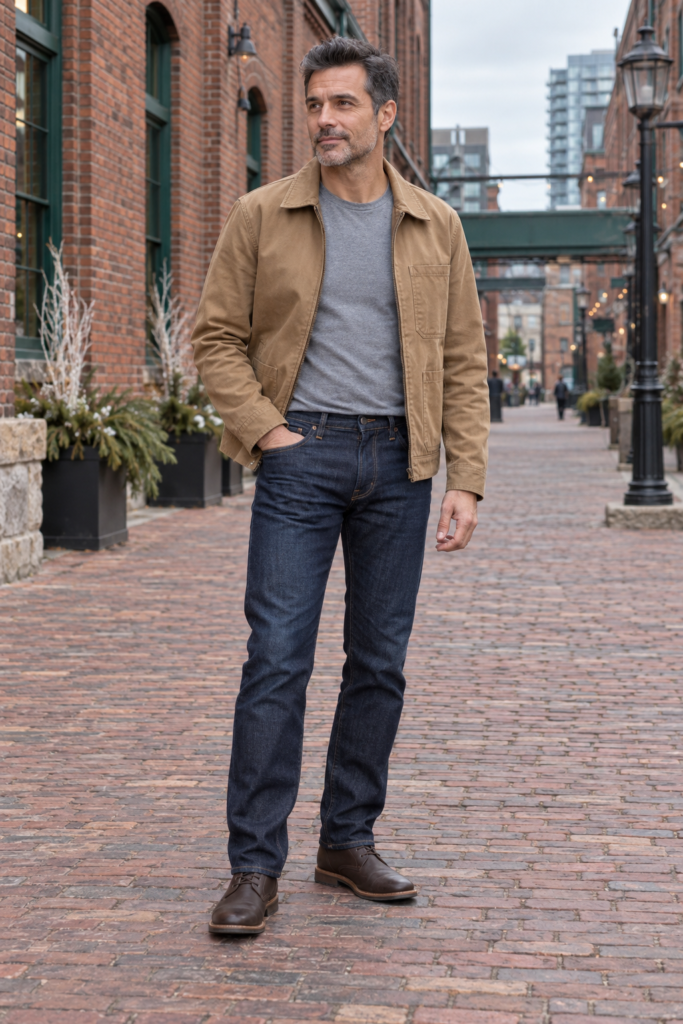
Our black jeans outfit guide for men offers more combinations using shirts, sweaters, jackets, and different shoes.
Browse denim: Explore Levi’s regular-fit jeans on the US website. Check the fabric, rise, inseam, and care guidance for the individual pair you choose.
4. Chinos or Another Useful Pair of Non-Denim Trousers
Chinos offer an alternative when jeans feel too casual or heavy. Soft tailored trousers or comfortable pull-on styles may suit your routine better.
Stone chinos brighten a navy sweater. Olive works naturally with cream and brown. If pale trousers are impractical for your commute or workplace, choose navy, gray, or black instead.

Look for pockets that sit comfortably without flaring open and a rise that lets you bend without continually adjusting the waistband.
A small amount of stretch may help movement, although fabric composition alone does not tell you how a pair will fit. The cut through the seat and thighs matters just as much.
Shop the inspiration: Dockers Original Chinos, Straight Fit, on the UK website, provide a darker option in the checked black colorway.
5. A Sweater That Layers Without Crowding Your Jacket
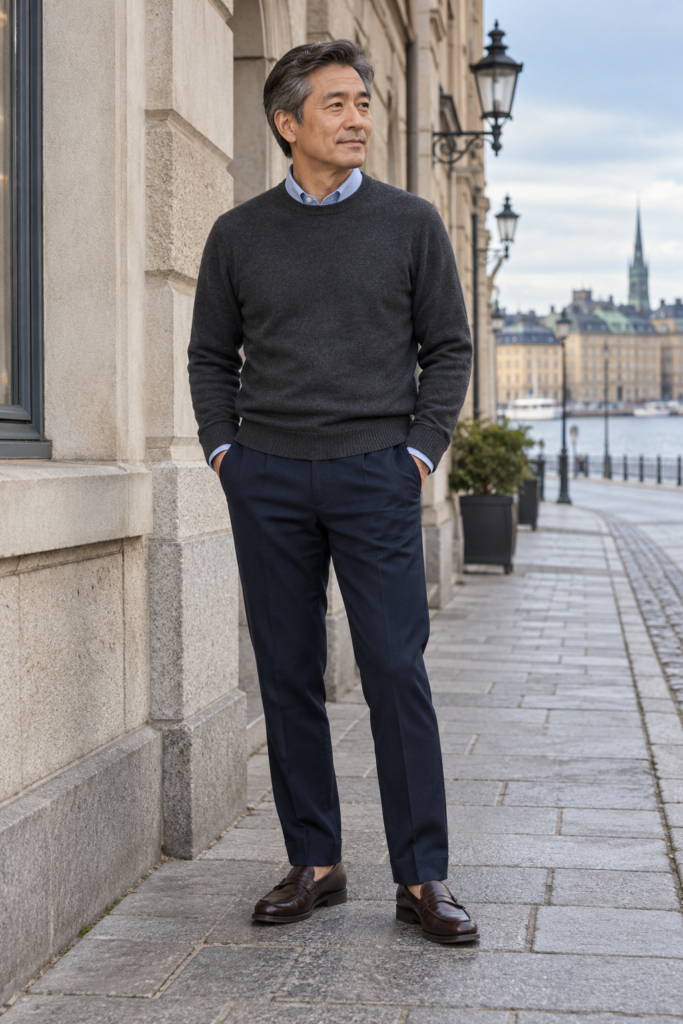
A fine or medium knit is useful because it can sit over a T-shirt, under a jacket, or on its own.
Choose cotton, wool, or a blend according to temperature, skin comfort, and the care routine you can maintain. A particular fiber is only helpful if you enjoy wearing and looking after it.
Try a charcoal crewneck with a white shirt collar showing above it, or a navy knit with stone chinos.
A fine knit creates a cleaner outline beneath a blazer. A thicker sweater gives jeans and substantial shoes more visual balance.
Read the care label before buying. For washable wool sweaters, Woolmark recommends drying flat unless the garment’s care instructions permit tumble drying. A sweater becomes less useful if its maintenance does not fit your life.
Shop the inspiration: Consider the UNIQLO Merino Crew Neck Sweater on the US website. Check the current garment measurements and item-specific care instructions.
6. A Second Shirt Chosen for Your Climate and Routine
Your next shirt should solve a different problem from the Oxford.
In warm weather, that might be a lightweight linen or cotton-linen shirt. For a casual office, a polo provides a collar without requiring a button-front shirt. In a cool climate, a substantial flannel may receive more wear.
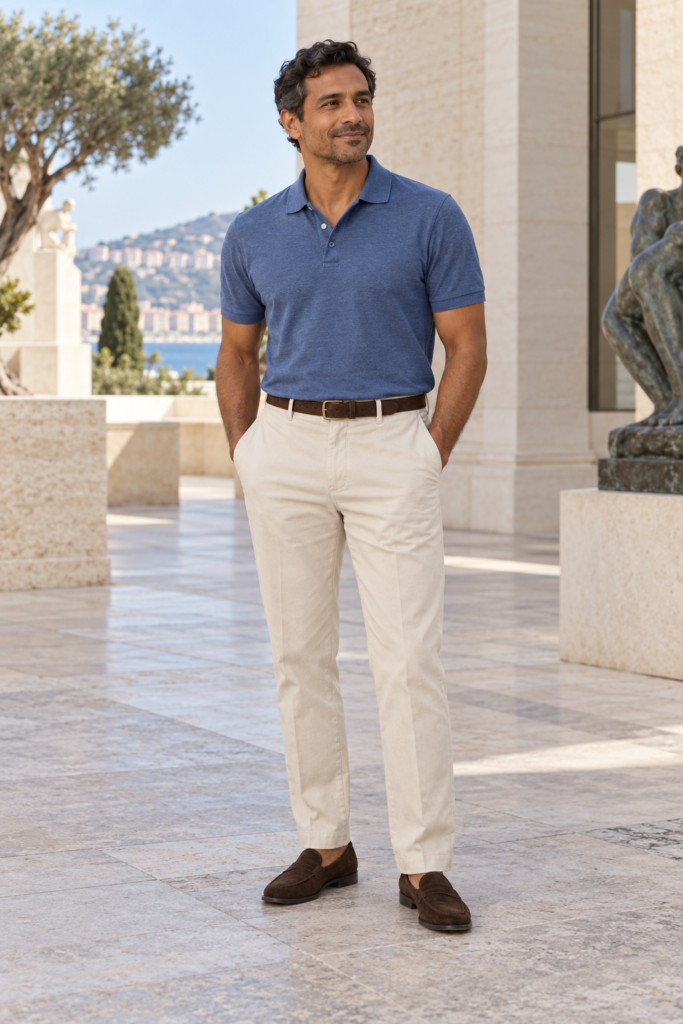
Notice fabric weight and openness as well as the fiber label. A loosely woven shirt feels different from a dense one, even when both are cotton.
Choose the option you can imagine wearing on a specific day. There is little value in buying a linen shirt for a lifestyle spent mostly in cold weather or heavily air-conditioned rooms.
Layers Worth Choosing for a Reason
7. A Light Casual Jacket
A chore jacket, overshirt, Harrington, denim jacket, or simple bomber gives a T-shirt-and-trousers outfit another layer of shape.
Pick one that fits the rest of your clothes.
An olive chore jacket works with an off-white T-shirt and indigo jeans. A short navy jacket sits neatly above higher-rise chinos. A denim jacket can introduce texture when the trousers are smoother and less structured.
Test sleeve and upper-back room over your usual sweater. A jacket that feels comfortable over a thin T-shirt may become restrictive once you add another layer.
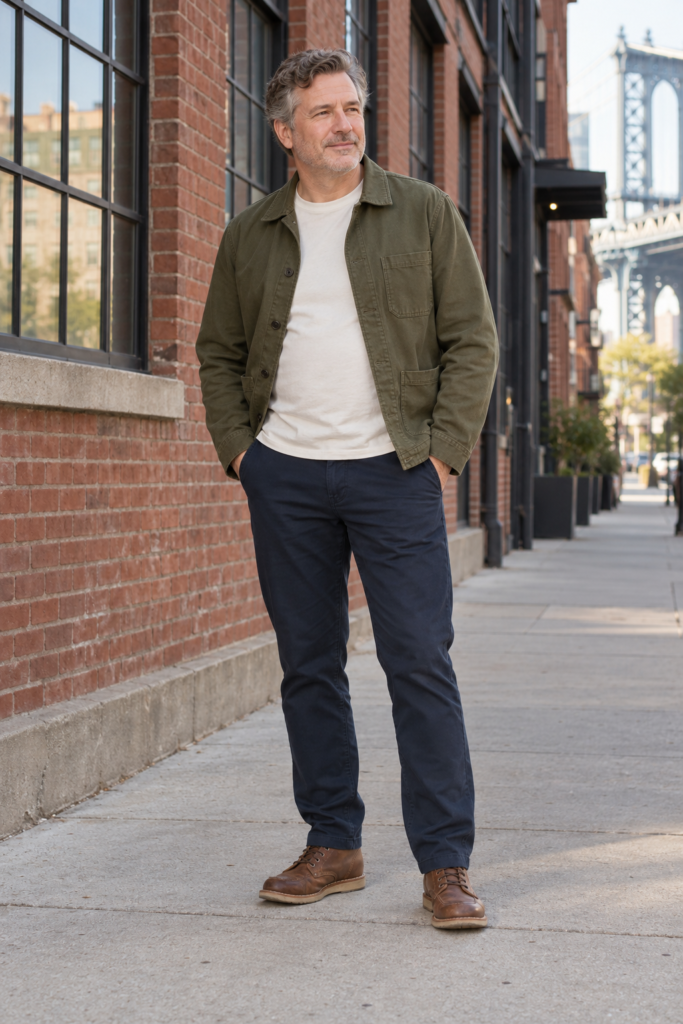
Choose one useful style first. Add another only when it serves a different purpose.
8. A Blazer, When Your Calendar Gives It a Job
A blazer can wait if your routine rarely calls for one.
When it does, choose a separate jacket whose texture works with your trousers. A soft shoulder and matte surface often sit more comfortably alongside chinos than a sharply structured, shiny suit jacket.

Try navy with gray trousers, or brown in a warmer wardrobe palette.
The lapels should lie reasonably flat. You should be able to move comfortably without the fastened fronts pulling sharply across your torso.
Our men’s smart casual outfit guide explains how to balance relaxed clothes with more structured pieces.
Always follow the actual workplace or event dress code. A casual blazer does not automatically make jeans suitable for every occasion.
9. Outerwear That Deals With Your Actual Weather
An overcoat, insulated parka, rain shell, and windbreaker solve different problems.
Choose for your usual conditions, including enough room for the layers underneath.
For a wet commute, investigate the manufacturer’s waterproof construction and care guidance instead of assuming any coated jacket will do.
For prolonged cold, prioritize suitable insulation and coverage. An uninsulated rain shell is not a substitute for a winter coat.
Consider length, too. A longer coat may provide useful coverage over tailoring, while a shorter jacket can be easier for a casual routine.
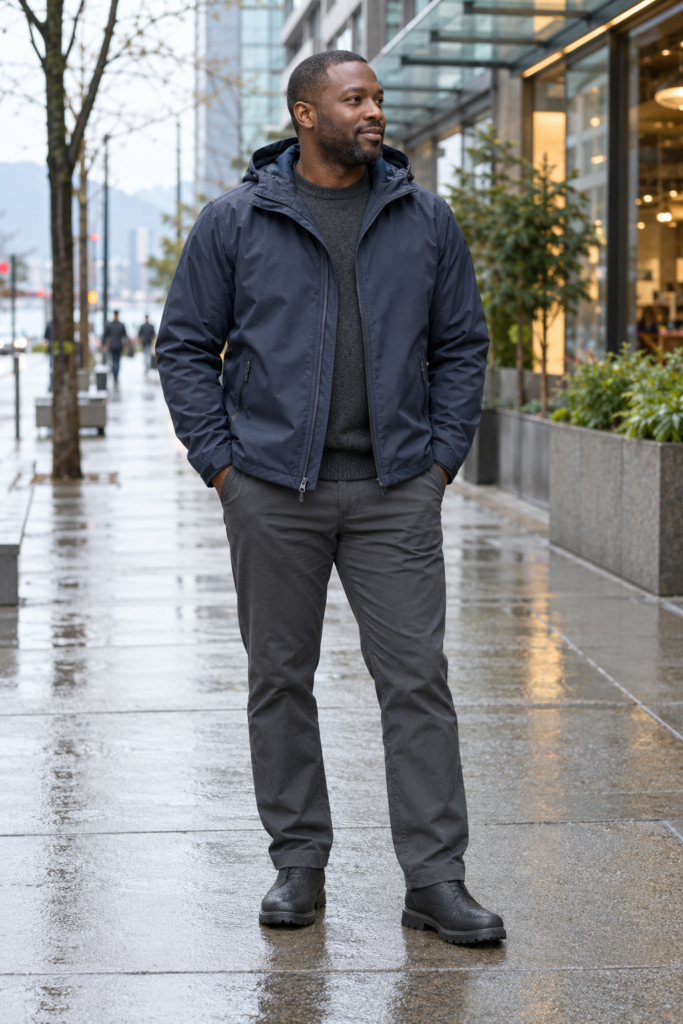
Shop the inspiration: The Patagonia Men’s Torrentshell 3L Rain Jacket, on the US website, is a three-layer waterproof/breathable shell. Treat it as rain protection and plan warmth separately.
Shoes and the Less Visible Essentials
10. Everyday Sneakers You Can Comfortably Walk In
Simple sneakers work with jeans, chinos, shorts, and some relaxed trousers.
White creates a distinct edge beneath a dark outfit. Off-white, gray, or black may be easier to maintain in your routine.
Prioritize comfort, width, and support. Low-profile sneakers look light beneath tapered trousers, while fuller shoes can balance wider legs.
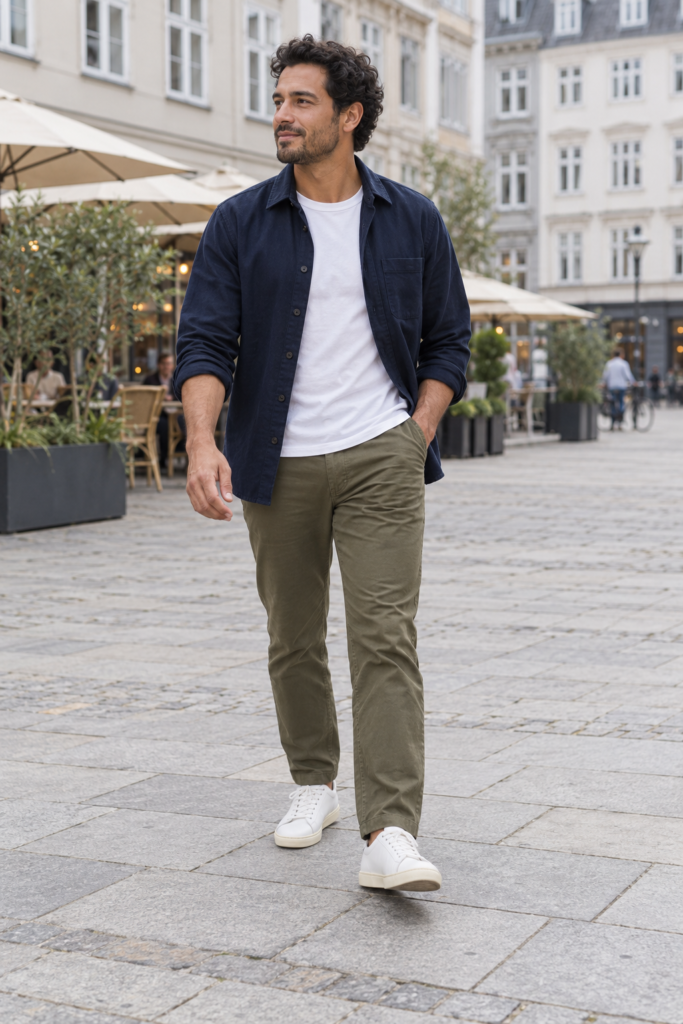
If you use orthotics, choose shoes that accommodate them. Build the outfit around footwear that works for your feet.
Keep activity-specific shoes for the activities that need them. One pair does not have to handle exercise, long walks, office days, and evenings out equally well.
11. One Pair of Shoes for Smarter Occasions
Choose the style your actual occasions require: loafers for relaxed polish, derbies for many office settings, or simple boots for casual cool-weather outfits.
Leather is one option. Choose another material if it better suits your preferences.
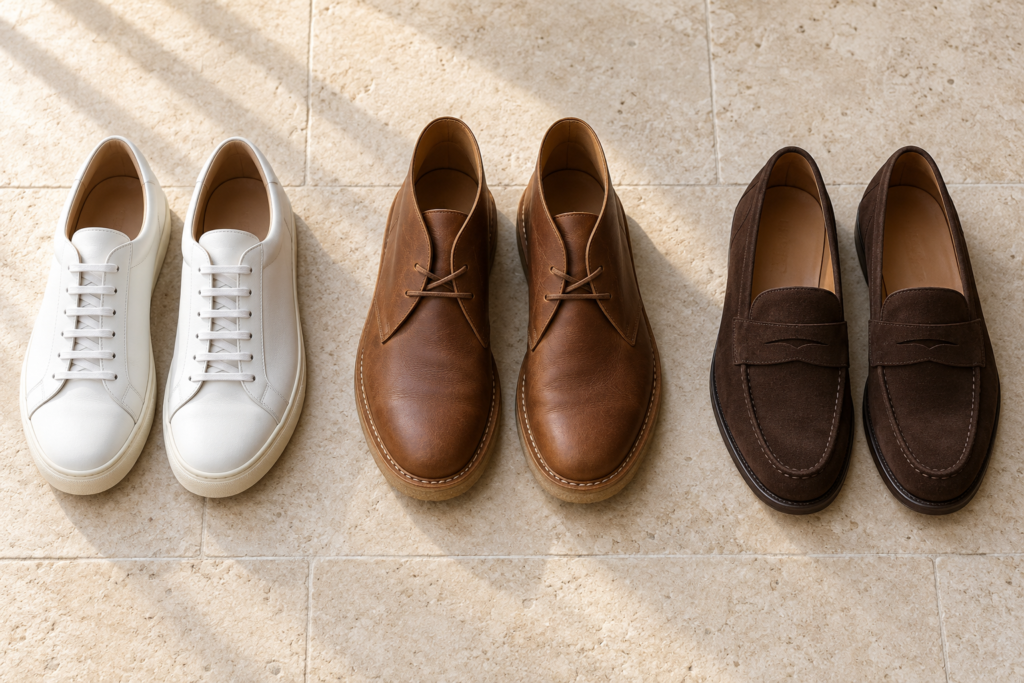
A suede loafer brings texture to cotton trousers. Brown desert boots work with denim and casual chinos. Neither automatically replaces formal dress shoes, and ordinary casual soles should not be assumed suitable for ice or heavy rain.
If an invitation requires formal footwear, treat that as a separate requirement rather than stretching one pair beyond its purpose.
Shop the inspiration: Explore the VEJA Campo Leather White Natural for a white sneaker and the Clarks Desert Boot Beeswax for a brown casual boot. Both links lead to US product pages.
12. Comfortable Underwear, Useful Socks, and Simple Finishing Pieces
Keep enough underwear and socks to cover the interval between laundry days, plus a practical reserve.

Check waistband comfort, seams, and whether socks stay in place inside the shoes you wear most. The pieces closest to your skin deserve as much attention as the visible layers.
An undershirt can help under sheer shirting if you like wearing one.
Add a belt when useful, but check the trouser fit if it does all the work of holding up the waistband.
Activity-specific clothes, sleepwear, and work uniforms deserve their own space in the plan. They need to function even if they never appear in an outfit photograph.
Adjust Your Wardrobe to Your Climate
Season names are less useful than the conditions outside your door.

October in Sydney calls for different decisions from October in Montreal. Indoor heating or air-conditioning can complicate either wardrobe.
| Conditions | Prioritize | Add Only When Useful |
|---|---|---|
| Hot or humid days | Lightweight shirts, comfortable trousers, washable basics | Shorts when activities and dress codes permit them |
| Mild, changeable weather | An overshirt or light jacket, a fine knit, adaptable layers | A second casual jacket with a different purpose |
| Frequent rain | Suitable rain protection and footwear | A dressier coat for separate occasions |
| Sustained cold | Insulated outerwear, warm layers, practical winter footwear | A wool overcoat for occasions it can comfortably cover |
Shorts deserve a place when you regularly wear them. Look for a length that feels comfortable standing and sitting, with enough room through the thigh to move naturally.
The same principle applies to winter accessories, thermal layers, and weather-specific footwear: buy them because your conditions require them.
Five Outfits You Can Build From These Foundations
| Occasion | Outfit | Why It Works |
|---|---|---|
| Everyday errands | Off-white T-shirt, dark jeans, olive overshirt, sneakers | The light T-shirt separates the darker layers, while the overshirt adds shape. |
| Relaxed office, where permitted | Pale-blue Oxford, navy chinos, brown derbies | The collar and shoes provide structure without requiring a suit. |
| Dinner | Navy blazer, white Oxford, gray trousers, dark loafers | Different jacket and trouser colors make the separates feel deliberate. |
| Warm weekend | Light linen shirt, stone shorts, simple sneakers | Lightweight fabric and an open silhouette suit an informal day. |
| Cool day | Charcoal knit, black jeans, brown boots, suitable coat | Tonal clothing provides a quiet base for the warmer boot color. |
Use these combinations as starting points. Change the cut, color, or footwear when another version better suits your body, comfort, or plans.
What to Buy First When Your Budget Is Limited
Begin with the gap that causes the most trouble.
If you have plenty of tops but no comfortable trousers, another T-shirt will not make mornings easier.
Restore everyday foundations first: base layers, useful trousers, comfortable shoes, and coordinating tops. Address weather protection and missing layers next.
Let urgency change that order when necessary. A work jacket you need immediately may deserve priority over a second pair of jeans.
Keep money aside for straightforward alterations, such as shortening a hem, when a garment otherwise fits well.
Compare secondhand options where suitable, checking condition, measurements, and return terms. A lower price is only helpful when the piece earns regular wear.
Before buying, plan two outfits with the proposed addition. Our guide to building a capsule wardrobe from scratch helps you organize what you own and identify meaningful gaps.
The Fit Check That Prevents Unnecessary Purchases
Try clothes in motion, with the layers and shoes you expect to wear.
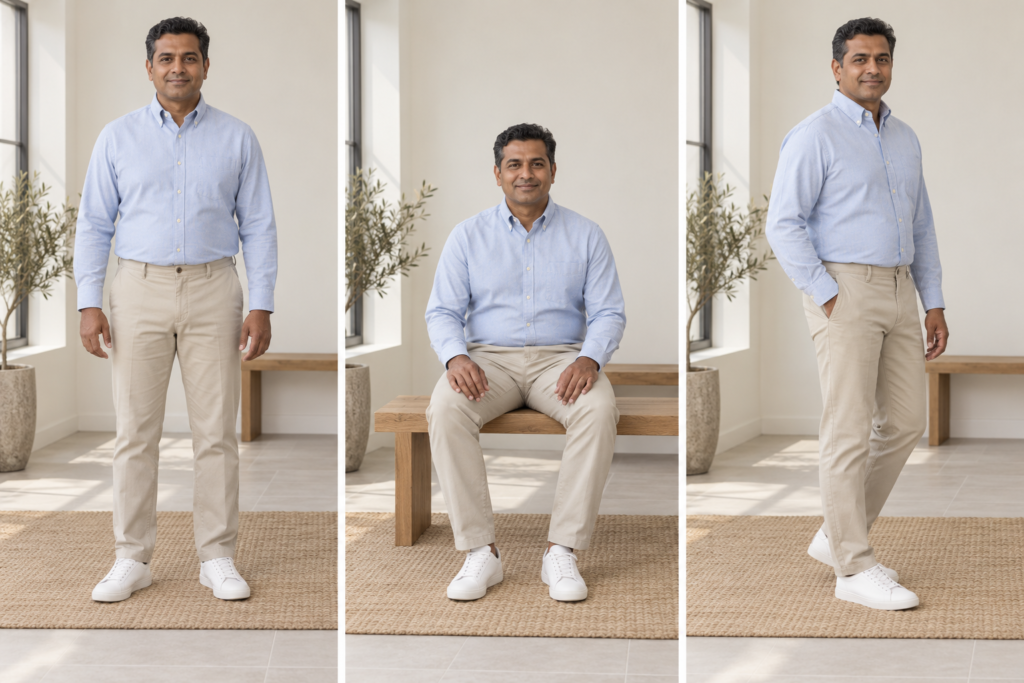
- Sit and reach. Check the waistband, thighs, upper back, and sleeves rather than judging the standing mirror view alone.
- Look at the whole outline. A long shirt, low-rise trousers, and a short jacket create a different proportion from a tucked shirt and higher rise. Choose the balance you enjoy.
- Check the care commitment. A garment you avoid washing or maintaining may spend more time in the closet than in your rotation.
- Choose fabric for its role. Thin trousers can look overwhelmed by a bulky winter boot, while heavier denim can carry a more substantial shoe.
- Compare measurements between styles. A familiar size label does not guarantee a familiar fit.
Neither a higher price nor a particular fiber guarantees that a garment will suit you. Comfort, construction, appearance, and usefulness need to work together.
Frequently Asked Questions
How many clothes does a man actually need?
Count your laundry interval, activities, climate, and dress requirements. Keep enough clean base layers and everyday outfits to cover that cycle, plus the specialized pieces you use. A fixed total cannot account for every lifestyle.
Does every man need a suit?
A suit is useful when work or occasions require one. For infrequent events, consider the dress code, fitting time, and whether borrowing or renting is practical. A blazer cannot replace a specifically required suit.
Which colors should I buy first?
Choose colors that connect to what you already own. A smaller selection can work better than buying one of everything. Include shoes and outerwear when planning the palette, since they affect the complete outfit.
Can I build a useful wardrobe on a small budget?
Yes. Keep serviceable pieces, fix the most disruptive gaps first, and judge purchases by fit and usefulness. Buying gradually also gives you time to notice whether a garment works before purchasing duplicates.
Do I need every item in this guide?
Use the guide to identify useful roles. A warm climate may remove the need for a heavy coat, while a casual routine may not justify a blazer. Let your activities, preferences, and dress requirements decide.
Make Tomorrow’s Outfit Easier
Choose one day you often struggle to dress for and put together its complete outfit tonight, including shoes and outerwear.
The missing piece will be much clearer than it is when you browse a page of individual products.
Build from that observation. If you are unsure which shapes or colors feel like you, our guide to finding your personal style can help you recognize the clothes you want to wear repeatedly.
A successful wardrobe earns its value on those ordinary days.