

Smart casual is one of those dress codes that sounds simple until you’re standing in front of your closet wondering whether jeans are too relaxed or a blazer looks too formal.
The good news? Dressing smart casual doesn’t mean buying a completely new wardrobe. It’s about combining polished pieces with comfortable everyday clothing so your outfit feels intentional without looking overdressed.
To dress smart casual as a woman, start with one polished piece—such as tailored trousers, a blazer, a crisp shirt, or a structured skirt—and balance it with relaxed essentials. Think straight-leg jeans with a blazer, wide-leg trousers with a fitted knit, or a midi dress with loafers.
Whether you’re dressing for work, a dinner reservation, a casual meeting, or a weekend gathering, these 12 outfit ideas will help you find the right balance.
What Does Smart Casual Mean for Women?
Smart casual is a dress code that sits between everyday casual clothing and more formal business attire.
It combines the neat appearance of tailored clothing with the ease of relaxed pieces. The goal isn’t to look corporate or overly dressed up. It’s to appear comfortable, confident, and appropriately polished for the occasion.
For example:
- A blazer with straight-leg jeans and loafers is smart casual.
- Tailored trousers with a simple T-shirt and clean sneakers can be smart casual.
- A midi dress with a cardigan and ankle boots is smart casual.
- A graphic T-shirt with distressed shorts and flip-flops is generally too casual for settings with a smart casual dress code.
The exact interpretation depends on where you’re going. A creative workplace might welcome dark denim and sneakers, while a restaurant or professional event may expect dressier footwear and more tailored clothing.
Smart Casual vs. Business Casual
Although these dress codes overlap, they aren’t identical.
| Smart Casual | Business Casual |
|---|---|
| More flexibility with denim | Denim may be restricted |
| Clean sneakers may be acceptable | Loafers and dress shoes are safer |
| Relaxed tailoring works well | More structured pieces are common |
| Suitable for social and some work settings | Primarily professional settings |
| Allows more personal styling | Usually more conservative |
When you’re unsure, choose slightly dressier pieces and keep accessories understated.
12 Smart Casual Outfit Ideas for Women
These combinations use familiar wardrobe pieces rather than requiring an entirely new collection of clothes.
1. Blazer + Straight-Leg Jeans + Loafers
A tailored blazer instantly gives everyday denim a more refined appearance.
Start with dark blue or black straight-leg jeans without heavy distressing. Add a white or cream fitted T-shirt, a relaxed blazer, and leather loafers.
A structured shoulder bag and simple earrings complete the outfit.
Why it works: The blazer and loafers create structure, while denim keeps the outfit approachable.
Best for: Casual offices, lunch meetings, dinner dates, and city outings.
For more denim styling inspiration, see our guide to 15 ways to style wide-leg jeans once its published URL is confirmed.
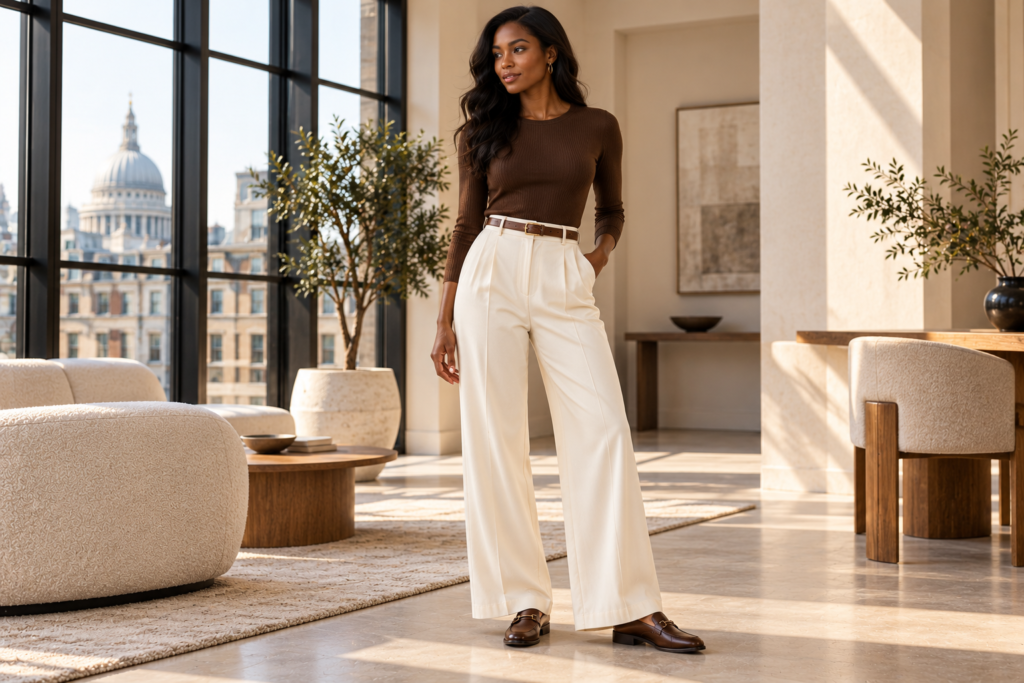
2. Wide-Leg Trousers + Fitted Knit Top
Wide-leg trousers are an easy foundation for a smart casual outfit because they look tailored without necessarily feeling restrictive.
Choose black, navy, charcoal, or beige trousers and pair them with a fitted knit top.
A tucked or slightly cropped top helps define the waist and balance the wider leg shape.
Finish with loafers, ballet flats, or low block heels.
Style tip: If your trousers are very long, check that the hem doesn’t drag on the ground. The right length makes a noticeable difference.
Best for: Work, presentations, coffee meetings, and daytime events.
3. White Button-Down Shirt + Dark Jeans
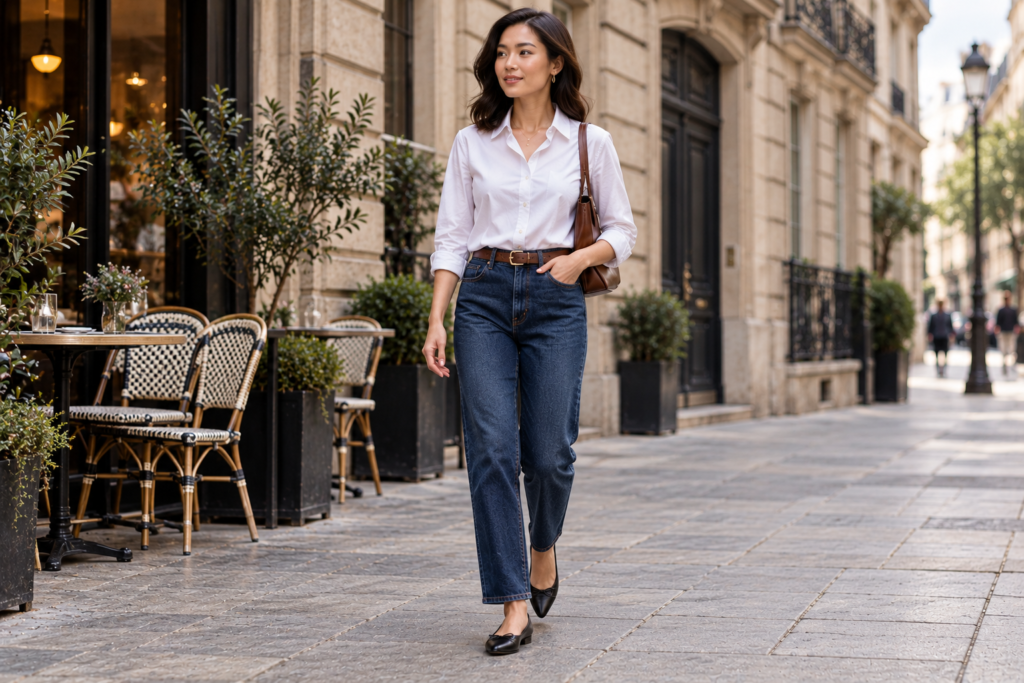
A white button-down shirt is one of the most adaptable pieces in a smart casual wardrobe.
Wear it with dark straight-leg jeans, a leather belt, and loafers or pointed flats.
Leave the top button open for a relaxed finish, or tuck the shirt neatly for a more polished look.
A slightly oversized shirt can work beautifully, but avoid combining excessive volume on both the top and bottom unless you intentionally define your proportions.
Best for: Casual Fridays, travel days, shopping, and informal meetings.
4. Midi Dress + Lightweight Blazer
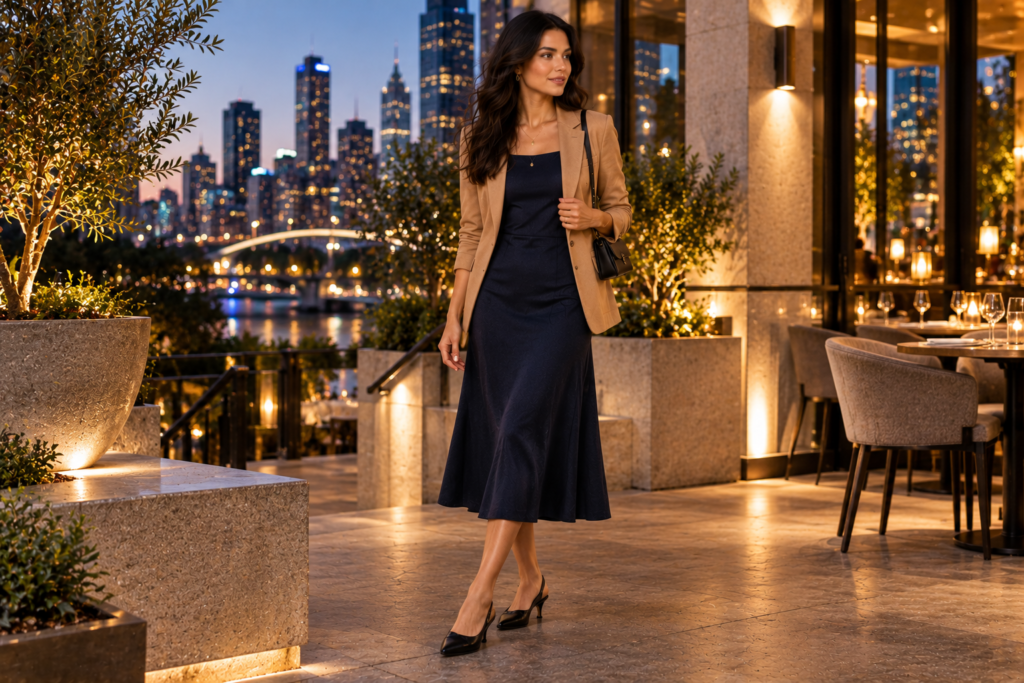
A simple midi dress offers an effortless way to look put-together.
Choose a solid-colored dress with a comfortable, flattering fit. Layer a lightweight blazer over it and add ballet flats, ankle boots, or low heels.
Black, navy, olive, burgundy, and chocolate brown are versatile options.
Why it works: The dress creates a cohesive silhouette, while the blazer adds a structured layer.
Best for: Dinner, office events, daytime celebrations, and smart casual gatherings.
5. Beige Trousers + Black Top
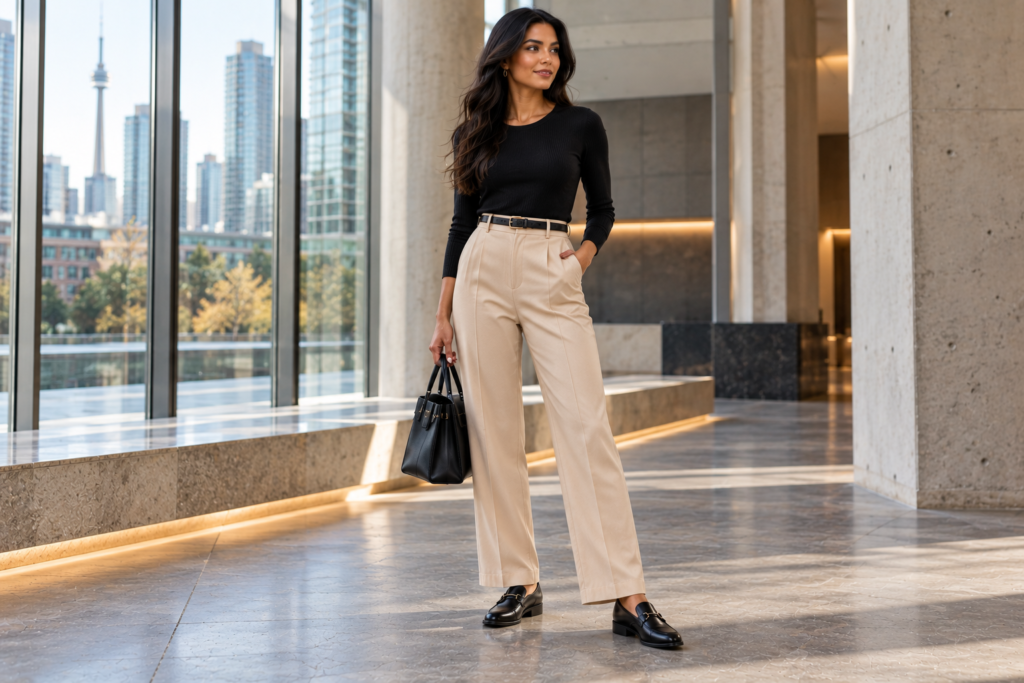
Beige tailored trousers and a black top create an elegant contrast that requires very little styling effort.
Choose straight-leg or wide-leg beige trousers, then add a fitted black knit, blouse, or high-quality cotton top.
Complete the outfit with black loafers, a slim belt, and a structured handbag.
Gold-tone jewelry can add warmth, although silver accessories work just as well.
Best for: Office days, lunch dates, casual dinners, and travel.
For more neutral outfit inspiration, explore different ways to combine beige clothing with other colors after verifying the live article URL.
6. Cardigan + Tailored Pants + Ballet Flats
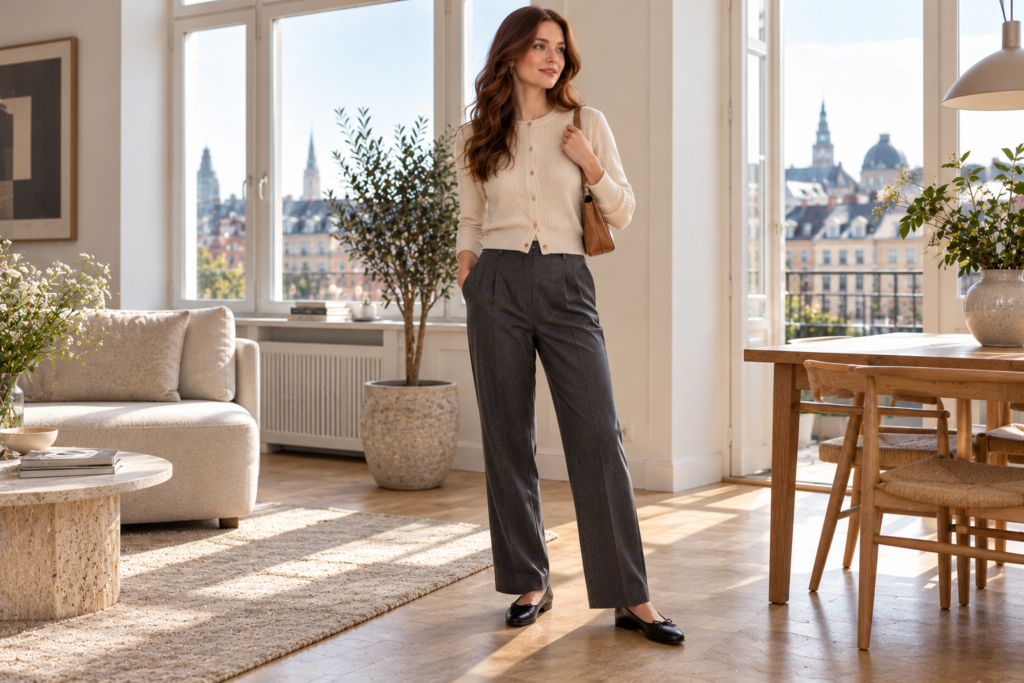
A fine-knit cardigan can look just as polished as a blouse when styled thoughtfully.
Try a cream, gray, or navy cardigan with tailored black trousers and simple ballet flats.
Wear the cardigan buttoned as a top or layer it over a fitted tank.
Choose knitwear that holds its shape rather than excessively stretched or pilled fabrics.
Best for: Comfortable workdays, daytime appointments, and transitional weather.
7. Monochrome Outfit With Different Textures

Dressing in one color family is a simple way to create a coordinated look.
Try black trousers with a black knit and black loafers, or combine ivory trousers with an oatmeal sweater and cream flats.
The secret is mixing textures.
Cotton, wool, linen, satin, and structured fabrics can add visual interest without introducing contrasting colors.
Style tip: Your pieces don’t need to match perfectly. Related shades often look more natural than identical tones.
Best for: Minimalist wardrobes, dinners, creative offices, and travel.
8. Dark Denim + Striped Shirt + Trench Coat
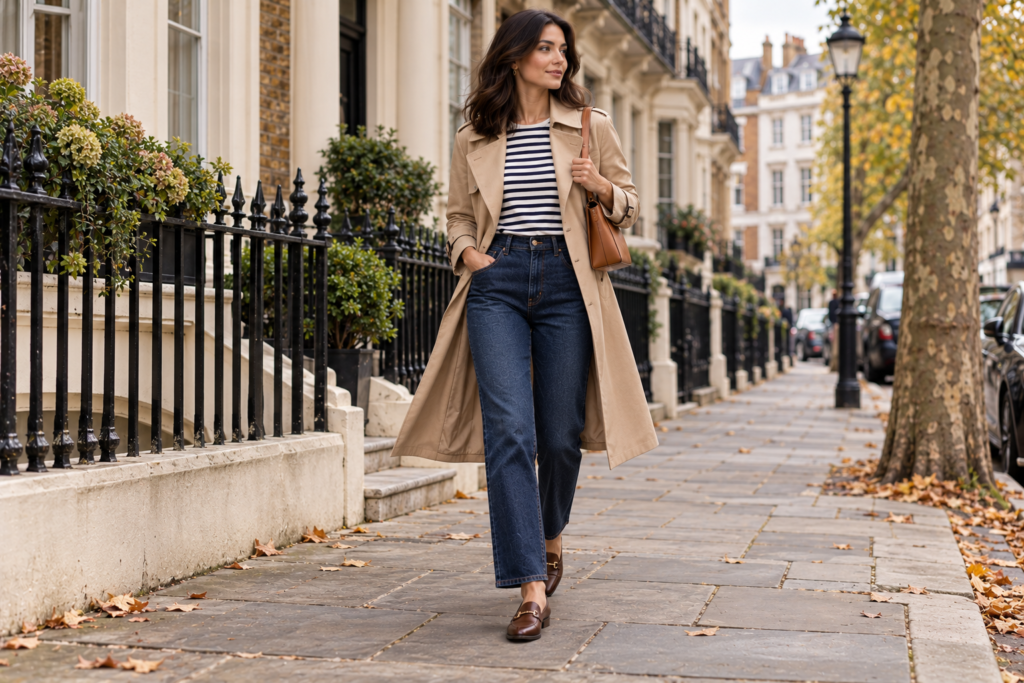
A striped shirt with dark denim and a classic trench coat creates a timeless smart casual combination.
Choose a navy-and-white striped top, dark straight-leg jeans, and a beige trench coat.
Finish with loafers or ankle boots.
Keep the rest of the outfit simple so the stripes remain the main visual detail.
Best for: Fall and spring outings, casual workplaces, and weekend city trips.
9. Midi Skirt + Fine-Knit Sweater
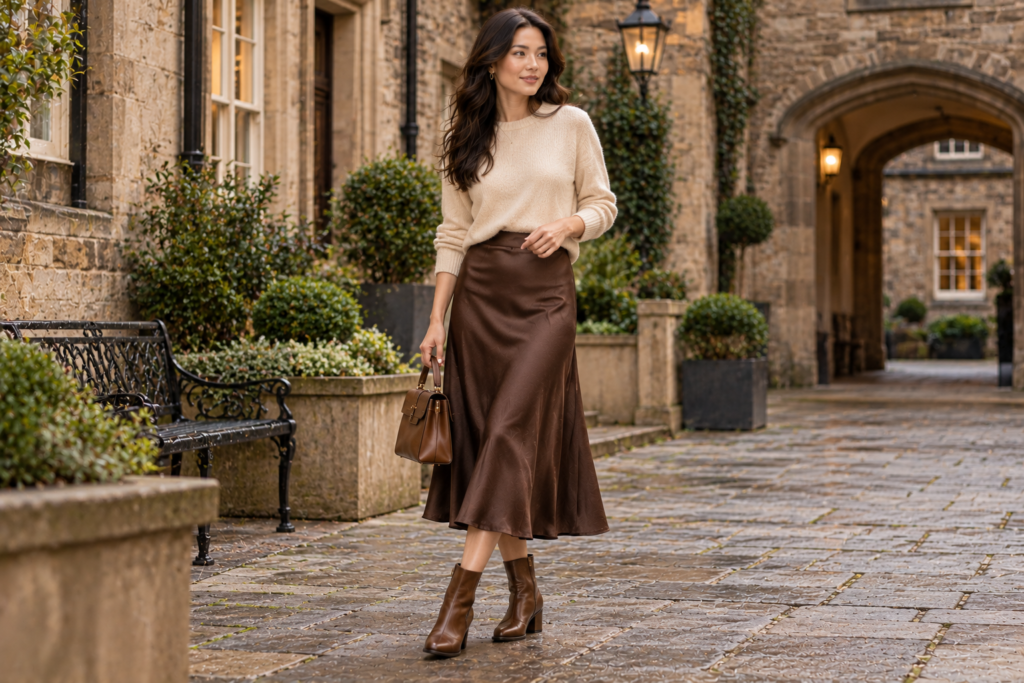
A midi skirt paired with a lightweight sweater creates a softer alternative to trousers.
Try a satin, pleated, or structured cotton skirt with a fine-knit sweater.
A partial tuck can define the waist, while ankle boots or loafers keep the outfit practical.
For cooler weather, add a tailored coat.
Best for: Office days, dinner, brunch, and family gatherings.
10. Tailored Shorts + Linen Shirt

Smart casual dressing changes with the weather, especially in warm climates.
A pair of tailored Bermuda-length shorts with a breathable linen shirt can work for relaxed smart casual occasions.
Choose structured shorts in beige, navy, or black and pair them with leather sandals or loafers.
Avoid distressed denim shorts or beach flip-flops.
Important: Shorts may be inappropriate for some workplaces, restaurants, or events. Always consider the venue.
Best for: Warm-weather lunches, vacations, and relaxed daytime gatherings.
11. Dark Jeans + Blouse + Low Heels

For an evening smart casual look, combine dark jeans with a blouse in satin, crepe, or another fabric with a refined finish.
Add kitten heels or low block heels and a small shoulder bag.
An understated necklace or earrings can make the outfit feel more intentional without turning it into formal eveningwear.
Best for: Dinner dates, casual parties, and evening events.
12. Tailored Coat + Knitwear + Ankle Boots

Smart casual outfits should still be practical in colder weather.
Start with straight-leg trousers or dark jeans, add a fine-knit sweater, and finish with a tailored wool or wool-blend coat.
Choose ankle boots with a comfortable heel and enough room for winter socks.
Charcoal, camel, navy, and chocolate brown are versatile outerwear colors.
Best for: Winter workdays, city outings, travel, and casual dinners.
The Smart Casual Wardrobe Essentials Checklist
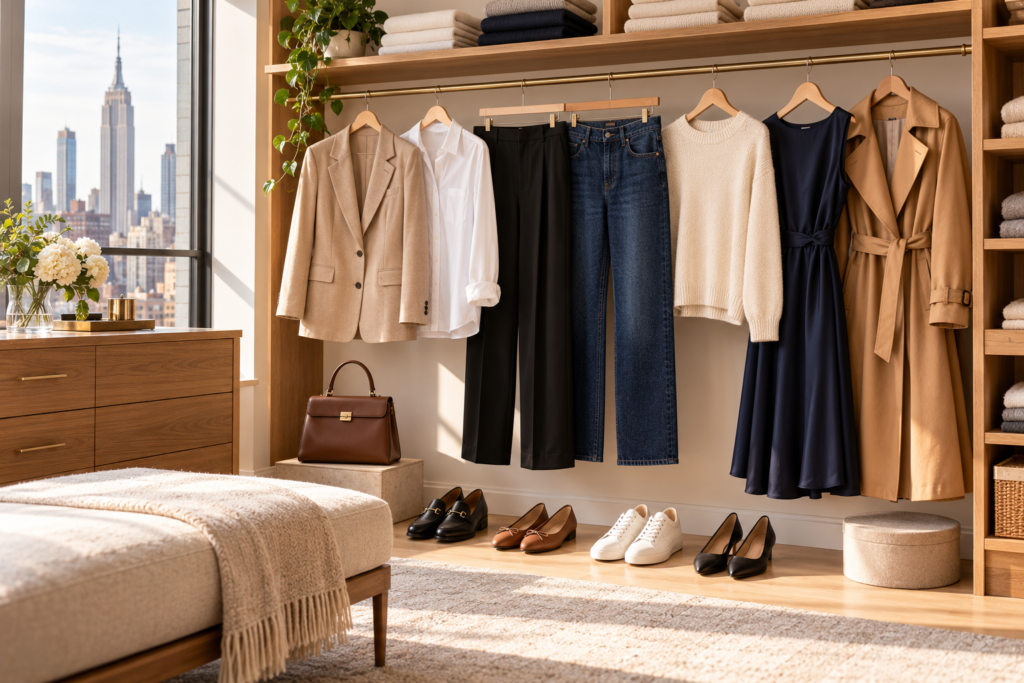
You don’t need all of these items. Begin with the pieces that suit your climate, lifestyle, and existing wardrobe.
| Wardrobe Essential | Why It’s Useful |
|---|---|
| Tailored blazer | Adds structure to relaxed outfits |
| Dark straight-leg jeans | Works with shirts, knits, and jackets |
| Black or navy trousers | Reliable for dressier occasions |
| White button-down shirt | Easy to dress up or down |
| Fine-knit sweater | Comfortable layering piece |
| Midi dress or skirt | Creates variety beyond trousers |
| Loafers or ballet flats | Polished everyday footwear |
| Clean minimalist sneakers | Suitable for relaxed settings |
| Structured handbag | Complements tailored outfits |
| Trench or tailored coat | Practical outerwear for cooler seasons |
If you’re building a wardrobe from the beginning, our capsule wardrobe guide offers a useful starting point, subject to confirming its published address.
How to Choose the Right Shoes for Smart Casual Outfits
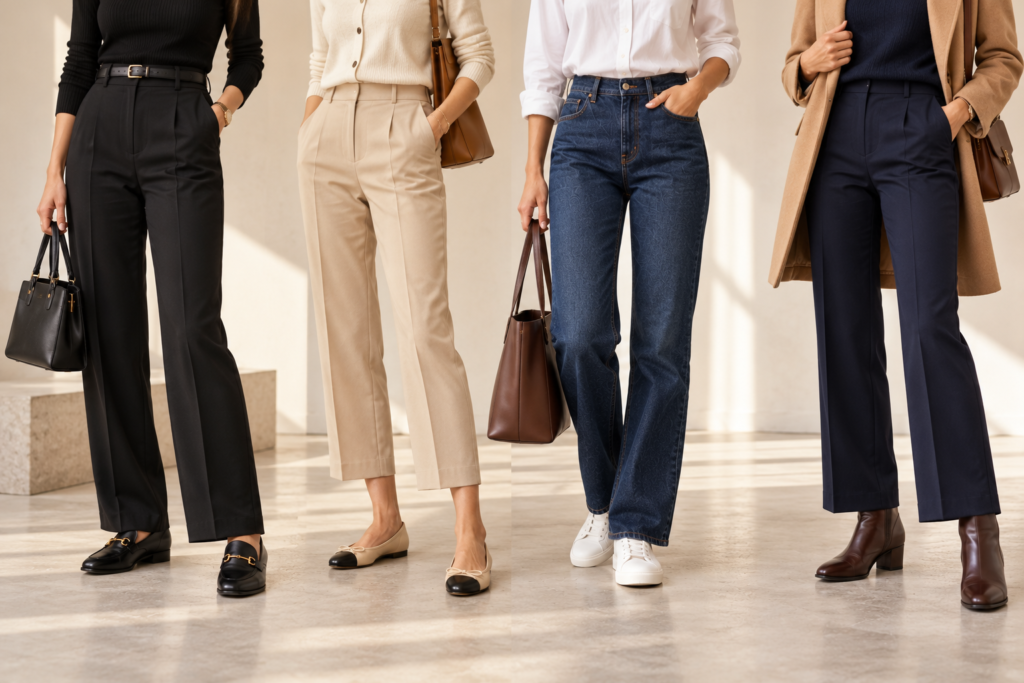
Shoes often determine whether an outfit feels relaxed, polished, or too formal.
Loafers: One of the most versatile choices. They work with trousers, jeans, midi skirts, and shirt dresses.
Ballet flats: Comfortable for many daytime occasions and especially effective with cropped trousers and skirts.
Minimalist sneakers: Suitable for many relaxed smart casual environments, provided they’re clean and in good condition.
Ankle boots: Ideal for fall and winter. Sleek styles generally look dressier than heavy outdoor boots.
Kitten heels: A practical option when you want a little extra polish without wearing high heels.
Comfort matters. A beautifully coordinated outfit is less useful if the shoes make walking or standing difficult.
How to Dress Smart Casual for Different Occasions

For the Office
Choose tailored trousers, a blouse or fine-knit top, and loafers. Add a blazer if the workplace leans professional.
Check whether your office allows jeans or sneakers.
For Dinner
Try dark jeans with a satin blouse and low heels, or a midi dress with a tailored jacket.
Consider the restaurant’s dress code, particularly for upscale venues.
For a Job Interview
Smart casual may be appropriate for some creative or relaxed workplaces, but interview expectations vary.
When the dress code is uncertain, a coordinated blazer and tailored trousers are generally a safer starting point than denim.
For a Weekend Event
Straight-leg jeans, a crisp shirt, and ballet flats can work beautifully.
Add a structured bag or lightweight jacket if the occasion calls for a more finished appearance.
Smart Casual Styling Tips for Different Seasons

Spring: Pair a trench coat with straight-leg jeans, a lightweight knit, and loafers. Use breathable layers that are easy to remove.
Summer: Choose linen-blend trousers, cotton shirts, relaxed midi dresses, and comfortable flats. Lighter fabrics help make polished dressing more practical in warm weather.
Fall: Combine tailored trousers with fine-knit sweaters, leather loafers, and lightweight coats. Burgundy, chocolate brown, olive, and navy work well together.
Winter: Layer a fitted thermal top beneath knitwear, add tailored outerwear, and choose weather-appropriate boots. Warmth and safe footwear matter more than following a particular aesthetic.
How to Make Smart Casual Outfits Look More Expensive on a Budget
A polished outfit doesn’t have to come from luxury brands.
Focus on fit, garment condition, and how pieces work together.
- Prioritize fit. Well-fitting trousers often look more refined than expensive trousers with an awkward hem.
- Choose versatile colors. Black, navy, cream, gray, and beige are easy to combine.
- Care for your clothing. Remove lint, repair loose buttons, and follow garment care instructions.
- Shop your closet first. A familiar shirt may look completely different when paired with tailored trousers.
- Consider secondhand pieces. Blazers, coats, and leather accessories can be worthwhile secondhand finds when their condition and fit are good.
- Avoid unnecessary purchases. Build outfits around pieces you’ll wear repeatedly.
For clothing-care decisions, check the garment’s care label rather than assuming all fabrics can be washed or pressed the same way.
The Federal Trade Commission’s clothing and textiles guidance provides useful information about textile labeling in the United States.
Common Smart Casual Mistakes to Avoid
Wearing Everything Too Casual
Distressed jeans, an oversized graphic T-shirt, and running shoes may feel comfortable but can look too relaxed for many smart casual settings.
Better approach: Keep one relaxed element and balance it with tailored or refined pieces.
Wearing Everything Too Formal
A matching business suit, formal pumps, and a highly structured blouse can look more business formal than smart casual.
Better approach: Relax one element, such as replacing suit trousers with dark denim where appropriate.
Ignoring Fabric Condition
Pilling, wrinkles, stretched necklines, and worn shoes can make otherwise stylish outfits appear less polished.
Better approach: Maintain the clothes you already own before buying replacements.
Choosing Trends Over Comfort
An outfit isn’t practical if you constantly adjust the neckline, struggle to walk, or feel uncomfortable sitting.
Better approach: Test the outfit while standing, sitting, and walking before leaving home.
Forgetting the Occasion
Smart casual is flexible, but that doesn’t mean every combination suits every venue.
Better approach: Consider the location, weather, activity, and any stated dress requirements.
A Simple Formula for Building a Smart Casual Outfit
When you don’t know what to wear, follow this four-part formula:
1. Choose a foundation: Tailored trousers, dark jeans, a midi skirt, or a simple dress.
2. Add a complementary top: A crisp shirt, fitted knit, refined blouse, or plain T-shirt.
3. Introduce one polished element: A blazer, loafers, structured bag, or tailored coat.
4. Check the overall balance: Make sure the fit, footwear, fabric condition, and level of formality suit your destination.
For example, dark jeans + white T-shirt + beige blazer + black loafers is a simple combination that can be adjusted for many smart casual settings.
The most useful styling habit is to build outfits around where you’re going rather than around an arbitrary list of fashion rules.
Frequently Asked Questions
Can women wear jeans for smart casual?
Yes. Dark-wash, black, or neat straight-leg jeans can work for many smart casual occasions. Avoid heavy distressing when the dress code is more polished, and check whether the venue permits denim.
Are sneakers acceptable for smart casual?
Clean, minimalist sneakers are often acceptable in relaxed smart casual settings. However, loafers, ballet flats, or low heels may be more appropriate for professional events and upscale restaurants.
What is the difference between casual and smart casual?
Casual clothing emphasizes everyday comfort and flexibility. Smart casual adds a more polished appearance through tailoring, refined footwear, structured layers, or coordinated styling.
Can I wear a T-shirt for smart casual?
Yes. A plain, well-fitting T-shirt can work with tailored trousers, a blazer, and loafers. Avoid overly worn or heavily graphic styles when the occasion requires a neater appearance.
What should a woman wear to a smart casual dinner?
A midi dress with low heels, tailored trousers with an elegant blouse, or dark jeans with a blazer are all practical options. The restaurant’s dress code should guide the final choice.
How can I dress smart casual in winter?
Combine tailored trousers or dark jeans with fine-knit sweaters, structured coats, and polished ankle boots. Use warm layers and weather-appropriate footwear without sacrificing comfort.
Is smart casual the same as business casual?
Not exactly. Smart casual generally allows more relaxed pieces and personal styling. Business casual usually places greater emphasis on professional clothing, although the rules vary by workplace.
Final Thoughts: Smart Casual Should Feel Like Your Own Style
The best smart casual outfits balance comfort, neatness, and personal expression.
You don’t need a closet full of blazers or expensive accessories to get the look right. Start with clothing that fits well, add one or two polished elements, and make sure the combination suits the occasion.
Whether you prefer tailored trousers, relaxed denim, dresses, or minimalist knitwear, smart casual dressing becomes easier when you understand how to balance structure with everyday comfort.
The goal isn’t to look dressed up all the time. It’s to look thoughtfully dressed for where you’re going.



3 thoughts on “How to Dress Smart Casual for Women: 12 Outfit Ideas That Always Look Put-Together”