
By Olivia Parker
A blazer can look roomy through the waist and still pinch your upper arms. Another can button neatly but lift away from your neck as soon as you reach for a keyboard. Neither problem is solved by deciding that blazers should simply be “fitted” or “loose.”
A women’s blazer should hold its intended shape while leaving enough room through the bust, back and sleeves for everyday movement. A tailored style follows the torso more closely; a relaxed cut allows extra space; an oversized design deliberately changes the shoulder line and volume. In each case, check for persistent strain, comfortable closures and sleeves that work for what you do.
Try it on over the top and undergarments you expect to wear. Then assess the same four things across every silhouette: shoulders, button tension, sleeves and movement.
Tailored, Relaxed or Oversized: What Changes?
Start with the product’s intended cut. A softly shaped linen jacket and a padded, boxy blazer will hang differently even when both fit well.
| Fit check | Tailored | Relaxed | Oversized |
|---|---|---|---|
| Shoulders | Follow the shoulder line, sometimes with a slight structured extension | May follow the shoulder or extend softly | Can extend noticeably or use a deliberately dropped seam |
| Torso | Shaped through the waist, with room to breathe and move | Skims the torso with less waist definition | Creates deliberate width through the body |
| Sleeves | Often wrist length, unless designed shorter | Usually an easy fit over the intended layer | May be wider or longer; hands should remain usable |
| Movement | Comfortable for normal tasks, with some structure | Allows movement without gripping the layer beneath | Extra volume should still let you use your arms comfortably |
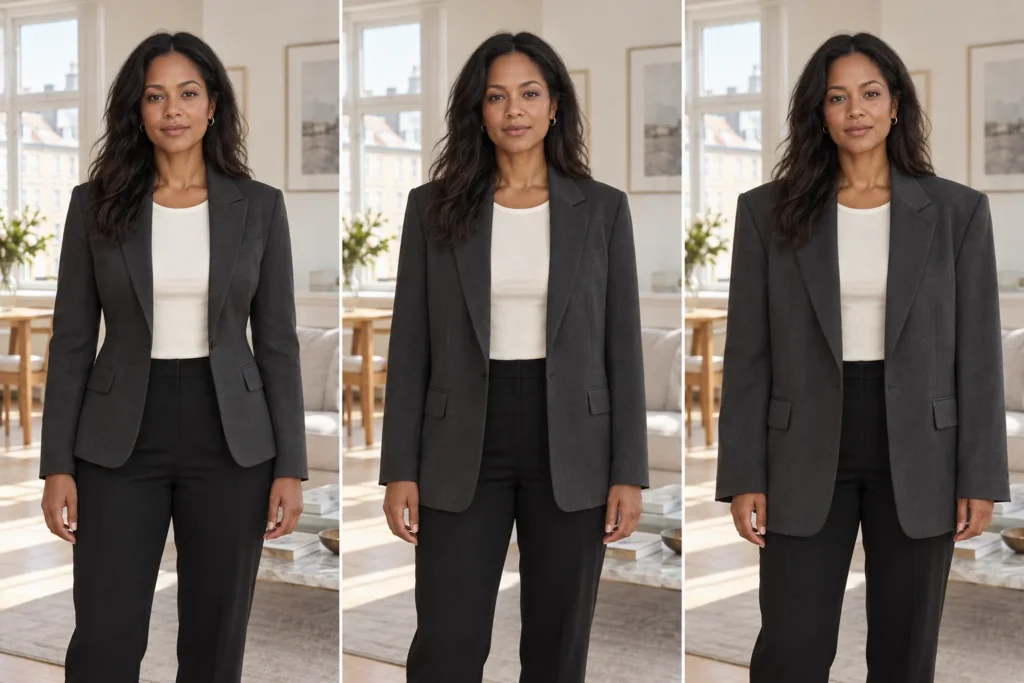
These are starting points rather than standardized retail definitions. One brand’s relaxed fit may resemble another’s oversized cut.
Is an oversized blazer just a bigger size?
You can experiment with sizing up, but compare the result with a blazer drafted to be oversized. Increasing a size can also lengthen the sleeves, lower the armholes and move the pockets. A purposefully roomy design may distribute that extra fabric differently.
Choose the silhouette first, then find the size that makes it work. Once you have a comfortable fit, our guide to wearing a blazer casually shows how different shapes work with everyday clothes.
Check the Shoulders, Collar and Upper Back Together
Let your arms rest naturally. Avoid pulling your shoulders back into a pose you would never hold through a workday.
On a conventional tailored blazer, the shoulder should form a coherent line into the sleeve. The seam may sit near your natural shoulder point or slightly beyond it, depending on the padding and construction. Cashmerette’s Auburn shoulder-fitting guide, for example, specifies a small extension beyond the natural shoulder for that particular tailored design.
An oversized blazer can extend farther. Assess whether that width creates the shape you want and whether the sleeve hangs comfortably from it.
Look at the collar and upper back as well. For a conventional collared blazer, the back neckline should generally settle close to your neck or the shirt beneath. Persistent fabric pooling below the collar, a conspicuous gap or a collapsed sleeve head deserves a second look. These signs can have several causes, including the shoulder slope and sleeve construction; they do not automatically mean you need a smaller size.

Try another cut if the jacket twists or needs repeated rearranging to sit comfortably. A collarless blazer needs a different neckline check: assess whether its opening rests as intended without pressing or pulling.
Read Button Tension Across the Bust, Waist and Hips
Fasten the closure the way the garment is designed to be worn, then release your hands. Keep breathing normally.
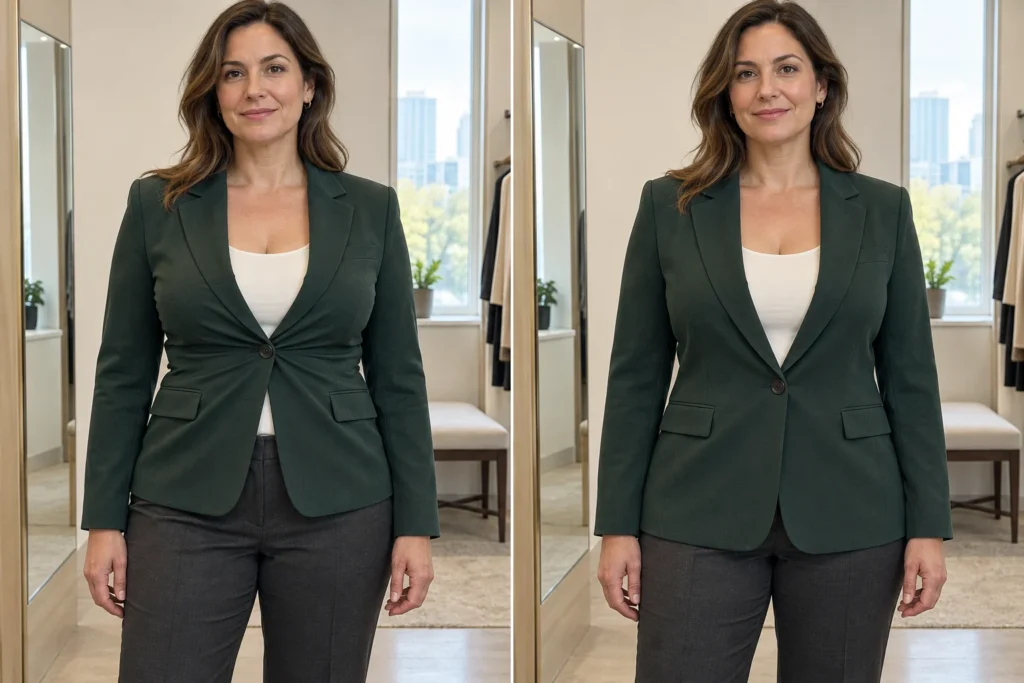
A button staying closed is only the beginning of the fit check. Look at the fabric around it. Pronounced diagonal lines radiating from the fastening, bowed lapels or a front that feels stretched are reasons to compare another size or cut. Proper Cloth’s jacket-alteration guide describes button tension and outward-bending lapels as signs of insufficient room in conventional tailoring.
When the shoulders fit but the bust does not
Sizing up can help, but check what changes elsewhere. If the larger size leaves you with an unwanted shoulder extension and loose upper back, try a cut with more room or different shaping through the bust.
Princess seams, which shape the front through curved panels, and bust darts can help position fullness. Their placement matters as much as their presence. Cashmerette’s bust-fitting tutorial distinguishes between needing more space and needing that space at a different height or in a different shape. That is a useful distinction when comparing ready-to-wear jackets, too.
Check below the button
A blazer can accommodate the bust while catching across the hips. For a conventional vented style, look at the back opening while standing naturally. Cashmerette’s Auburn fit guide specifies that its vent should rest closed when standing and open during movement. A vent forced apart at rest can prompt a closer check of hip room and the jacket’s balance.
For a double-breasted blazer, secure the internal fastening if provided before assessing the overlap. If you intend to wear a jacket exclusively open, judge that use honestly. It should still feel comfortable across your back and arms; choose a different option if you also need a neat, closed appearance.
Set Sleeve Length and Upper-Arm Room Separately
For a conventional full-length sleeve, the wrist area is a useful starting point. Let your arms hang down before judging it. A sleeve that reaches well over your hands may interfere with typing, washing your hands or handling a bag.
Bracelet sleeves are deliberately shorter. Some oversized styles deliberately run longer. Both can work, provided the length suits your preferences and daily tasks.
If you wear a shirt underneath, a visible cuff can create a clean transition between sleeve and hand. The amount is a styling choice. Try the actual shirt, because cuff depth and bulk change how the two garments sit together. Our white button-down styling guide offers combinations worth bringing into the fitting room.
Next, bend your elbow and bring a hand toward the opposite shoulder. Check for gripping around the upper arm or elbow. A roomy body does not guarantee roomy sleeves, and stretch in the outer fabric does not tell you how much the lining will allow.
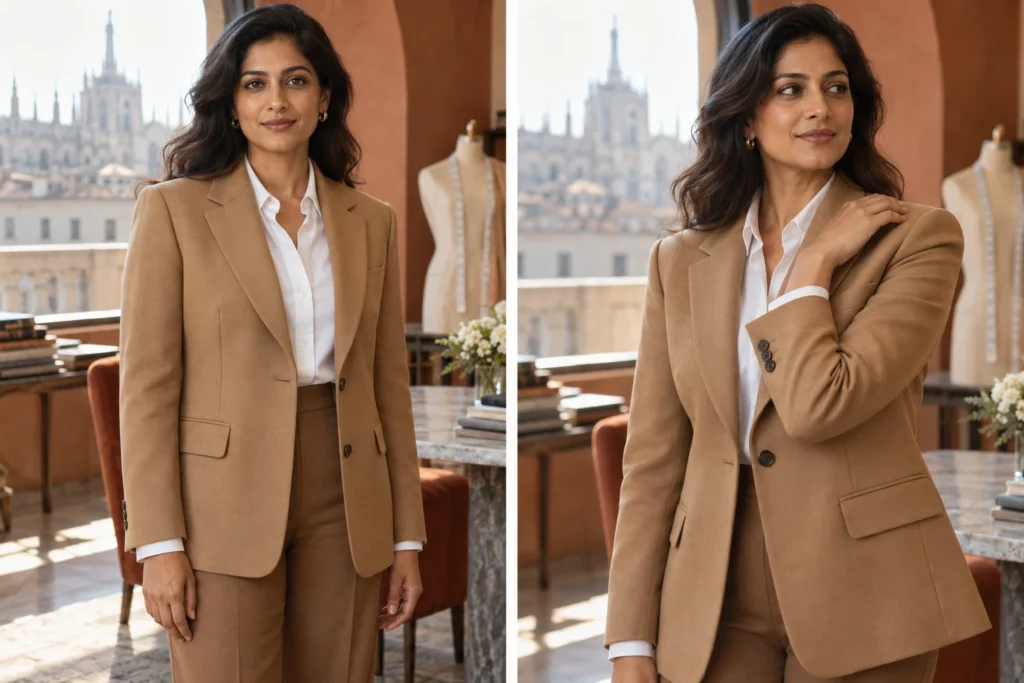
Evaluate the sleeve without pushing it up first. Cuffing can create a look you enjoy, but you should know whether you are choosing that styling or relying on it every time you wear the jacket.
Choose Blazer Length With the Whole Outfit in View
There is no single correct hem position for every women’s blazer. Body length and body width are separate choices: a cropped jacket can be oversized, while a longline blazer can be closely shaped.
Try the jacket with the bottoms you intend to wear:
- With wide-leg pants: A cropped or high-hip blazer leaves more of the waistband and upper trouser visible. A longer jacket creates a longer upper layer; check whether its hem hangs freely over the hips.
- With straight-leg jeans: A hip-length jacket offers a straightforward starting point. Compare it open and closed to see how much waist definition you want.
- With a dress or skirt: Look at where the jacket ends relative to the waist seam, pleats or skirt volume. Sit down to check whether those layers bunch together.

Keep the shoes consistent when comparing lengths. If trouser fabric is pooling over the footwear, resolve that before deciding the jacket’s proportions are wrong; our guide to wide-leg pants length with different shoes explains that adjustment.
If the sleeves, pockets and waist shaping all sit lower than you want, compare a petite cut rather than shortening the hem alone. Tall ranges may be worth comparing when several details sit too high. Check each brand’s measurements, since fit-range labels vary.
Try Everyday Movement Before You Buy
A fitted woven blazer will not necessarily give you the unrestricted reach of a sweatshirt. Some folds during movement are normal. The useful question is whether it accommodates the tasks you expect to do.
Use this short fitting-room sequence:
- Stand naturally, open and fastened. Check whether the jacket settles without repeated tugging.
- Reach forward at desk height. Notice sharp pulling across the back or gripping in the upper sleeves.
- Bend your elbows. Make sure the sleeves allow comfortable movement over your intended top.
- Sit in your usual posture. Unbutton if that is how you will normally wear it seated. If it must remain fastened, test that specifically.
- Try your everyday bag or outer coat. Check whether straps displace the neckline or the coat compresses the blazer’s shoulders.

For readers who use a wheelchair or spend much of the day seated, assess the jacket in that position from the start. Check the front hem, back fabric and sleeve clearance during the movements you regularly make.
Repeat the fitting with knitwear if that is part of the plan. A blazer that fits over a thin top may need a different cut to accommodate a sweater. Our winter layering guide explains how to plan space across the whole outfit.
Decide Between Another Size, Another Cut and an Alteration
Before buying a blazer that needs work, ask a tailor to assess the actual garment. Seam allowances, lining, pockets and cuff construction determine what is feasible.
| What you notice | A useful next step |
|---|---|
| The blazer feels restrictive in several areas | Compare the next size and repeat the movement checks |
| The bust needs room, but the larger size changes the shoulders too much | Try a different front shape or bust fit |
| The body fits and only the sleeves are too long | Ask whether the cuffs and lining allow shortening |
| The waist is roomier than you want | Ask about modest reshaping while preserving movement and pocket placement |
| The shoulder structure or armholes feel fundamentally wrong | Compare another cut before committing to major alterations |
| The jacket needs substantial shortening | Check how the new hem would relate to the pockets, buttons and vents |
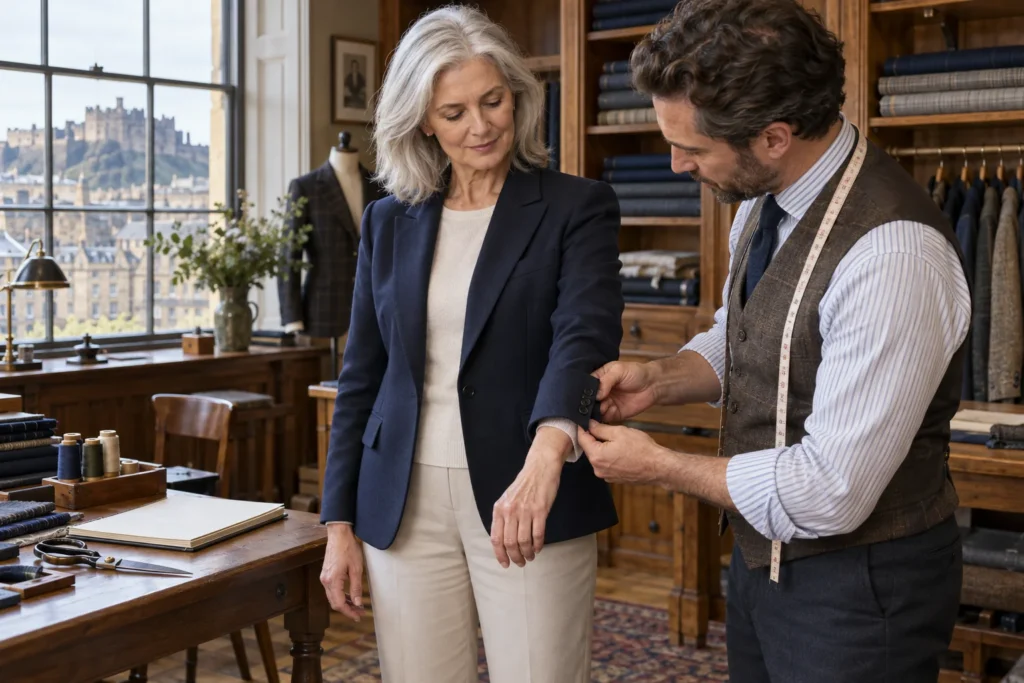
Shoulder rebuilding is a complex alteration. Working cuff buttonholes can also limit simple sleeve shortening, while major body shortening can disrupt the jacket’s proportions. These are construction limits covered in Proper Cloth’s alteration guidance; its specific adjustment allowances apply to its own garments.
Get a quote before treating a low purchase price as the final cost. A blazer that needs one manageable adjustment can be a sensible choice. Several structural changes deserve a comparison with a different jacket.
Shop for the Silhouette You Actually Want
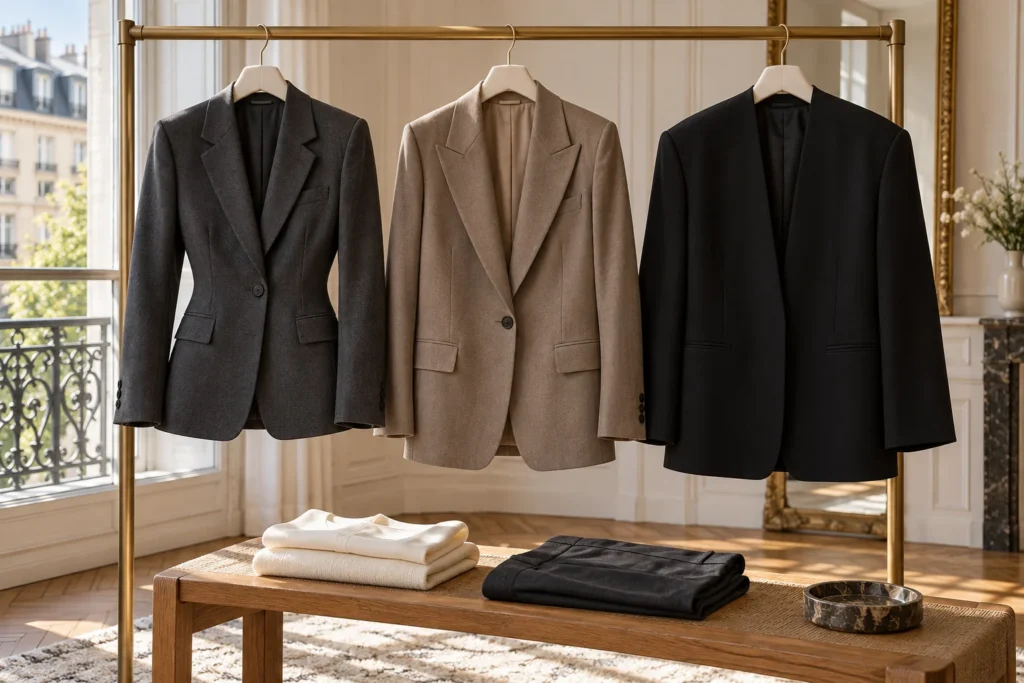
Use these examples to compare design details, then apply the same fit checks to your own wardrobe. They are shop-the-inspiration options, rather than exact matches to the planned illustrations. The links lead to US product pages; check your regional storefront for sizing, delivery and returns.
Tailored: COS Waisted Tailored Wool Blazer
COS describes this wool-twill style as slim fitting, with padded shoulders and waist-shaping seams. Those details make it a useful reference for a defined torso with a structured shoulder. Check bust room and button tension before deciding whether the waist shape suits you.
Shop the inspiration: COS Waisted Tailored Wool Blazer
Relaxed: Aritzia Generation Blazer
The linked Generation Blazer has a relaxed fit, peaked lapels and shoulder pads, according to Aritzia. It is an example of how a roomy torso can retain shoulder structure. Try it over the layer you plan to wear rather than sizing down automatically to remove the extra space.
Shop the inspiration: Aritzia Generation Blazer
Oversized: COS Structured Collarless Wool Blazer
COS lists this style as oversized with sculpted shoulders. Its collarless construction offers a different neckline from a conventional notched-lapel blazer, so assess how that opening rests on you. Use it to compare deliberate shoulder volume while keeping the sleeve and movement checks in place.
Shop the inspiration: COS Structured Collarless Wool Blazer
For work outfits, decide which silhouette meets your workplace’s expectations and your own preferences. Our women’s smart-casual guide connects tailoring with practical everyday separates.
Frequently Asked Questions
How can I check blazer sizing when shopping online?
Start with the retailer’s measurement instructions. Distinguish body measurements from finished-garment measurements, and compare available jacket dimensions with a blazer you already like. Bust, shoulder width, upper-arm room, sleeve length and body length answer different questions. A model’s height and size provide context rather than a prediction of your fit.
Does a blazer need a defined waist to fit well?
No. Straight, boxy and oversized blazers can fit as intended without following your waist. Assess their drape, comfort and intended volume. Waist definition is a design preference.
Are creases in a linen blazer a fit problem?
Creasing alone does not establish a fit problem. Look for folds that remain under tension while you stand naturally, particularly around a fastening or upper arm. Compare how they change when you unbutton the jacket and move.
Can I remove shoulder pads to improve the fit?
Ask a tailor first. Padding is part of the jacket’s construction; removing it can change how the shoulder and sleeve hang. If you prefer a softer outline, compare a blazer designed with less structure.
Make the Final Choice in Your Everyday Clothes
Bring the top, bottoms and shoes you expect to wear, then repeat the fit checks once more. Choose the blazer whose shape you enjoy while standing, sitting and moving. If you need an adjustment, identify it before buying and confirm that the garment can support it. That gives you a much clearer decision than the size label alone.