

By Olivia Parker
A winter outfit can look perfectly balanced in the mirror and become uncomfortable the moment you put on your coat. The sweater sleeves bunch at the elbows, the blazer collar catches under the lapels, and the waistband suddenly has three tops tucked into it.
The most useful winter layering outfits start with those small practical details. Give each layer enough room, choose one piece to provide most of the volume, and make sure the outfit still works when the coat comes off. You can build plenty of combinations around jeans, trousers, skirts, and dresses you already own.
The quick formula: Start with a comfortable, close-fitting base, add an insulating layer suited to the day, and finish with outerwear appropriate for wind and precipitation. Then check the sleeves, hems, shoes, and indoor version of the outfit.
Shopping links below lead to official US product pages and offer ways to recreate the outfit ideas. They are inspiration, rather than a claim that a particular branded item appears in an accompanying image. Check your regional store for sizing, delivery, and returns.
1. Give Each Winter Layer a Clear Job
Before choosing colors, decide what you need your clothes to do. A short walk between heated buildings calls for a different combination than an afternoon outdoors.
REI’s guide to layering explains three useful functions: a base manages moisture, a middle layer provides insulation, and a protective outer layer shields against the weather. For everyday dressing, these functions can overlap; an insulated coat may provide warmth and weather protection together.
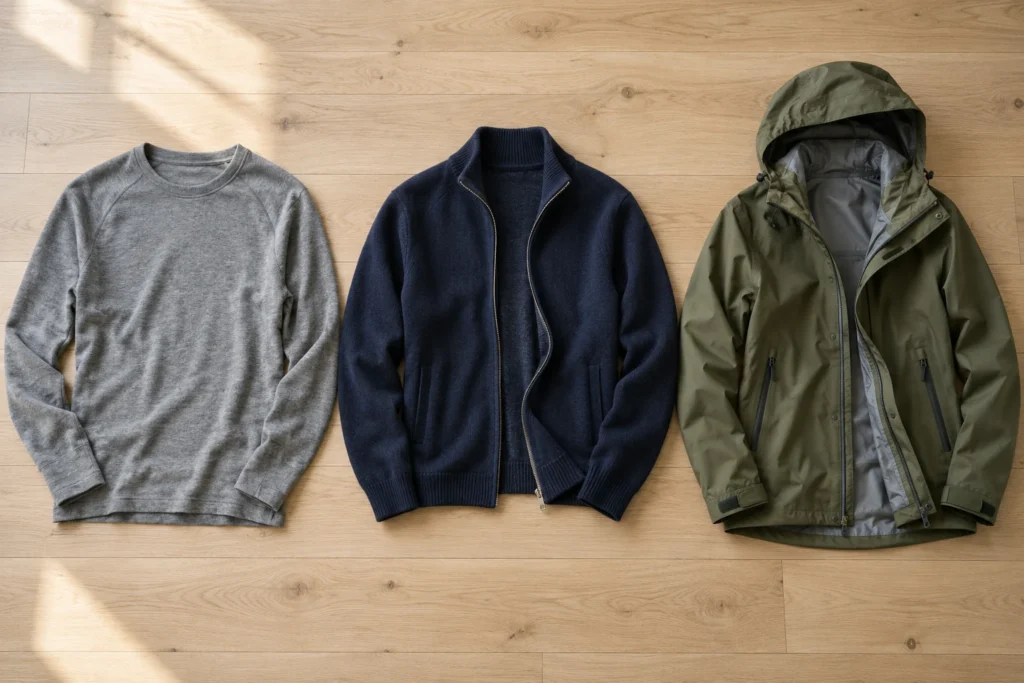
- Next to the skin: Try a thin thermal top or a merino or synthetic base layer. It should sit smoothly without pulling across the chest or underarms.
- Through the middle: Choose a sweater, cardigan, fleece, or light insulated jacket according to the conditions and how active you will be.
- On the outside: Check the garment’s actual wind and rain protection. A tailored wool coat and a waterproof shell serve different purposes.
A cotton shirt can be part of an indoor outfit. For a cold outing where you expect to sweat, REI recommends moisture-managing alternatives to cotton, which absorbs water readily.
Shop the inspiration: UNIQLO HEATTECH T-Shirt. A thin starting layer for everyday combinations; choose the neckline to suit the clothing going over it.
2. Make Room for Layers Without Losing the Shape
Uncomfortable layering often comes from mismatched garment shapes. A wide sweater sleeve will bunch inside a narrow coat sleeve, even when both pieces fit well separately.
Try your coat over the thickest combination you actually plan to wear. Fasten it, reach forward, bend your elbows, and sit down. If the collar lifts or the upper arms feel trapped, try a thinner middle layer or a coat with more sleeve room. Automatically buying a larger size can leave the shoulders and cuffs in the wrong place.

Keep the area around your waistband manageable. Tuck a thin base layer if you prefer, then leave a heavier sweater untucked or choose a shorter knit. Stacking a thermal top, shirt, and chunky sweater inside tailored trousers usually creates avoidable pressure.
There is no requirement to make every outfit fitted. A roomy coat over relaxed trousers can look intentional when the sleeves fall cleanly and the trouser hems clear the ground. If you wear seated, check that the coat opens comfortably across your lap and that excess fabric stays clear of wheels and moving parts.
3. Build Everyday Winter Outfits Around Jeans
Denim makes a useful starting point because the same pair can work with several different upper layers. Choose the boots first, then check the jeans’ length over them.
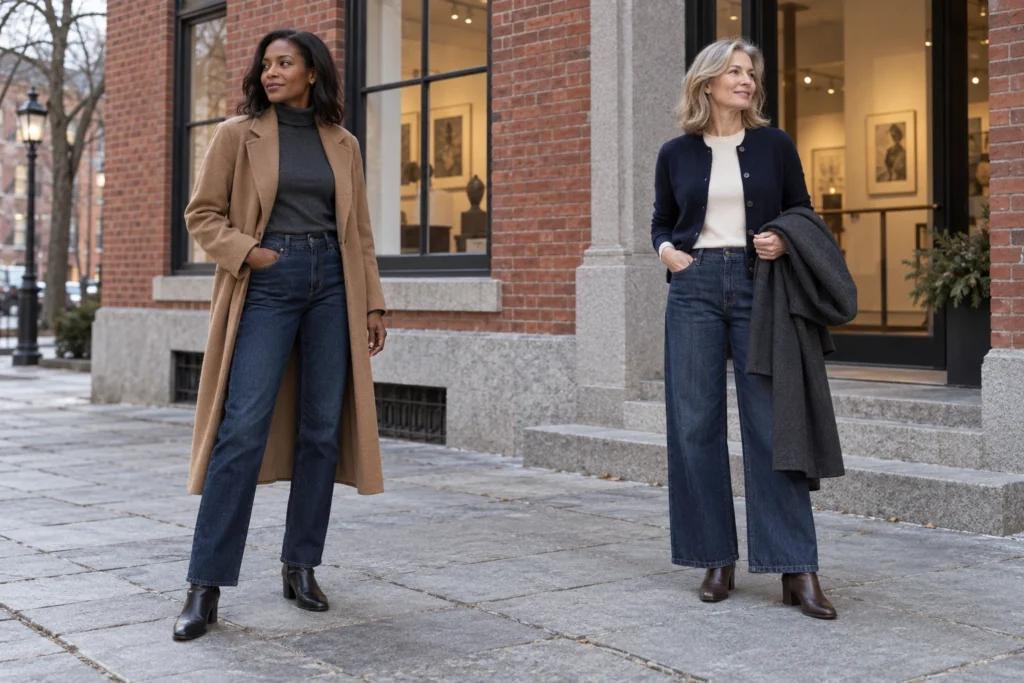
Outfit 1: Fine turtleneck, straight-leg jeans, and a long coat
Try a charcoal turtleneck, dark-blue straight-leg jeans, a camel coat, and black ankle boots. The close knit slips easily under the coat, while the denim keeps the combination relaxed enough for ordinary errands.
Let the jeans fall over the boot shaft without gathering into a thick cuff. If the hem catches, a slightly wider leg opening may solve the problem. Our guide to wearing ankle boots with different jeans explains the fit details.
On a colder day, add thin thermal bottoms only if there is comfortable room beneath the jeans, including when you sit.
Outfit 2: Short cardigan, wide-leg jeans, and a roomy coat
Combine a navy cardigan, a thin cream crewneck, indigo wide-leg jeans, and dark-brown boots. A cardigan ending near the waistband leaves the jeans’ shape visible; a longer cardigan works too, especially when its hem hangs freely instead of catching around the hips.
Choose a coat that clears the knit through the sleeves. For more ways to adjust top length and denim proportions, explore our wide-leg jeans outfit guide.
4. Choose Winter Work Outfits That Adapt Indoors
A good winter office outfit has a comfortable version for the commute and another for the hours spent inside. Make the middle layer easy to remove if your workspace tends to feel warm.

Outfit 3: Merino knit, blazer, tailored trousers, and an overcoat
Wear a fine burgundy knit under a navy blazer with charcoal trousers. Add a roomy overcoat and commuting boots, changing into office shoes if that suits your routine.
The blazer supplies structure, so the knit can stay simple. Watch the shoulders: thick knit seams under a closely fitted jacket can make its sleeves twist. Our advice on styling a blazer with everyday clothes offers more relaxed combinations.
If you overheat easily, swap the turtleneck for a crewneck and let a removable scarf provide neck coverage outdoors.
Shop the inspiration: UNIQLO Merino Ribbed Turtleneck Sweater. Consider this type of fine knit when a thick sweater will not fit comfortably under tailoring; check the care instructions before buying.
Outfit 4: Button-down shirt, sweater vest, and straight trousers
Layer a pale-blue shirt beneath a chocolate sweater vest, then add navy trousers and a winter coat. The sleeveless middle layer leaves less fabric inside the coat’s arms, while the shirt collar gives the outfit a defined edge.
Choose a vest with enough room for the shirt to lie flat. If the hem gathers around your waist, try a straighter cut rather than forcing both pieces into the waistband. Skip the shirt-and-vest combination when it feels fussy; a fine cardigan over a simple top gives you a similar option with an easier opening.
5. Layer Skirts and Dresses With Coverage in Mind
Winter skirts and dresses are easier to wear when the layers overlap comfortably. Pay attention to the space between the hem and boots, and check how the outfit behaves when you sit or climb stairs.

Outfit 5: Ribbed sweater, midi skirt, and tall boots
Pair a cream ribbed sweater with a charcoal A-line midi skirt, opaque tights, black knee-high boots, and a long coat. Let the skirt move over the boot shafts rather than pulling tightly across them.
A shorter sweater can meet the skirt’s waistband without needing a tuck. If you prefer a longer knit, look for a hem that falls cleanly over the skirt instead of gripping it.
A lined wool-blend skirt offers a different starting point from a thin satin skirt. If you choose satin, test it over the tights you intend to wear: static and friction can change how it hangs.
Outfit 6: Fine base layer, sweater dress, and a straight coat
Wear a smooth thermal top beneath a moderately relaxed sweater dress, adding tights or thermal leggings and flat boots. Match the base-layer neckline to the dress unless you deliberately want a contrasting collar to show.
Check that the underlayer’s seams do not create ridges through the knit. A dress with some room through the body will usually accommodate layers more easily than a very close-fitting style.
For a dinner invitation, a dark knit dress and tonal boots make a simple starting point. Add a brooch or earrings indoors, then use weather-appropriate outerwear for the journey.
6. Keep Weekend and Travel Layers Easy to Remove
For errands, train journeys, and casual visits, prioritize accessible zips, comfortable waistbands, and somewhere to put the layer you take off.

Outfit 7: Smooth sweatshirt, tailored trousers, and a puffer
Try a gray crewneck sweatshirt over a thin base, black relaxed trousers, and an olive puffer. The trousers give the sweatshirt a cleaner outline without making the outfit formal.
A crewneck creates less fabric behind the neck than a thick hood. If you prefer a hoodie, check that its hood sits comfortably outside the coat and does not interfere with closing the collar.
Choose footwear for the pavement conditions. Sneakers can work on a dry, mild day; wet or icy routes call for footwear designed for those conditions.
Outfit 8: Zip cardigan, soft trousers, and a removable outer layer
For travel, combine a thin long-sleeve top, a zip cardigan, comfortable straight trousers, and an insulated jacket. You can open the cardigan without pulling it over your head in a crowded seat.
Keep a scarf and gloves in an accessible pocket or bag. Check the trouser waistband while seated, and leave enough space in the boots for your usual socks.
Shop the inspiration: Patagonia Women’s Nano Puff Jacket. The brand describes it as a lightweight synthetic insulated layer with a finish that sheds light moisture. It can be an option beneath a suitable shell; it is not a substitute for a waterproof rain jacket.
7. Match the Outer Layer to the Actual Weather
A coat’s appearance tells you less than its construction and stated performance. Check the forecast, how long you will be outdoors, and whether you will be walking briskly or standing still.
| Conditions | A practical starting combination | Detail to check |
|---|---|---|
| Mild winter weather with short outdoor trips | Thin top, removable cardigan, lighter coat | Whether the middle layer is comfortable indoors |
| Dry cold with longer waits outside | Base layer, insulating middle, suitable winter coat | Coverage, closures, and room for your chosen layers |
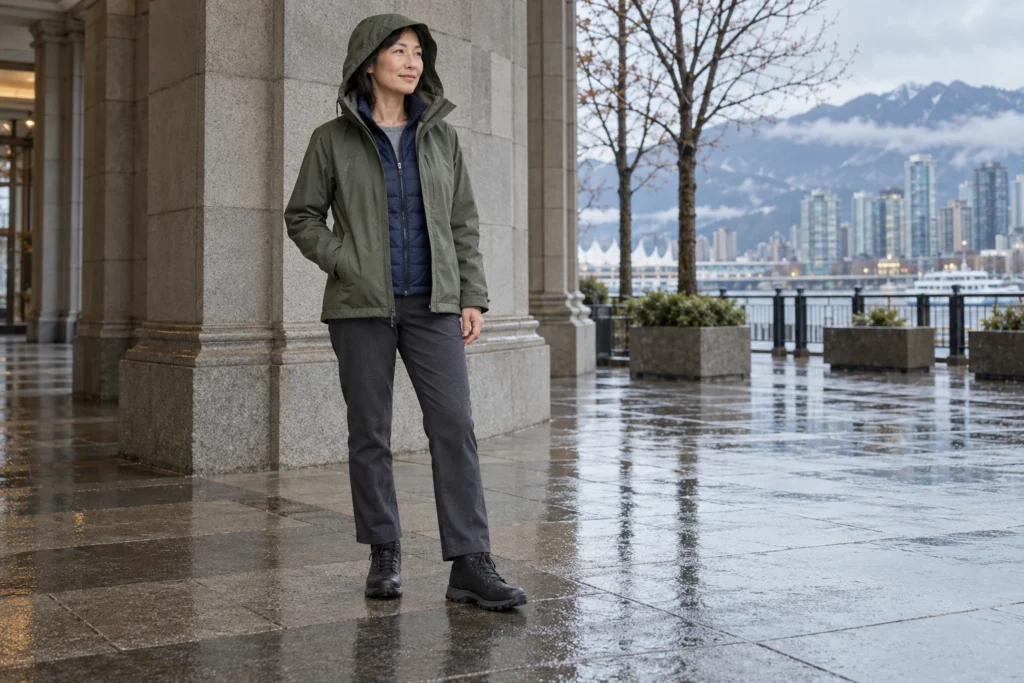
| Wind and persistent rain | Moisture-managing base, insulation as needed, waterproof hooded shell | Weather protection, hood fit, and sleeve space |
| Snow, slush, or freezing conditions | Conditions-appropriate insulation, protective outerwear, winter footwear | Coverage, traction, and hems that stay clear of wet ground |
These are starting points, rather than temperature ratings. Clothing needs vary with activity, exposure, and personal comfort. A thin trench or ordinary blazer may complete a mild-weather outfit but should not be assumed to provide enough protection for severe conditions.
For extended outdoor time, the National Park Service’s winter guidance emphasizes adjustable layers, a protective hooded outer layer, and warm footwear.
Shop the inspiration: Patagonia Women’s Torrentshell 3L Rain Jacket. This is a waterproof shell option for a wet commute; choose insulation separately and try the pieces together.
8. Use Color and Texture to Connect the Layers
Start with two colors you already enjoy wearing together. Navy and gray, chocolate and cream, or black and olive give you several easy combinations. A third color can sit in a scarf, cardigan, or bag.
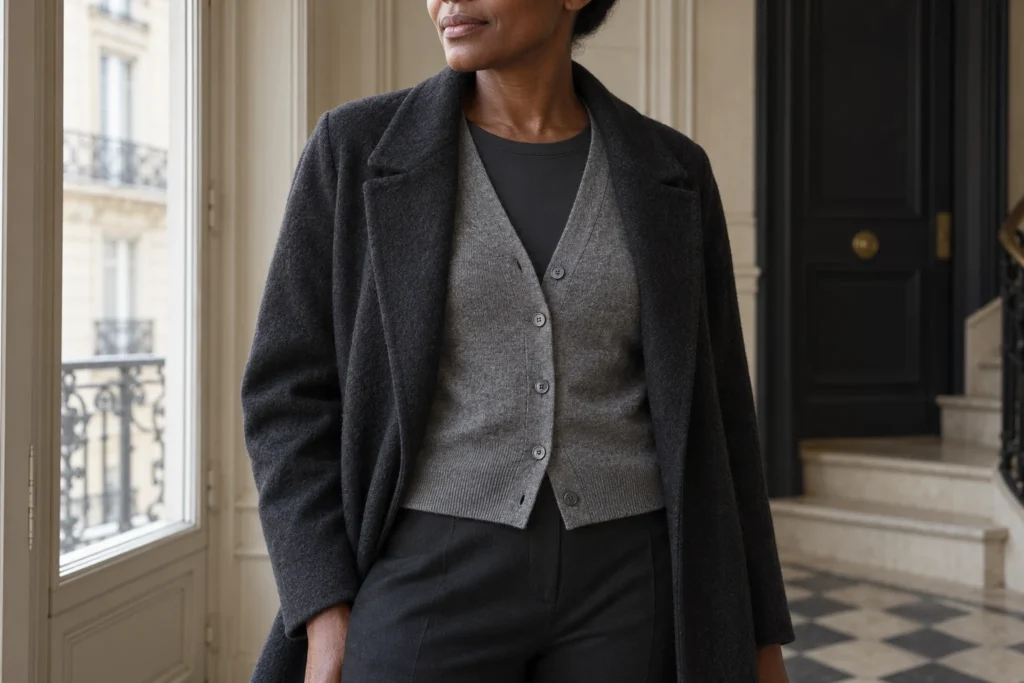
For a quieter outfit, repeat related shades while varying the surfaces: a smooth charcoal base, a softly textured gray cardigan, and a dark wool coat. The pieces remain distinct without needing strong color contrast.
If you want a visible collar or cuff, expose one detail at a time and check it with the coat on. A shirt hem, cardigan edge, scarf, and necklace all competing around the same opening can make an otherwise simple outfit feel busy.
Our guide to matching clothing colors offers more combinations. You can use the same palette throughout winter and change the character of an outfit through denim, knitwear, tailoring, and accessories.
9. Build a Winter Wardrobe Around Repeat Combinations
Before shopping, put together three outfits from what you own: one for work or appointments, one for casual days, and one for your most demanding regular weather. Photograph them with the outerwear and shoes included.
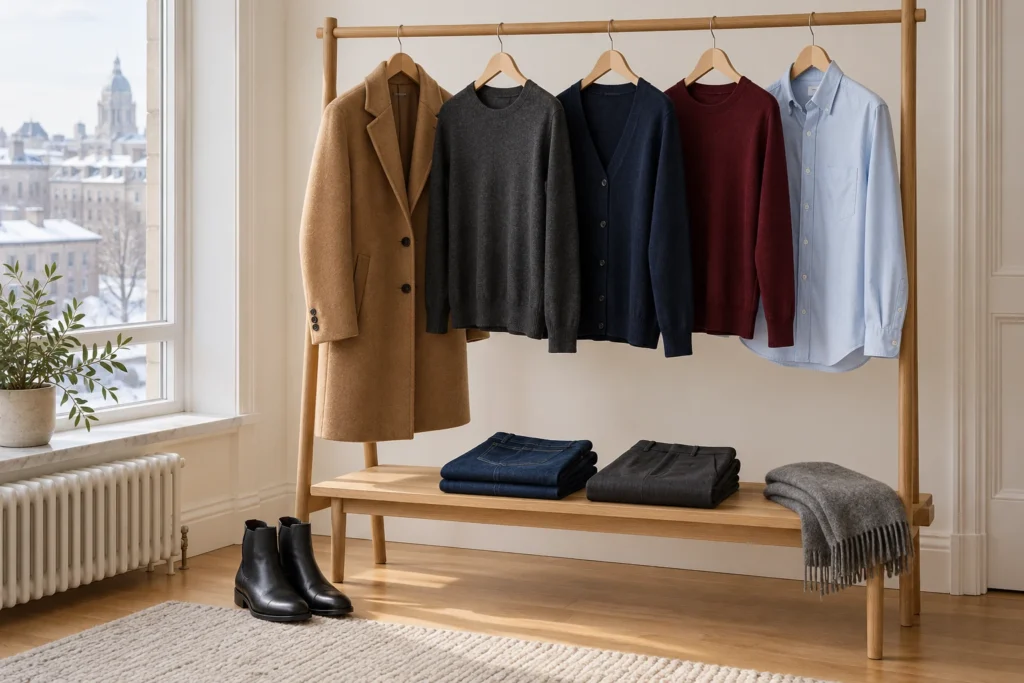
The missing piece should become easier to identify. Perhaps your knits all fit beneath one coat but not another, or you have several sweaters and no comfortable base layer.
When comparing a purchase, check:
- Compatibility: Does it fit over or under the pieces you plan to wear with it?
- Comfort: Can you sit, reach, and use the pockets with the full outfit on?
- Care: Will you realistically follow the washing, drying, or cleaning instructions?
- Use: Does it solve a recurring need, rather than repeat something you already have?
Use our capsule wardrobe guide to organize those combinations. If you already have lighter layers from our fall outfit ideas for women, start by seeing which ones fit beneath your winter outerwear.
Keep your budget focused on the gap you found. A secondhand coat with the right sleeve room or an alteration to a trouser hem may be more useful than another sweater.
Frequently Asked Questions
How many layers should I wear in winter?
Use the base, insulation, and weather-protection functions as a starting point. The number of garments depends on the conditions: one insulated coat may cover two functions, while colder outings may require additional layers.
How do I layer clothes without feeling bulky?
Start with thin inner pieces, check that sleeves fit inside one another, and avoid stacking thick tucked hems. Keep room for movement rather than squeezing every layer into a narrow coat.
Can I wear wide-leg trousers in winter?
Yes. Choose a fabric and underlayers suited to the day, then check the hem over your winter shoes. Keep it clear of wet pavement, and make sure any thermal bottoms fit comfortably beneath it.
What if wool feels itchy?
Try a smooth layer underneath or choose a fabric you find more comfortable, such as a suitable synthetic knit or fleece. Check the finished garment against your skin; a fiber name alone does not tell you how it will feel.
How can I make a practical puffer look more polished?
Pair it with trousers that hang neatly over the shoes and keep the visible layers coordinated. A plain crewneck and a simple bag leave the coat’s shape as the main feature.
Before heading out, fasten the coat, sit down, and reach for your bag. Then take the coat off and check the outfit underneath. Comfortable sleeves, dry hems, suitable shoes, and a layer you can remove will make these winter outfits easier to wear throughout the day.



1 thought on “Winter Layering Outfits That Look Stylish: 8 Wearable Ideas”