
By Olivia Parker
A wool sweater can come out clean and still fit differently: the sleeves finish higher, the ribbed hem tightens, or the body grows longer after hanging wet. To wash a wool sweater without shrinking it, start with its care label, use a suitable wool detergent, keep handling gentle, and follow the drying instructions as carefully as the washing instructions.
The quick answer: For a hand-washable sweater, use cool or lukewarm water as the label directs, gently soak and rinse, press out moisture without twisting, and reshape it to dry flat. Machine wash only when the garment label permits it. Take a dry-clean-only sweater to a professional cleaner.
The useful distinction is between cleaning the knit and preserving its shape. These steps address both, with a simple way to record the fit before and after washing.
1. Start With the Care Label, Not the Fiber Percentage
Find the sewn-in care instructions before filling a basin. “100% wool” describes the fiber content; it does not tell you whether the finished sweater is suitable for a washing machine. Merino is a type of wool, rather than a promise of easy care.
Read the washing and drying instructions together:
| What the label says | What to do |
|---|---|
| Hand wash | Use a basin and the temperature specified for that garment. |
| Machine wash, with a stated temperature and gentle process | Follow those instructions using a suitable machine program. |
| Dry clean only or do not wash | Arrange the indicated professional care instead of washing at home. |
| Machine washable, but do not tumble dry | Machine wash as directed, then use the permitted drying method. |
| Missing or unreadable instructions | Ask the manufacturer or a professional cleaner before choosing a method. |
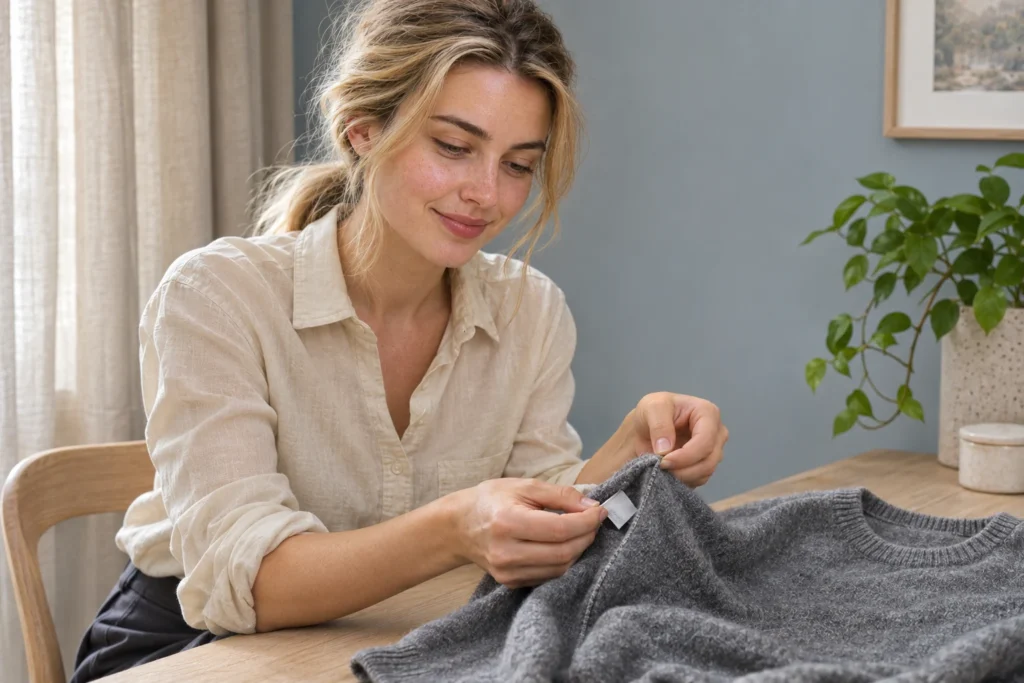
A number inside a wash-tub symbol gives the maximum washing temperature. Bars beneath the tub indicate reduced mechanical action; two bars mean a very mild process. GINETEX’s official care-symbol guide explains these distinctions.
Check the full garment, including contrasting trims, embroidery, and linings. A wool blend still needs the care specified for that particular sweater.
When building a capsule wardrobe, make drying space part of the buying decision. A sweater that needs to lie flat has a different laundry routine from a machine-washable cotton top.
2. Set Up the Basin and Choose a Wool Detergent
Have the drying area ready before the sweater gets wet. You need:
- A clean basin or sink with room for the sweater.
- Detergent explicitly suitable for wool.
- Two clean, pale, lint-free towels.
- A flat drying surface or mesh sweater rack.
- A measuring tape and somewhere to note the garment’s dimensions.
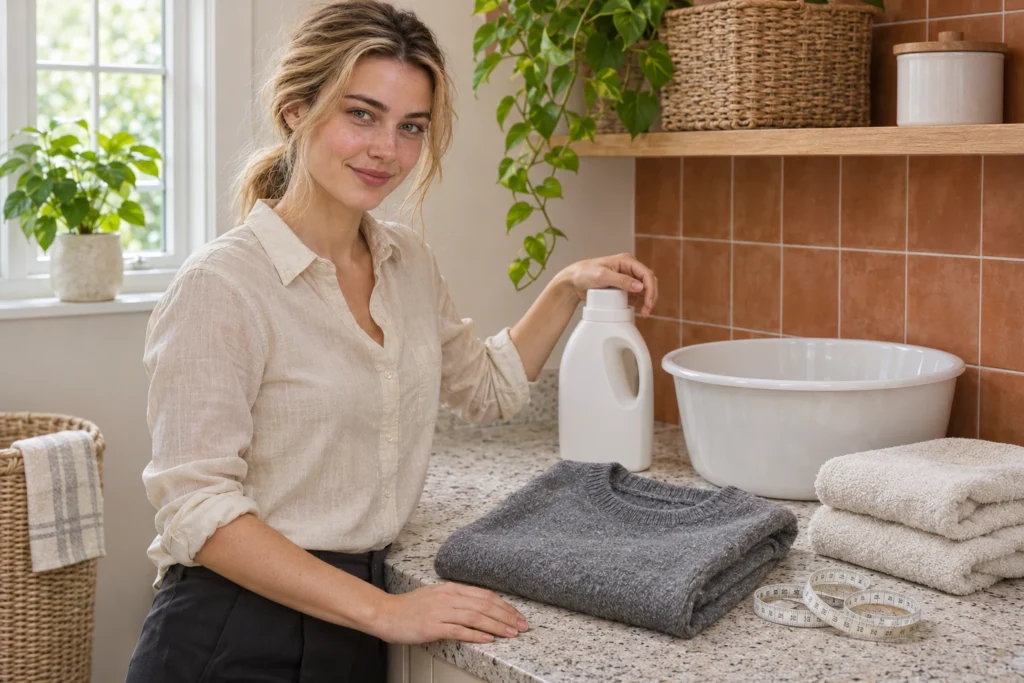
Choose a mild, neutral wool detergent and use its stated dose. Woolmark’s detergent guidance advises against heavy-duty detergents, biological detergents containing enzymes, and products containing bleach. Avoid both chlorine and oxygen bleach.
A detergent described simply as “gentle” is worth checking more closely: look for an explicit wool-care claim. Cap sizes and concentrations vary, so “a couple of capfuls” is not a reliable universal instruction.
Inspect the neckline, cuffs, and underarms. For a fresh spill, blot excess liquid with a clean absorbent cloth. Choose any further treatment for the actual stain and garment rather than scrubbing harder or making the whole wash hotter. Woolmark’s stain-removal guide separates treatments by stain type; persistent marks on a valuable sweater are a sensible reason to consult a cleaner.
Shop the care setup: a verified detergent option
Ecover Wool & Silk Laundry Liquid is described as Woolmark-approved on its official product page. It is a fragranced option for washable woolens; follow the directions on the version sold in your country. A wool detergent you already own may serve the same purpose.
View Ecover Wool & Silk Laundry Liquid
3. Record the Sweater’s Shape Before Washing
Lay the dry sweater flat without pulling the fabric. Photograph the front, then note a few measurements. This gives you a reference for reshaping instead of relying on memory.
| Measurement | Use the same points before and after |
|---|---|
| Body length | From the high shoulder point beside the neckline to the bottom edge. |
| Chest width | Straight across the body at the underarm level, with the fabric relaxed. |
| Sleeve length | From the shoulder seam to the cuff edge; for a raglan sleeve, choose and photograph another repeatable starting point. |
| Hem width | Across the bottom ribbing without stretching it open. |
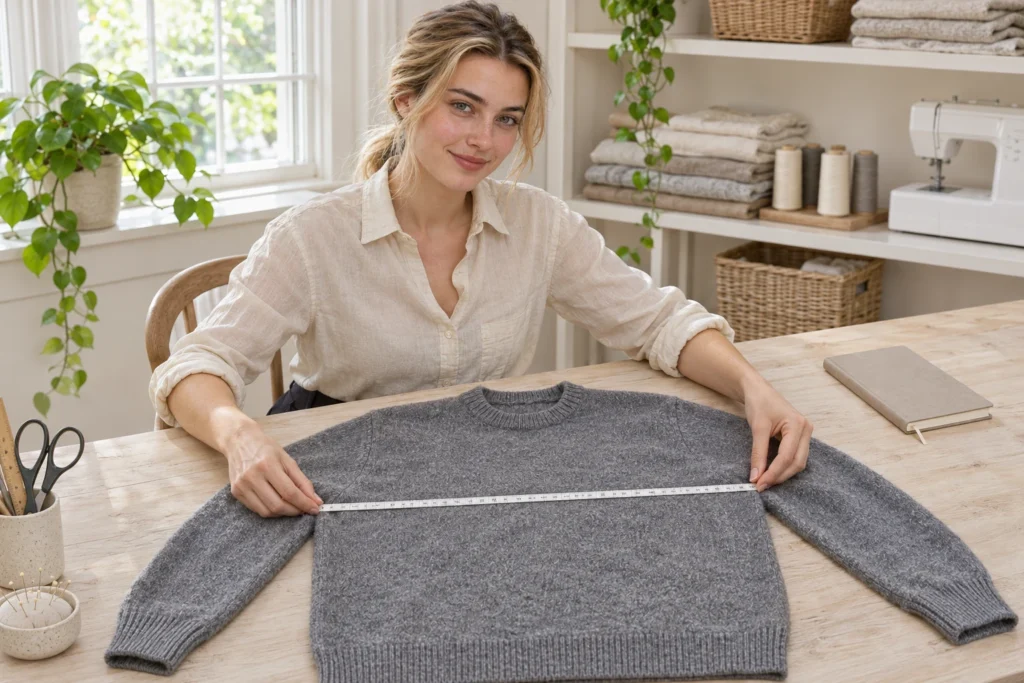
Record inches or centimeters consistently. The chest measurement here is the sweater’s flat width, not your body’s chest circumference.
Photograph any existing unevenness, too. A slightly twisted side seam or longer back hem may be part of the original garment.
For a useful wash record, note the detergent, dose, water temperature, washing method, and drying arrangement. Compare the measurements again only after the sweater is fully dry and resting flat. This is a home reference, rather than a laboratory shrinkage test.
4. How to Hand Wash a Wool Sweater
Use this method for a sweater whose label permits hand washing. Woolmark’s wool-washing guide gives approximately 30°C, or 86°F, as a general hand-washing temperature. If your garment specifies cold water or another restriction, follow that instruction.
Step 1: Prepare the water
Fill the clean basin with enough water for the sweater to sit comfortably submerged. Mix in the measured wool detergent before adding the garment. Keep the sweater clear while adjusting the taps.
Step 2: Submerge it gently
Turn the sweater inside out. Lower it into the water and press it down gently so the fabric becomes wet throughout. Avoid rubbing panels together, pulling the sleeves, or kneading the knit repeatedly.
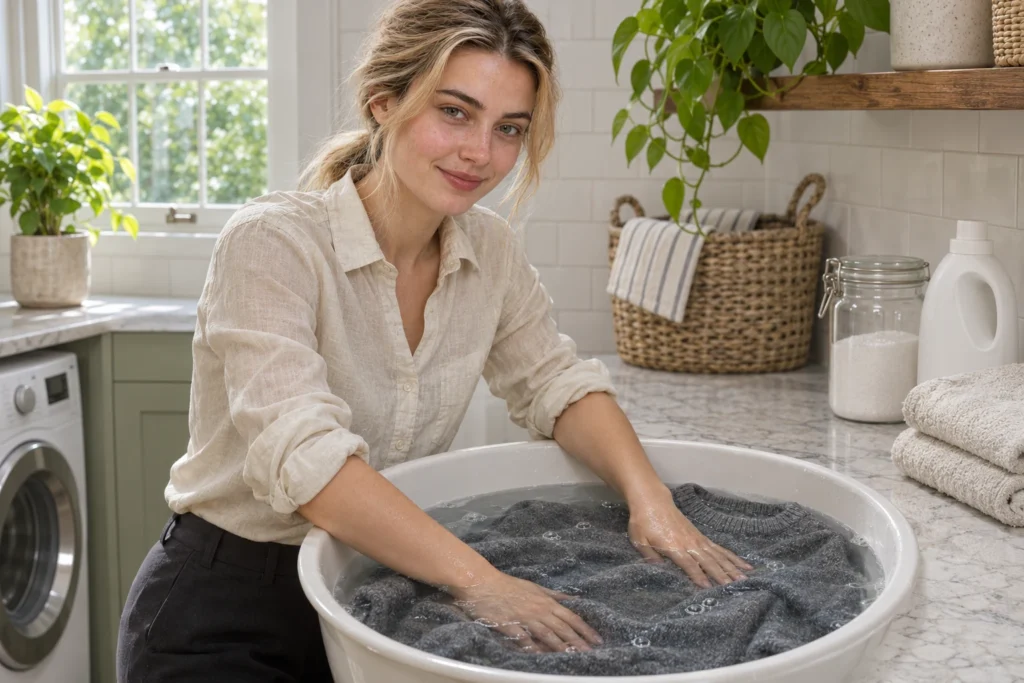
Step 3: Allow a short soak
Woolmark’s sweater guide recommends a 10-minute soak. Follow a different time if your garment or chosen detergent requires one; a longer soak is not automatically more effective.
Step 4: Drain and rinse
Keep the sweater supported in the basin while draining. Refill with clean water and gently press water through the knit.
American Wool’s care instructions recommend two rinses at the same temperature as the wash water. Use further clean water if detergent remains. A specialist no-rinse wash has its own directions, so check the bottle before applying this rinsing sequence.
Step 5: Press out water
With the garment still supported, gently press out excess water. Scoop it up from underneath when transferring it to a towel, supporting the body and sleeves together.
Avoid lifting a soaked sweater by its shoulders or cuffs. Wet fabric needs support across its length.
5. Machine Wash Only When the Label Allows It
A machine can be appropriate for washable wool. The permission comes from the garment’s care instructions, followed by a compatible program and temperature.
Woolmark’s machine-washing advice recommends turning the sweater inside out or using a laundry bag, adding wool detergent, and selecting the wool program.
Before starting:
- Check that the chosen program meets the garment’s temperature and handling instructions.
- Use the recommended wool-wash load size rather than filling the drum as you would for everyday cotton laundry.
- Separate pale and dark colors.
- Follow the machine’s wool-program directions for detergent placement and spin settings.
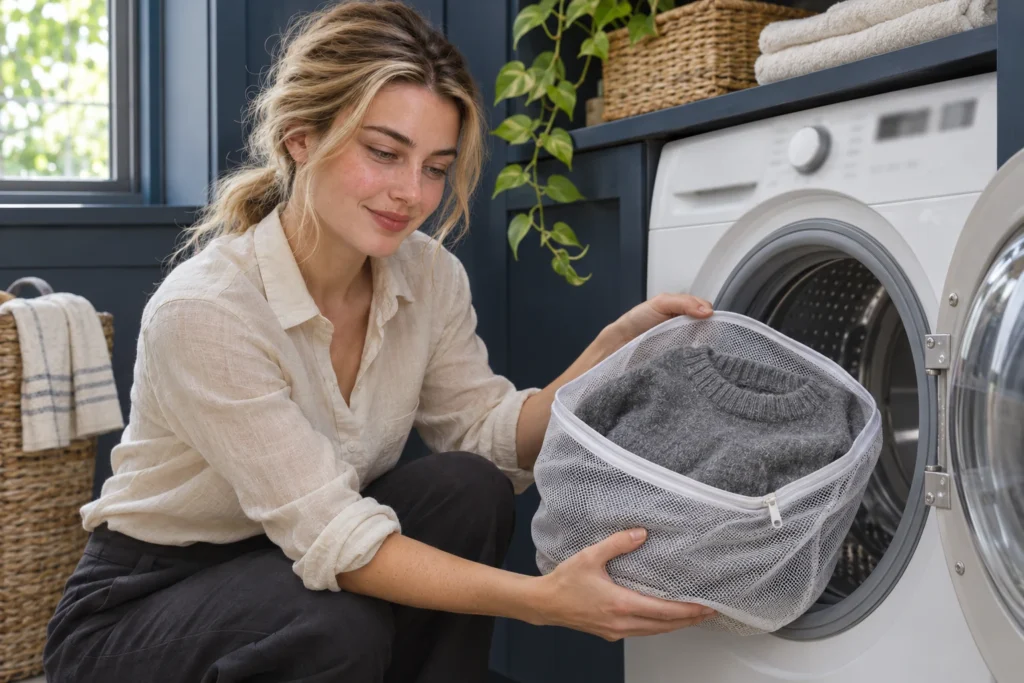
If there is no wool program, Woolmark suggests a cold-water or delicates cycle for suitable machine-washable garments. Check that the program actually meets your sweater’s requirements.
A setting called “Hand Wash” needs the same scrutiny: use it for a hand-wash-only garment only if the garment maker and appliance instructions allow that combination.
Remove the sweater promptly when the program finishes and support it from underneath. Machine-washable and tumble-dryable are separate care permissions.
6. Dry the Sweater Flat and Reshape It Gently
Spread the sweater on a clean towel, roll the towel around it, and press gently to absorb moisture. Unroll it and move it to a dry towel or suitable flat mesh rack.
Lay the sleeves and body fully on the surface. Smooth folds with your palms and adjust the outline toward the measurements recorded before washing. Align the side seams, straighten the cuffs, and let the ribbing sit naturally rather than pulling it wider.
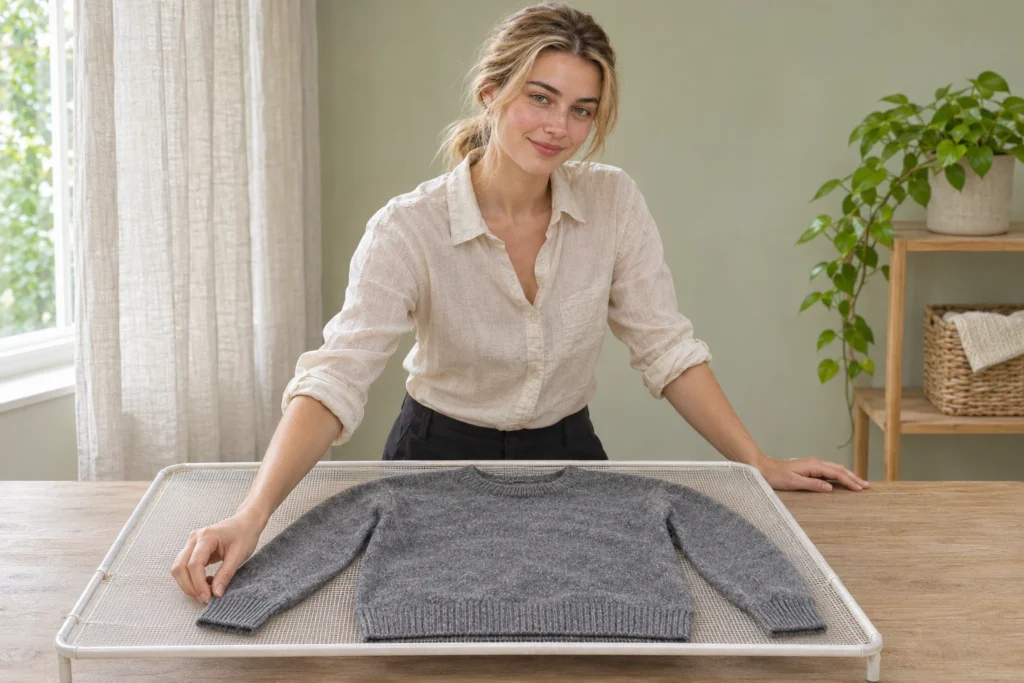
Woolmark’s flat-drying instructions recommend keeping knitwear out of direct sunlight and away from direct heat. Hanging can stretch a wet sweater under its own weight. Avoid radiators and drying it draped over a narrow rail.
Check the underside as it dries. Replace a damp towel when needed, and support the whole garment if you reposition it. Feel inside the cuffs, underarms, and thick neckline before folding; a dry surface can conceal damp layers.
There is no dependable drying time for every sweater. Knit thickness, room conditions, and the drying surface all matter. Allow extra time rather than using heat to meet a deadline.
Only tumble dry when the label explicitly allows it, using the specified settings.
Shop the care setup: a verified drying-rack option
The OXO Folding Sweater Dryer has a horizontal mesh surface designed to support garments while air circulates. Check that your sweater’s body and sleeves fit on the usable surface. An existing suitable rack or towel arrangement may be enough.
View the OXO Folding Sweater Dryer
7. What If the Wool Sweater Has Already Shrunk?
Compare its measurements and texture with the original garment. A change in outline and severe felting need different expectations.
Woolmark explains that agitation in water can make wool fibers interlock. Heat, moisture, and mechanical action can contribute to felting, which compacts the fabric. Cold water alone does not make vigorous washing suitable.
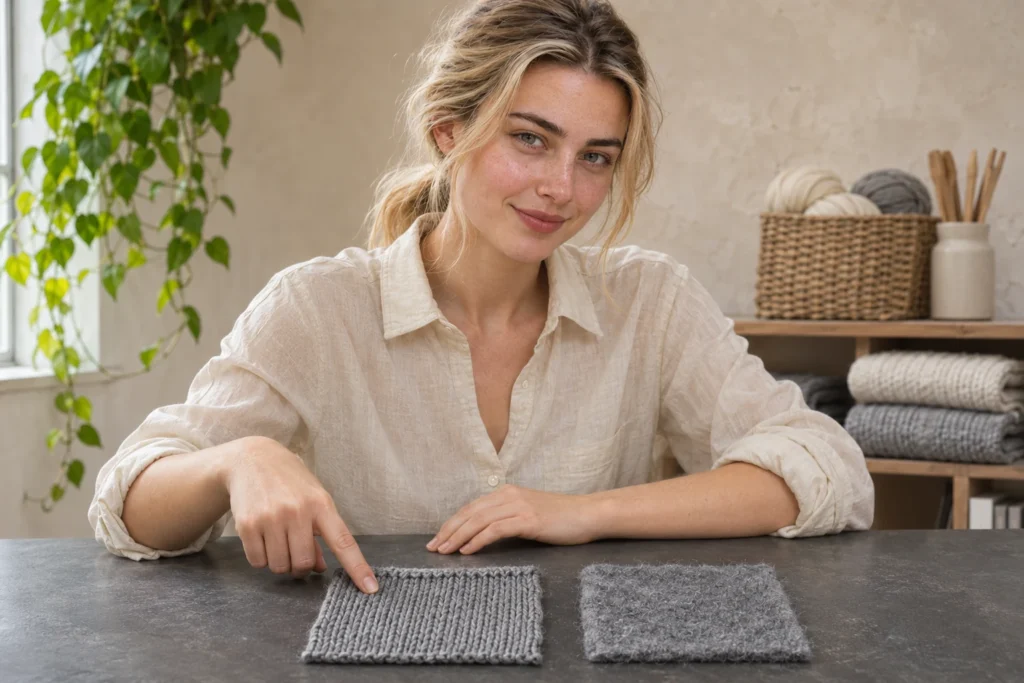
For washable knitwear that is mildly out of shape, careful damp reshaping may help. Woolmark’s sweater-drying guidance distinguishes recoverable distortion from severe felting, which cannot be reversed.
Stop pulling if the fabric resists. Forceful stretching can distort the neckline or seams without restoring the original fabric.
Treat conditioner and “unshrinking” recipes cautiously: they are not a reliable reversal of felting. For a valuable garment, ask a knitwear repair specialist or cleaner to assess what recovery is realistic.
8. Refresh Between Wears and Store It Clean
Wash according to the sweater’s condition: visible soil, persistent odor, sweat, and the care label matter more than a fixed wear count.
For an otherwise clean knit with a lingering food smell, try airing it flat first. Woolmark’s everyday-care guidance recommends flat airing and resting wool between wears, as well as folding knitted garments for storage.
A smooth, washable underlayer can make sense beneath an everyday sweater. Choose sleeves and a neckline that sit comfortably inside the knit; our winter layering guide explains how to check that space without bunching.
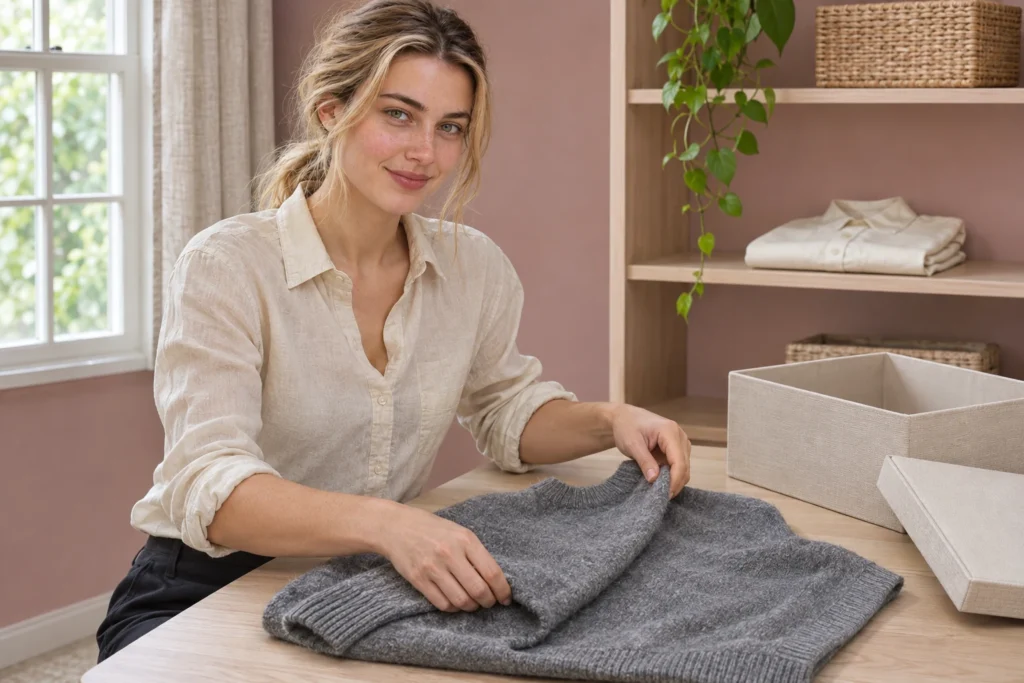
Before seasonal storage, clean the sweater as directed and let it dry completely. Fold it into a clean, dry storage space. Food residue and body oils can attract moths, so address them before packing knitwear away.
Keep useful lightweight pieces accessible during a wardrobe change. A fine cardigan may still belong in your spring capsule wardrobe, even when heavier knits are ready for storage.
Frequently Asked Questions
Can you wash a 100% wool sweater at home?
Yes, if its care label permits washing. Fiber content alone does not establish whether hand washing, machine washing, or professional cleaning is appropriate.
Can you wash merino wool on a normal cycle?
Use the program specified for the garment. Some merino sweaters are machine washable, but that does not make a normal cotton cycle appropriate.
Can you use shampoo to wash wool?
Choose a detergent explicitly intended for wool. Shampoo formulations vary, and a hair-care label does not establish a suitable garment-washing dose or method.
Should you wash wool in cold or warm water?
Follow the garment label. Cool or lukewarm water is common in wool-care guidance; approximately 30°C is Woolmark’s general hand-washing reference. Avoid treating “warm” as an instruction to use hot tap water.
Can a wool-blend sweater go in the dryer?
Only when its care instructions allow tumble drying. A synthetic fiber in the blend does not establish dryer suitability for the finished garment.
Before putting the sweater away, check that the cuffs and neckline are dry, then compare its relaxed shape with your original notes. That record gives you a practical starting point for the next wash: the method used, any change observed, and the drying space the garment actually needed.