By Olivia Parker
Deciding what to wear to a winter wedding means dressing for two settings: the celebration and the journey between venues. A velvet dress might feel comfortable during the ceremony, then too warm beside a crowded dance floor. Beautiful satin trousers can work all evening, provided their hems stay clear of wet pavement.
Start with the invitation, then work through the forecast, outdoor time, and footwear. Your outfit should still feel complete when you hand over your coat.
The quick answer: For many cocktail or semi-formal winter weddings, a dressy midi, tailored pantsuit, or occasion jumpsuit works well with suitable outerwear and comfortable dress shoes. For black tie, a floor-length evening gown or tuxedo is a dependable starting point. Adjust the layers to the actual temperature rather than assuming every winter wedding calls for heavy clothing.
Start With the Dress Code and the Day’s Schedule
The couple’s instructions come first. A country-house wedding can be black tie; a city restaurant celebration can be relaxed. The venue helps interpret an invitation, but it does not replace the stated dress code.
Emily Post’s dress-code guide distinguishes black tie from black-tie optional and allows several forms of dressy attire. Use these combinations as starting points:
| Invitation | Dresses and separates | Suits and tailoring |
|---|---|---|
| Black tie | A formal, floor-length gown is a dependable choice; confirm alternatives for a particularly traditional event. | A tuxedo with a formal shirt, bow tie, and dress shoes. |
| Black-tie optional | An evening gown, sophisticated cocktail dress, or genuinely dressy separates. | A tuxedo or dark suit with a dress shirt and tie. |
| Formal | A gown, dressy midi, or evening ensemble, interpreted through the time and the hosts’ guidance. | A dark suit and tie, unless the invitation specifies black tie. |
| Cocktail | An occasion dress, elegant jumpsuit, or dressy pantsuit. | A tailored suit, dress shirt, and appropriate shoes. |
| Semi-formal or dressy casual | Polished dresses or separates, with fabric and accessories suited to the event. | A suit or tailored jacket and trousers, depending on the hosts’ expectations. |
Also check the schedule. Will there be outdoor photographs, a walk between buildings, or a ceremony in a lightly heated space? Ask the venue about those practical details.
For a religious or cultural ceremony, follow any requirements for coverage, headwear, or footwear. A hat or fascinator is a choice to confirm for a British wedding, rather than an automatic requirement for every UK invitation.
Choose Winter Wedding Fabrics and Colors for the Actual Weather
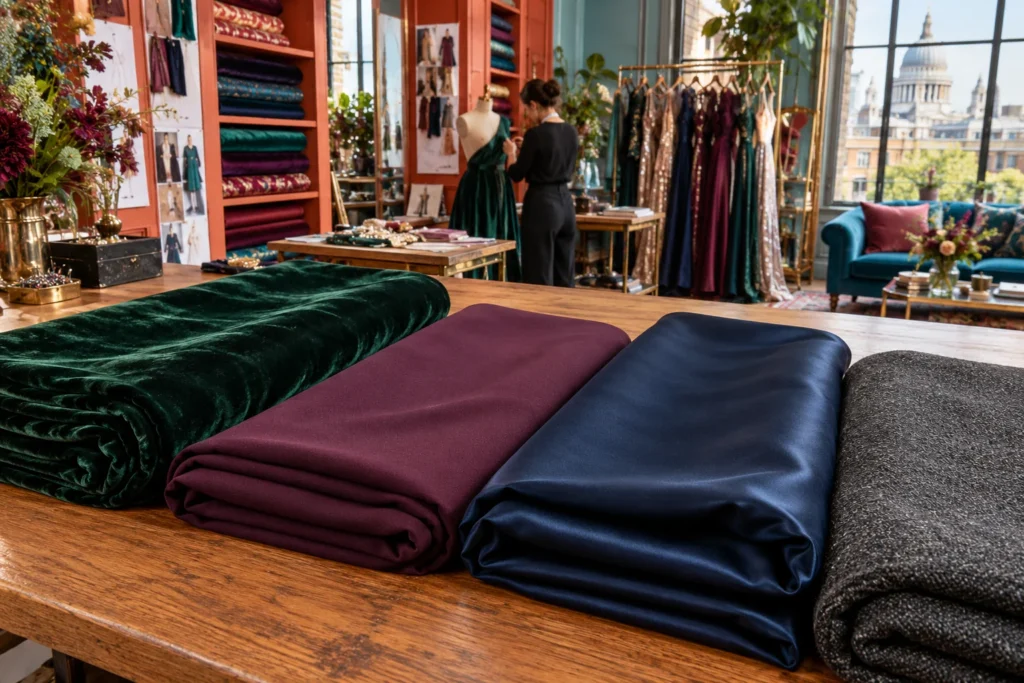
Velvet brings surface texture to a simple silhouette. Crepe can give trousers and dresses a clean drape, while jacquard adds pattern through the fabric’s construction. Satin catches the light beautifully, but a satin finish alone tells you little about warmth: check the fiber content, thickness, and lining.
Long sleeves are useful, although sheer lace and burnout velvet leave more skin exposed than their silhouettes suggest. Hold the garment up to the light and try it with the layers you intend to wear. A lined dress with comfortable room through the shoulders may be more practical than a heavier one that restricts movement.
For color, consider burgundy with navy, forest green with black, or plum with pewter accessories. Dusty blue, rose, and restrained floral prints can also work in winter; dark colors are an option, not a requirement. Our guide to matching clothing colors can help connect your coat, outfit, and shoes without making everything identical.
Follow the couple’s color requests. For a wedding where white is bridal, avoid an all-white or ivory guest ensemble unless invited to wear it. Debrett’s wedding-guest guidance advises against head-to-toe white or cream. At celebrations with different traditions, ask which colors are reserved or discouraged.
Five Winter Wedding Guest Outfits You Can Build Around
The following combinations cover different levels of formality. Shop your wardrobe first, then fill the gap that affects comfort or dress-code suitability.
Shop the inspiration links point to similar pieces or clearly identified collections. Check current measurements, size availability, delivery, and return terms for your country.
1. A Long-Sleeve Velvet Midi for a Cocktail Wedding
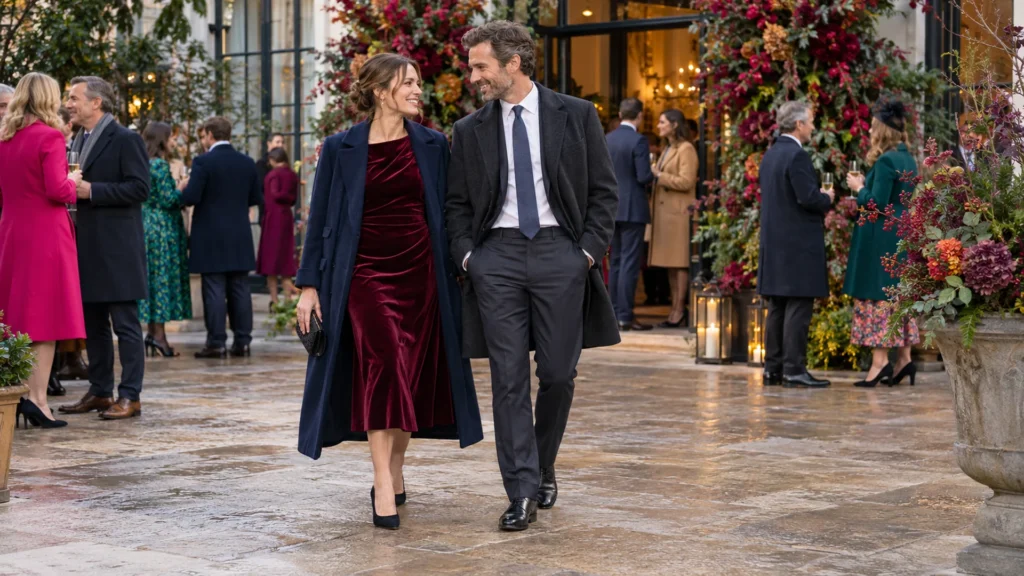
Try a burgundy or forest-green velvet midi with black closed-toe pumps and a navy coat. The dress supplies the texture, so a compact bag and small earrings can be enough.
Check the waist seam while sitting and the sleeves while reaching forward. If the skirt is narrow, make sure its vent allows a comfortable stride. A wrap neckline should remain secure when you lean over a table.
Shop the inspiration: View Adrianna Papell’s Long Sleeve Damask Burnout Velvet Midi Dress in Black, a patterned alternative to the solid-color idea. Check its coverage and care requirements before choosing it.
2. A Midnight-Blue Gown for a Black-Tie Celebration
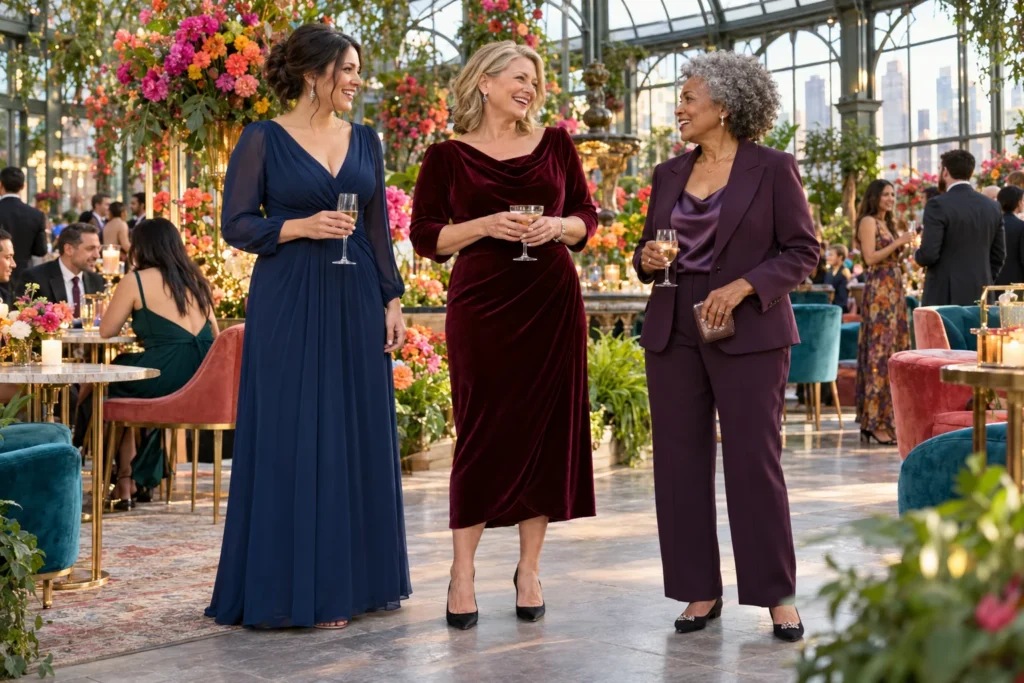
A midnight-blue evening gown, silver-toned earrings, and a small evening bag create a formal outfit without relying on heavy embellishment. Add a substantial coat for the journey.
Have the hem assessed with your chosen shoes. It should allow you to walk without repeatedly stepping on the front. If you prefer flats, choose dressy ones at the fitting; there is no benefit in tailoring the gown for heels you plan to remove immediately.
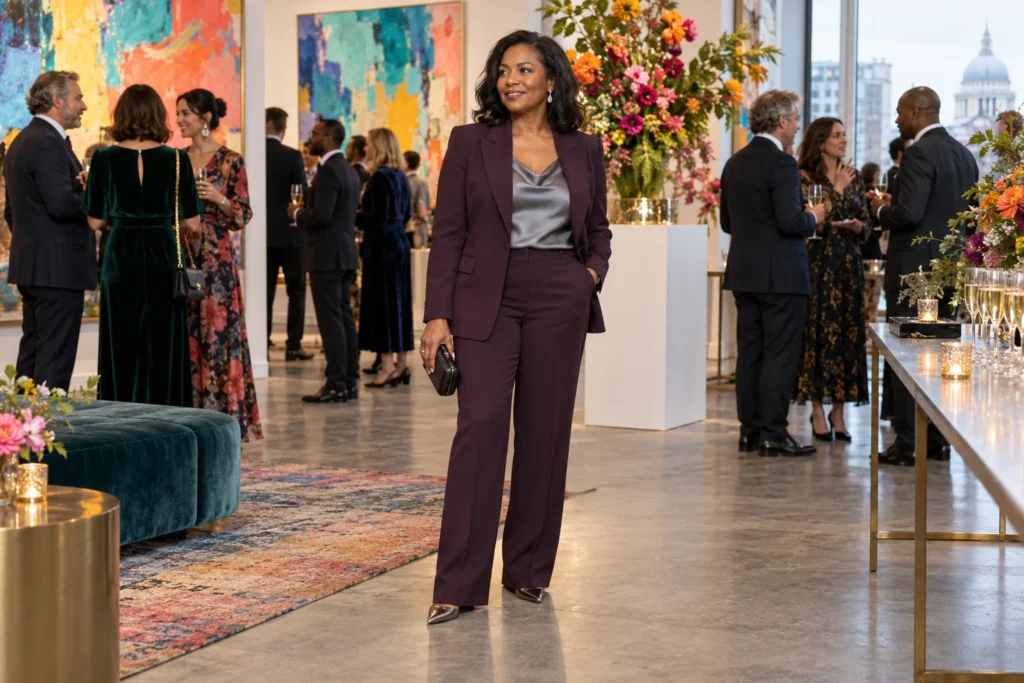
3. An Aubergine Pantsuit With a Satin Shell
An aubergine suit with a muted silver-gray top works well for many cocktail or semi-formal celebrations. The slight sheen of the top gives matte tailoring an evening finish.
Look for trousers that fall freely through the hip and thigh, and a jacket that closes without pulling. The shell should sit smoothly beneath the lapels. Use the hem-and-footwear guidance in our article on shoes to wear with wide-leg pants when planning alterations.
4. A Crepe Jumpsuit With a Dressy Jacket
A black or deep-teal occasion jumpsuit can suit a cocktail wedding, particularly with a structured evening jacket and polished flats or low heels. Choose a cut and fabric that feel appropriate to the invitation.
Sit, bend, and raise your arms during the fitting. A jumpsuit can fit at the waist yet pull through the torso. Test the fastening too: a back zipper that requires assistance may become inconvenient during a long reception.
Shop the inspiration: Browse Phase Eight’s wedding-guest jumpsuits. This is a collection link; compare each style’s coverage, fastening, and fabric separately.
5. A Printed Midi With Fine Knitwear for a Relaxed Wedding
For an explicitly relaxed daytime celebration, pair a plum-based printed midi with a fitted, fine-gauge cardigan, opaque tights if needed, and dressy flats. A defined neckline and neat buttons help the cardigan sit comfortably with the dress.
Keep the knit short enough to reveal the dress’s waist, or choose a longer, straight layer that hangs cleanly. This combination suits a more relaxed invitation; a casual cardigan does not automatically make a day dress suitable for formal eveningwear.
What to Wear Over a Dress or Suit
Try your coat over the complete outfit before deciding it fits. A coat that works over a T-shirt may compress a blazer or catch on a dress’s sleeves. Reach forward, sit down, and fasten it comfortably.
A long, clean-lined coat is a useful companion to a midi dress or trousers. Its hem does not need to match the outfit exactly; check that the visible layers hang neatly and that you can walk freely. A cropped evening jacket can work over a defined waist, but you may still need a proper outdoor coat.
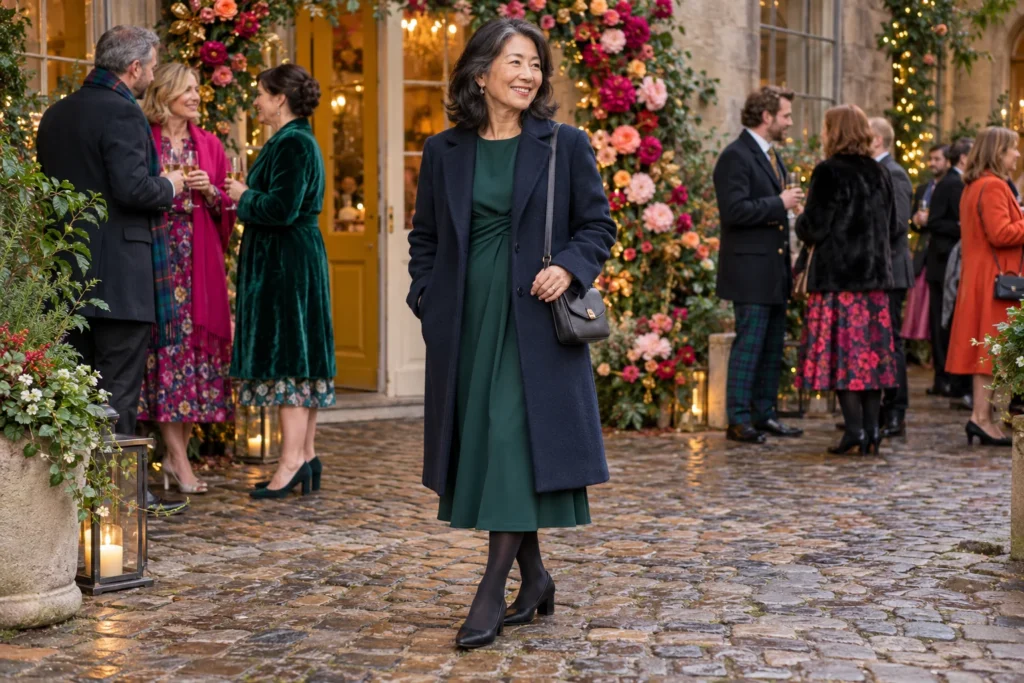
Shop the inspiration: View the Whistles Wool Blend Longline Coat in Navy at John Lewis. It offers a tailored outer-layer option; assess its fit and suitability for your conditions rather than treating any wool blend as a temperature guarantee.
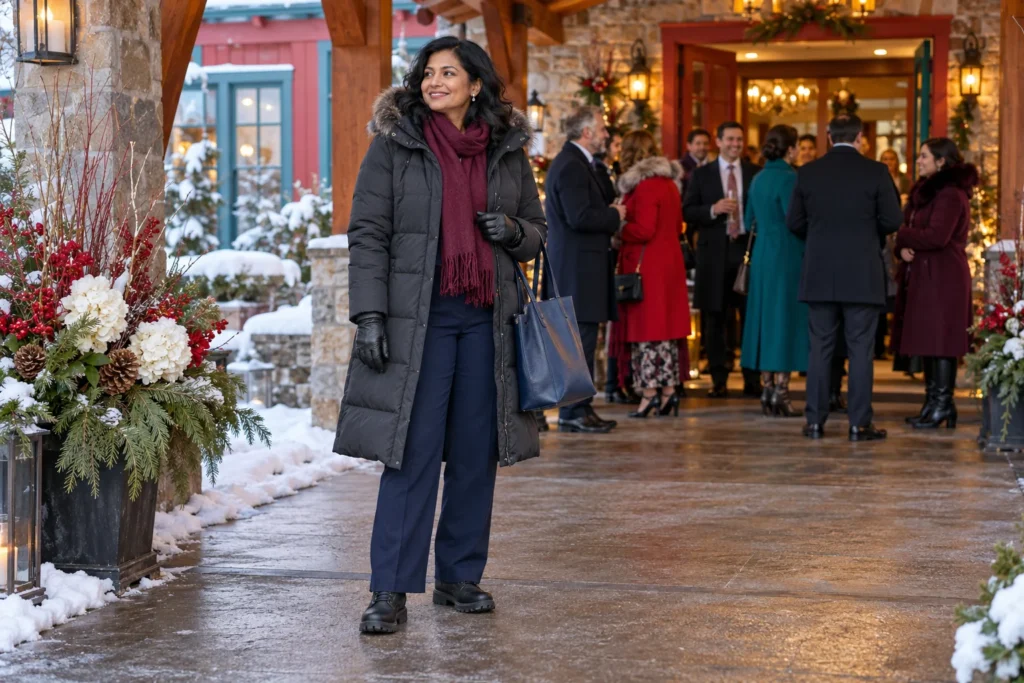
For freezing weather or a long outdoor wait, wear the insulation you need, including a puffer or parka. You can remove it indoors. A decorative stole or thin wrap is useful for light coverage, but it should not be your entire cold-weather plan.
If you add a thermal layer, check that its neckline and hems stay where you want them when seated. Keep the indoor layers manageable so you can adjust once the room warms up.
Choose Shoes, Boots, and Tights Together
Start with the walking surface. A dry hotel corridor, wet lawn, gravel path, and icy parking area require different decisions. No heel shape makes an icy surface safe; use appropriate winter footwear for the journey and change inside when necessary.
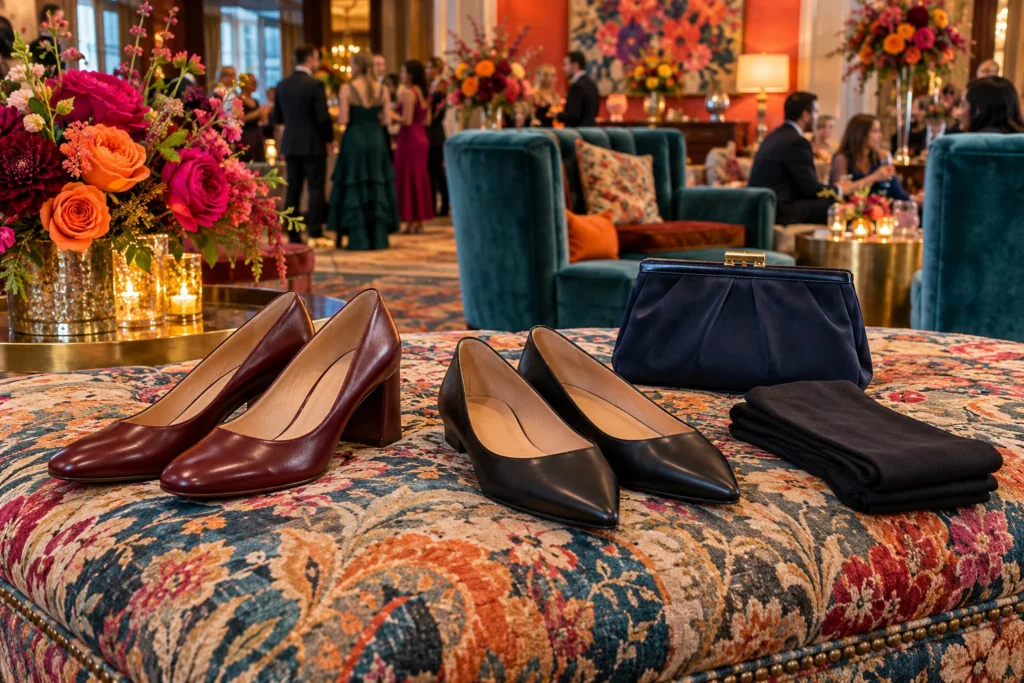
For the celebration, consider closed-toe pumps, dressy flats, or low heels that fit comfortably with your hosiery. A block heel may feel steadier than a narrow heel for some wearers, but fit, sole construction, heel height, and the surface all matter.
Dressy boots can work at some cocktail, semi-formal, and relaxed weddings. A slim shaft that fits beneath a midi skirt looks more continuous than a wide boot opening competing with the hem. For strict black tie, confirm whether your proposed boots suit the hosts’ expectations; dress shoes are the more conventional choice.
Tights are optional. Sheer styles offer a lighter visual finish, while opaque styles provide more coverage. Denier alone is not a warmth rating, so consider the product’s construction and how much time you will spend outside.
Try the tights with the dress and shoes together. Check for toe pressure, a rolling waistband, and a skirt lining that catches when you stand. If you prefer open-toe shoes for an entirely indoor reception, plan covered footwear for a cold or wet journey.
Adjust for the Venue, From City Hotel to Country House
A Heated Hotel or Museum
Choose an outfit you can comfortably wear after removing your coat. A heavily lined velvet dress, thermal top, and thick tights may be more warmth than you want indoors. Confirm whether there is a coat check and somewhere to leave outdoor footwear.
A Barn, Country House, or Outdoor Ceremony
Ask about heating, flooring, and the route between spaces. A barn reception may be fully heated, while a beautiful historic ceremony room may feel cool. The label alone tells you little.
For prolonged outdoor time, build the outfit around an adequately warm coat, covered legs, gloves, and footwear suited to the ground. Long hems should clear damp paths. Bring indoor shoes only if there is a practical place to change and store the outdoor pair.
A Mild Coastal or Australian Winter Wedding
Use the local forecast rather than copying a snowy-city outfit. A lighter lined dress, tailored jacket, or removable wrap may be sufficient for a mild celebration, while an exposed evening venue may call for more protection. Rain and wind can matter as much as the daytime temperature.
Wherever the wedding takes place, check both the ceremony and reception arrangements. One outfit can serve both when its layers are easy to add and remove.
What Men Can Wear to a Winter Wedding
For black tie, begin with a correctly fitted tuxedo, formal white shirt, bow tie, and appropriate dress shoes. For black-tie optional, a dark suit and tie is an accepted alternative. Emily Post’s wedding-attire guide also distinguishes daytime formality from evening expectations.
For many cocktail or semi-formal weddings, a navy or charcoal suit with a dress shirt and tie is a useful starting point. A slightly heavier wool fabric can suit cooler conditions, but choose its weight for the heated room as well as the journey. A waistcoat adds another layer; an outdoor coat still has its own job.

Check that the jacket lies smoothly at the collar and that the trousers allow comfortable sitting. Wear socks that cover the ankle when seated if you want a continuous formal finish. Try the overcoat over the suit, especially across the shoulders and upper arms.
A fine-knit roll-neck and tailored trousers may suit an expressly relaxed celebration. Keep a formal shirt and the required neckwear when the invitation calls for them.
Finish With Accessories, Fit, and a Repeat-Wear Plan
Choose jewelry around the actual neckline. A pendant should not repeatedly catch on its edge, and a heavily embellished bodice may need little additional decoration. Our guide to layering necklaces with different necklines explains how to keep chains visible and separated.
Test the bag with your phone in its case, cards, keys, and anything you need throughout the day. Apply the same capacity checks used when choosing an everyday handbag: the opening and closure matter as much as the outside dimensions. A small shoulder bag can leave your hands available for a walking aid, a drink, or greeting other guests.
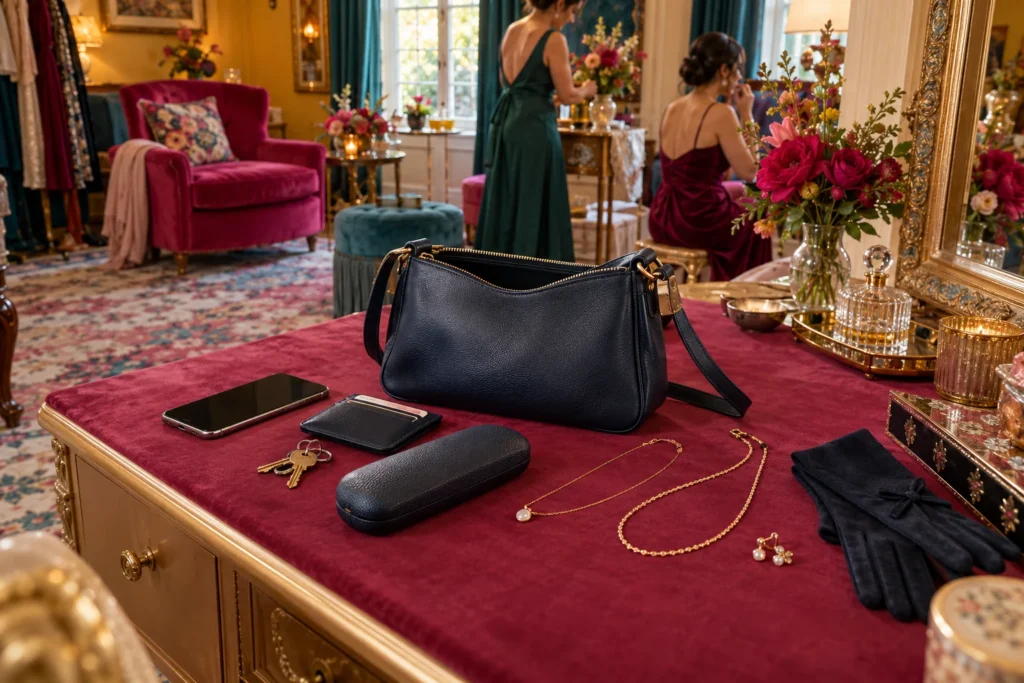
Before buying an entirely new outfit, identify the missing piece. Altering existing trousers, borrowing an evening bag, or renting a formal outfit may solve the problem. Compare the full cost, including alterations, cleaning, delivery, and returns.
Check care instructions before steaming velvet, pressing satin, or packing an embellished garment. If the label is unclear, ask the maker or a suitable cleaner. Finish with a seated fitting and a short indoor walk in the complete outfit, including the coat and bag.
Frequently Asked Questions
Can You Wear Black to a Winter Wedding?
Black works at many contemporary weddings, especially evening celebrations. The invitation and the couple’s cultural or family expectations still come first. Texture, jewelry, or a colored accessory can give a simple black outfit a more celebratory finish.
Can You Wear a Sleeveless Dress in Winter?
Yes, when it suits the dress code and you have appropriate layers. A heated reception may be comfortable in a sleeveless dress, but plan for the journey, outdoor photographs, and any ceremony coverage requirements.
Can You Wear Trousers Instead of a Dress?
Yes. A dressy pantsuit or evening separates can suit many weddings. Match the tailoring, fabric, and accessories to the invitation. For a particularly traditional black-tie event, confirm expectations before choosing an alternative to a gown or tuxedo.
Is a Short Dress Appropriate?
It can be for some cocktail or relaxed celebrations. Consider its cut, fabric, and suitability for the ceremony. Adding tights changes coverage, but it does not change the underlying formality of the dress.
What If the Invitation Has No Dress Code?
Check the wedding website, time, venue, and any guidance from the hosts. If it remains unclear, ask the couple or their designated contact a specific question, such as whether they expect cocktail outfits or formal eveningwear.
A Final Outfit Check
Put everything on together before the day: outfit, underwear, tights or socks, shoes, coat, jewelry, and bag. Sit, walk, reach forward, and check your hems. Then plan the journey and where you will leave any extra layers.
The right winter wedding outfit lets you move between the ceremony, photographs, dinner, and dancing with a few straightforward adjustments. Once those details work, you can give the celebration your attention.