By Olivia Parker
A blazer folded over your arm on the train can earn its place once you sit beneath an air-conditioning vent. That is the starting point for these summer work outfits for women: a complete base outfit for the journey, with a separate layer chosen for the hours indoors.
The most useful combinations let you change coverage without rearranging everything else. Your blouse stays tucked, your shoes still work with the hem, and the cardigan fits over your sleeves when you reach for the keyboard.
The quick answer: Wear a lightweight, opaque top or dress with room to move, then carry a cardigan, blazer, or overshirt for the office. Choose the indoor layer around how cold your workspace feels. If you regularly arrive with a damp top, carrying a clean replacement may be more useful than adding another layer over it.
Start with your employer’s dress code. These ideas cover a range of business-casual and relaxed offices; requirements for suits, sleeves, and footwear take priority. Our guide to smart casual for women explains the broader styling approach, while Corporette’s summer workwear guide provides a useful reference on how much office expectations can vary.
Shopping suggestions link to similar pieces from official US storefronts. Check local sizing, delivery, and returns if you are shopping from another country.
Choose an Office Layer You Can Wear While Working
A sweater draped over your shoulders may be enough for a short meeting. For several hours at a cold desk, start with sleeves and a front you can close. Try the layer while seated: the shoulder seams should allow you to reach forward, and the cuffs should stay clear of your hands.
| Indoor layer | A useful starting point for | Check before choosing it |
|---|---|---|
| Fine, closely knitted cardigan | Regular desk work with adjustable coverage | Enough sleeve room over your usual top |
| Woven blazer | Meetings and offices that expect tailoring | Lining, shoulder structure, and comfort when seated |
| Cotton overshirt | A relaxed workplace with a mild indoor chill | Whether it provides enough coverage for your desk |
| More substantial cardigan or jacket kept at work | A workspace where a thin layer feels insufficient | Storage and compatibility with several base outfits |
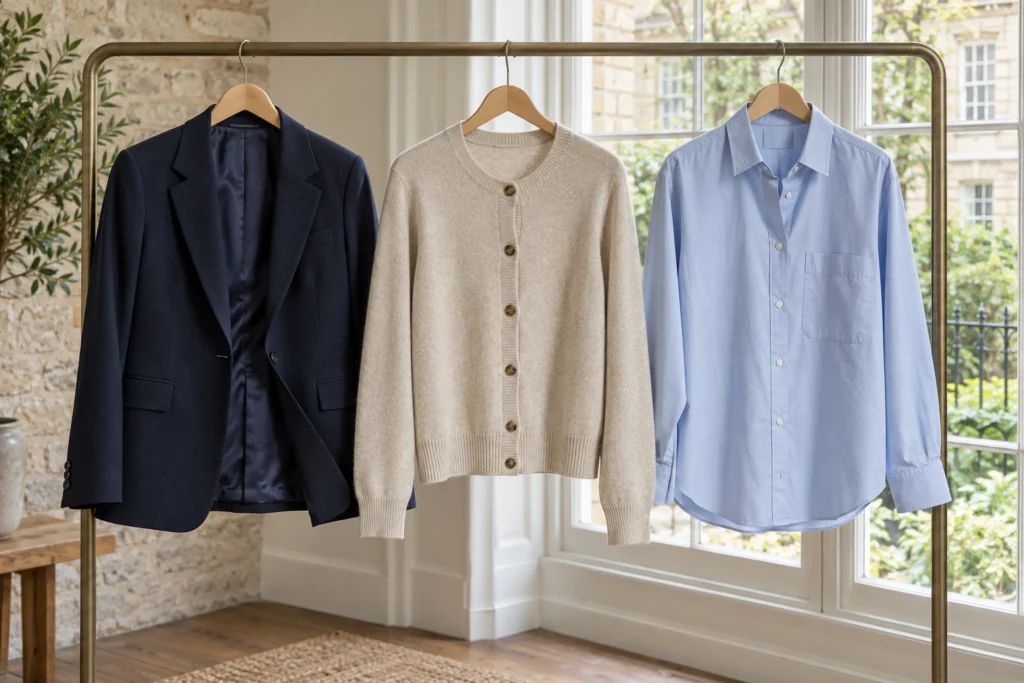
A lined jacket can be a sensible indoor choice when you carry it through the hot part of the day. Conversely, a very open knit may offer less coverage than you want, however substantial it looks on a hanger. If your legs get cold, choose trousers or a longer skirt as well.
For the commute, REI’s humidity guidance recommends lightweight clothing that hangs slightly away from the skin. Apply that idea to the base outfit, then add your office layer after arriving. Our guide to summer dressing in hot and humid weather covers outdoor fabric choices in more detail.
1. Wide-Leg Trousers, a Woven Shell, and a Blazer
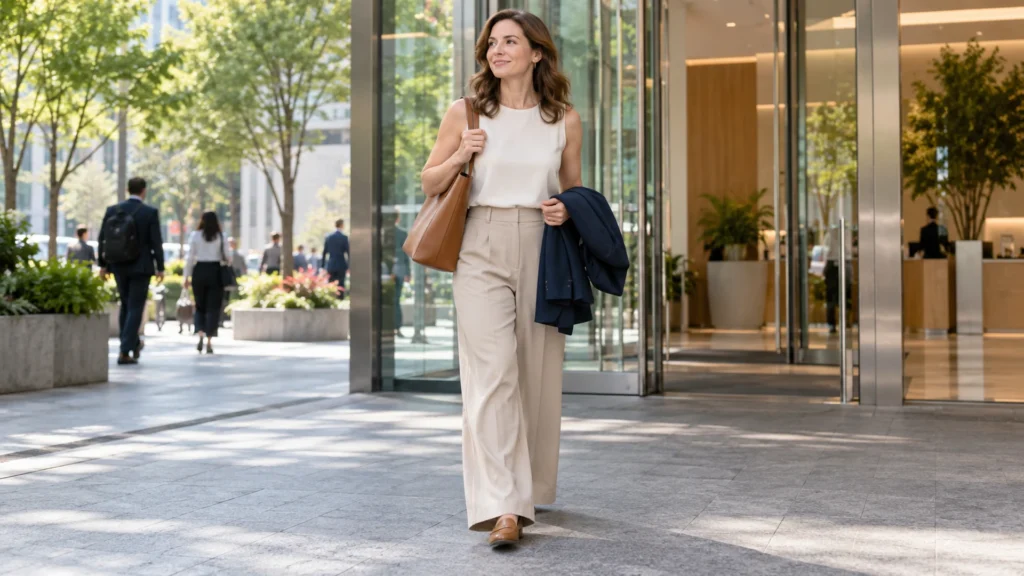
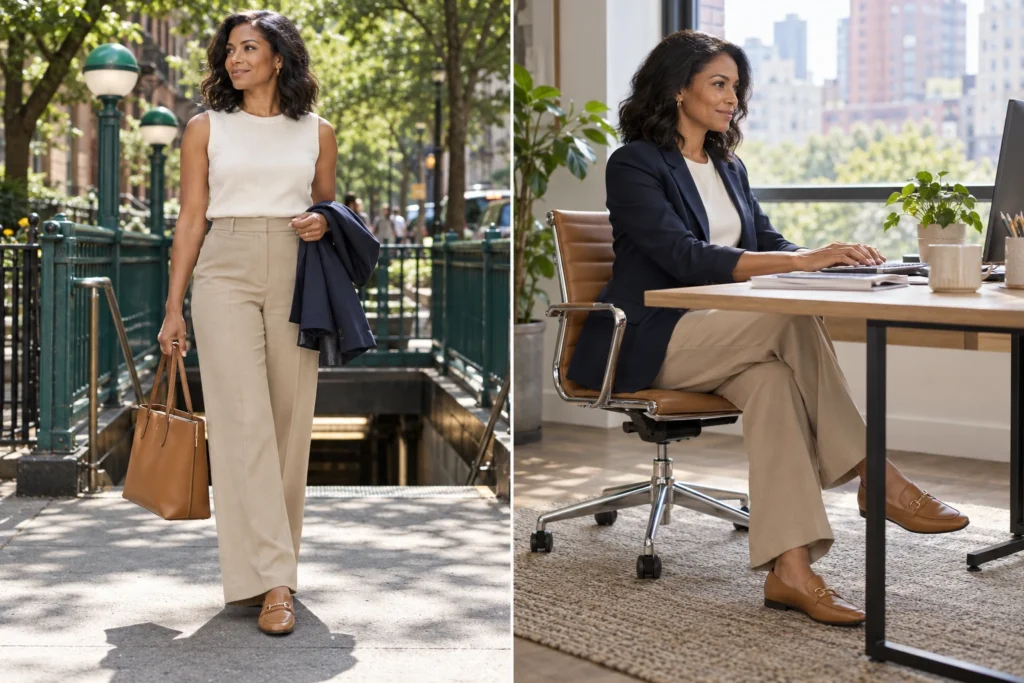
Start with sand-colored tailored trousers, an ivory sleeveless woven shell, a navy blazer, tan loafers, and a zip-top tote. The light top and trousers form a complete outfit; the jacket supplies a defined shoulder line for meetings.
On the commute: Carry the blazer and wear the shell alone where appropriate. Look for armholes that sit comfortably and a neckline that stays where you want it when bending forward. If your workplace requires sleeves, use a short-sleeve blouse instead.
At the desk: Add the blazer once you have settled indoors. Leave enough room through its upper arms for the blouse alternative, and unbutton it when seated if that feels better. A hem around the hip is an easy starting point over wide trousers, though a longer jacket also works if you prefer that proportion.
The trousers need ease through the seat and upper thighs as well as width at the ankle. Sit down before deciding on a size. If the blazer pulls across your back while typing, use our women’s blazer fit checks to separate a sizing issue from the wrong cut.
Shop the inspiration: Quince’s 100% European Linen Structured Blazer has a linen outer fabric and a full cotton lining. Consider it as a lined office-layer alternative; carry it outdoors when that extra coverage feels too warm.
2. A Cotton Shirt Dress With a Waist-Length Cardigan
A blue-and-white striped, short-sleeve shirt dress works with a navy cardigan, brown closed-toe flats, and a compact work bag. Choose a skirt with enough movement for stairs and a waist that remains comfortable when you sit.
For the journey, wear the dress on its own and pack the cardigan. Keep a self-fabric belt softly tied rather than pulling the waist tight. Check that the button placket stays flat across both the chest and lap.
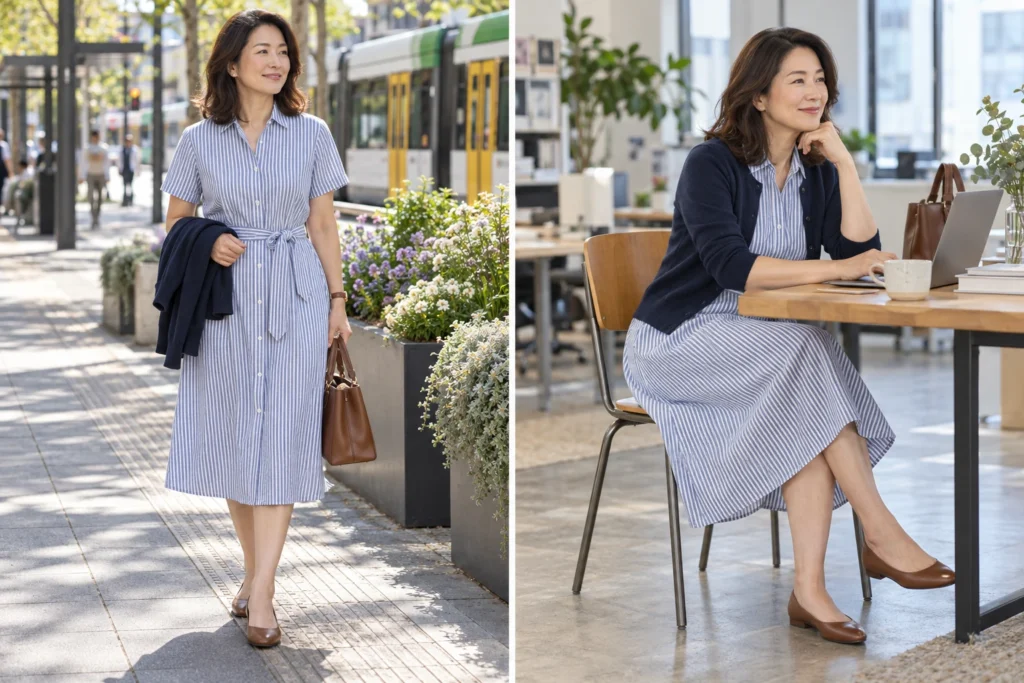
Indoors, a cardigan ending around the waist or upper hip leaves the skirt free to move. Choose sleeves wide enough to slide over the dress sleeves without rolling them into a ridge. Wearing the cardigan open also keeps a dress belt from pressing into a second waistband.
A roomy shirt dress can replace a blouse-and-skirt combination when you prefer fewer fastenings. If buttons repeatedly gape while seated, try a different cut or a dress with a fixed bodice and side fastening.
Shop the inspiration: M.M.LaFleur’s Boden Al Fresco Dress is a longer-sleeved alternative in cotton poplin containing 96% cotton and 4% elastane. Its three-quarter sleeves provide more coverage than the outfit described here. The linked page marks it final sale, so check the fit and return terms carefully.
View the M.M.LaFleur cotton-poplin dress
3. An A-Line Midi Skirt, a Short-Sleeve Blouse, and a Cotton Cardigan
Try a terracotta midi skirt with an ecru blouse, an ecru cotton cardigan, dark brown loafers, and a small pendant. Repeating the blouse color in the cardigan connects the two versions of the outfit without needing matching sets.
Outside: Wear the blouse and skirt, carrying the cardigan. A softly flared skirt gives you room to stride; check its length on stairs and when stepping onto transit. Tuck the blouse loosely enough that reaching forward does not pull it taut across your back.
At your desk: Put on the cardigan and let its hem sit around the upper hip. A fine knit creates less bulk over a tucked blouse than a thick ribbed band. If the skirt has a prominent waistband, compare the cardigan both open and fastened to see which sits more comfortably.
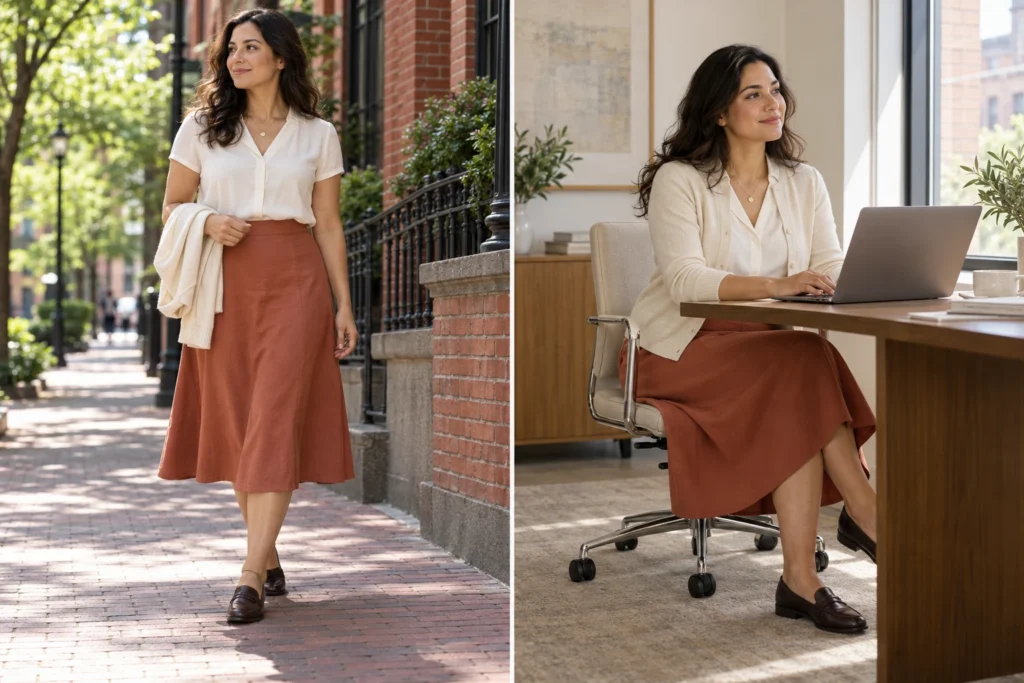
Pay attention to the skirt’s lining and seated fit. A fluid outer fabric can still feel restrictive if the lining is narrow. If you prefer more leg coverage indoors, choose a longer midi that stays clear of the floor and allows an ordinary walking stride.
4. Straight-Leg Pants, a Long-Sleeve Shirt, and a Merino Cardigan
For fuller coverage, combine charcoal straight-leg pants with a pale blue lightweight woven shirt, a burgundy fine-knit cardigan, black loafers, and a black tote. The shirt supplies sleeves throughout the day; the cardigan adds another layer once you are seated.
During the commute, carry the knitwear and leave the shirt sleeves down or roll them as your preferences allow. Look for enough upper-back room that the shirt moves with you when holding a rail or carrying a bag.
Before adding the cardigan indoors, unroll any bulky cuffs. Then check that both layers sit smoothly through the elbows. A raglan or roomier cardigan sleeve may suit a generous shirt better than a narrow armhole. This combination also works with a white shirt; our white button-down styling guide explains how shirt length and tucking change the result.
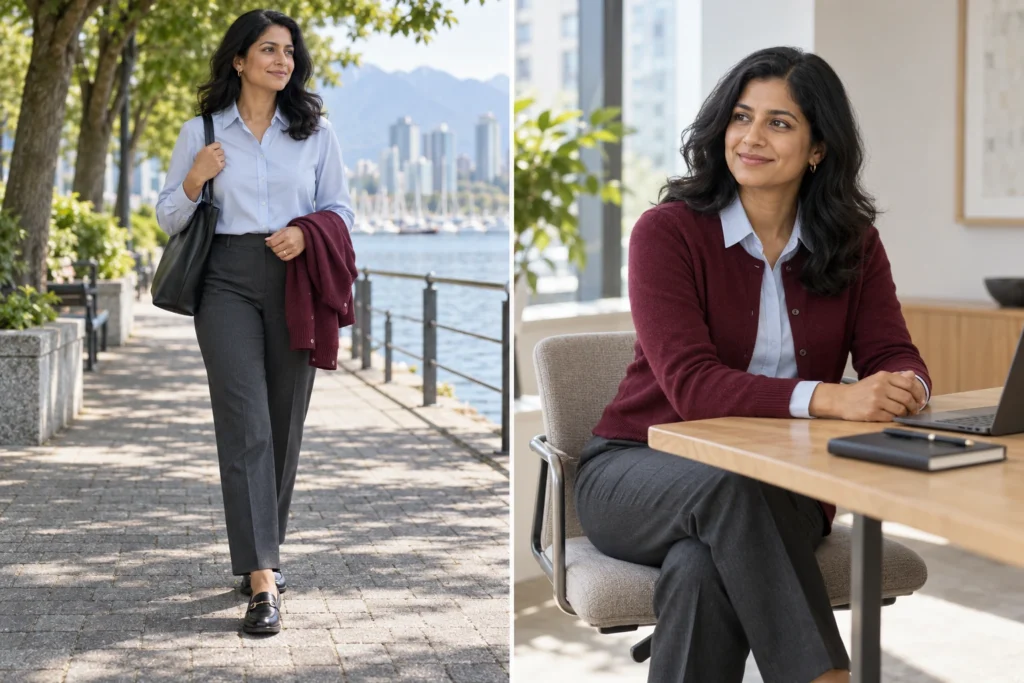
Choose a close-knit cardigan when coverage is the priority. If wool irritates your skin, try a cotton or other knit you already find comfortable, and judge the finished garment rather than relying on its fiber name.
Shop the inspiration: UNIQLO’s women’s Merino Cardigan is listed as 100% wool. The official care guidance specifies a cold gentle wash and recommends a mesh laundry bag and reshaping after washing. Check the label on the garment you receive.
View the UNIQLO Merino Cardigan
5. A Sleeved Shift Dress With a Collarless Jacket
A navy short-sleeve shift dress, a cream collarless jacket, burgundy closed-toe flats, and a structured bag create a more tailored option for client-facing days. Look for a dress that skims the body, with enough room through the hips to sit without the hem pulling sharply upward.
On the way in: Carry the jacket and wear the dress with shoes you know work for your route. A simple neckline leaves space for the jacket’s edge without several collars competing around your neck.
For the office: Put the jacket on before the meeting or before entering any area where it is required. A smooth sleeve lining can make it easier to pull the jacket over the dress, but try the combination together: the dress sleeves should stay flat underneath.
This is an option for workplaces that accept tailored separates. For a dress code requiring a matching suit, use a matching dress-and-jacket set or trouser suit, with an appropriate blouse underneath. Keep the same carry-and-add routine wherever the policy permits it.
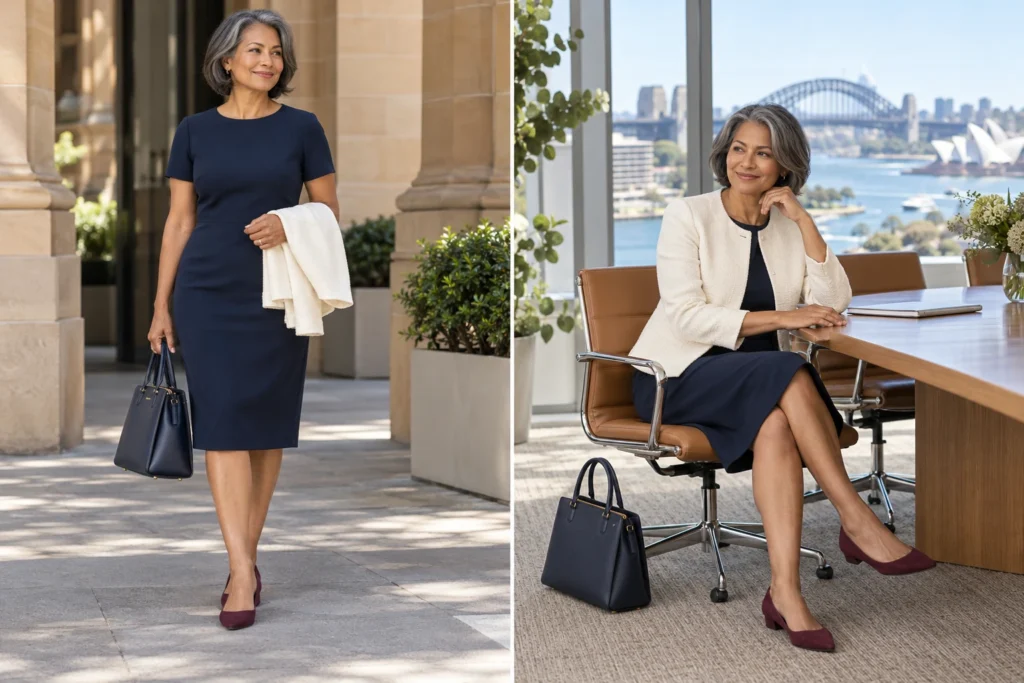
Choose the dress’s hem length while seated as well as standing. A slightly longer style may be more convenient for a day spent moving between a desk and meeting rooms.
6. Pull-On Linen-Blend Pants, a Structured Tee, and an Open Shirt
For a relaxed office, pair dark green linen-blend pants with an ecru crewneck tee, a pale blue cotton overshirt, white low-profile sneakers, and a simple tote. Choose a tee with enough substance to remain opaque, but check that its back and underarms feel comfortable under the shirt.
During the commute, pack the overshirt and wear the tee with the trousers. A straight or gently wide leg leaves room for movement. If the waistband has an exposed drawstring, leave the tee untucked at the upper hip if you prefer to cover it.
Inside, add the shirt with the sleeves down. Wear it open for a light layer or button it as needed. This is a starting point for mild air-conditioning; if your workspace needs more warmth, keep a cardigan there rather than expecting a thin shirt to do everything.
Use this combination where tees, sneakers, and relaxed waistbands fit the office culture. For a more formal day, substitute flat-front trousers and a blouse.
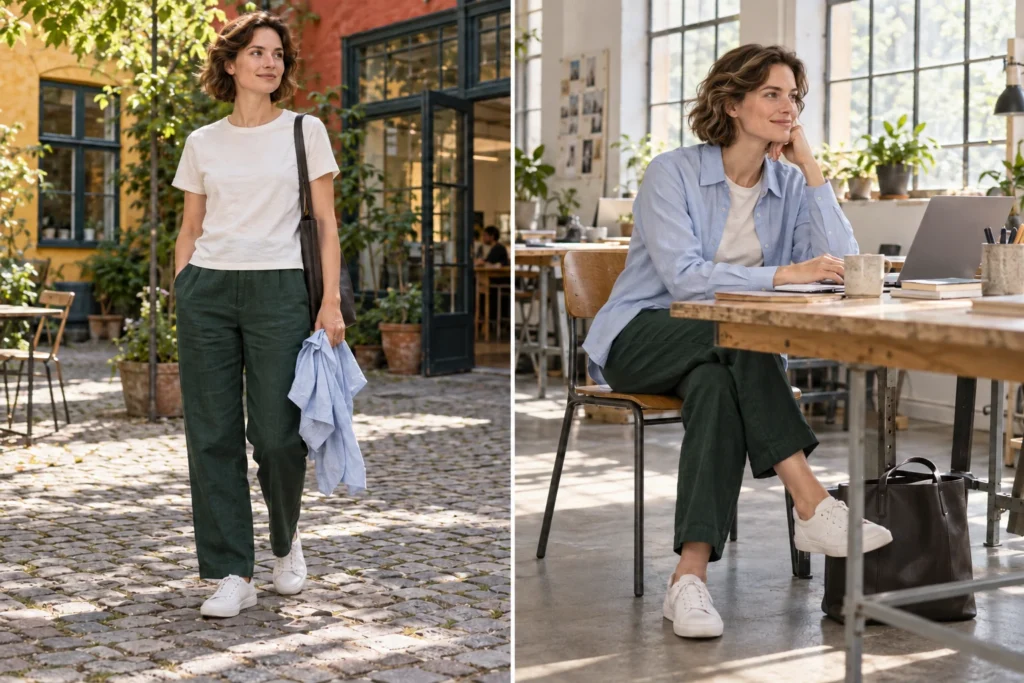
Shop the inspiration: UNIQLO’s Linen Blend Easy Pants have a linen-rayon fabric, an elastic waist, and an external drawstring. They are a relaxed alternative, with a visibly more casual waistband than tailored trousers. The product page also flags slight sheerness in some pale colors; check the details for your chosen shade.
View the UNIQLO linen-blend pants
Make a Shoe Change Work With Your Trouser Hem
Walking shoes and desk shoes need to work with the same trousers. A hem set for a raised sole may drag when you change into a flatter loafer, even if both pairs look relatively low.
Try the whole outfit in both pairs. Walk, turn, and check the back of each trouser leg. If the hem catches under either heel, choose shoes with more comparable sole heights or use an ankle-length pair of pants for that day. Our guide to wide-leg trouser length with different shoes explains the comparison in more detail.
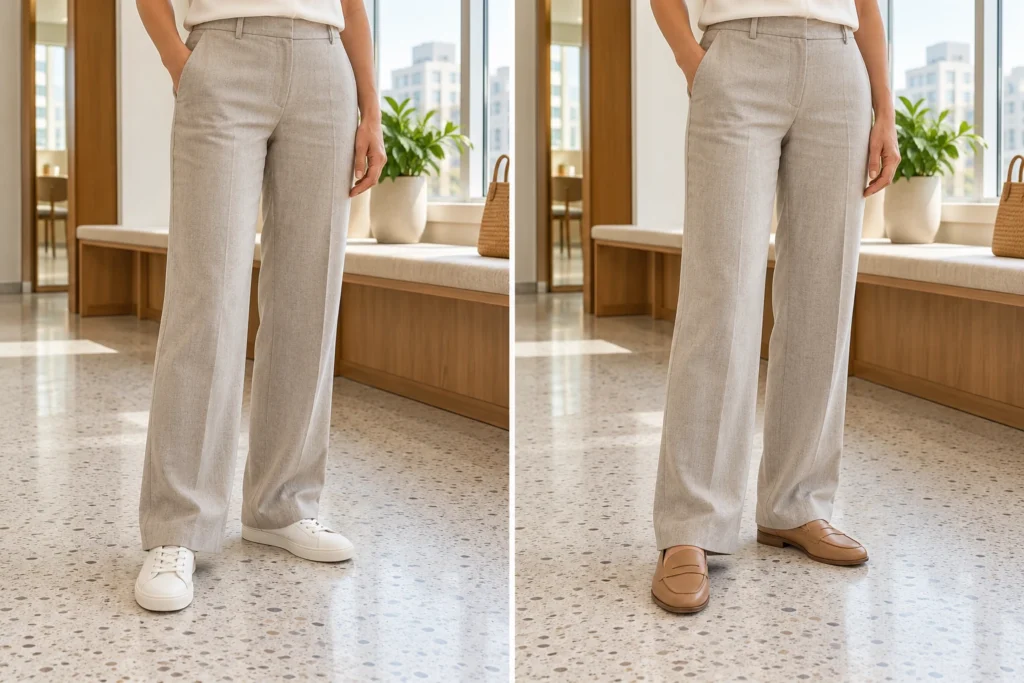
Use shoes you already know are comfortable for the journey. If you change at work, store the second pair there when possible or pack them separately from clothing. The same principle applies to dresses and skirts: test the length and stride in the shoes you will actually wear outside.
Pack for the Transition at Your Desk
Make the layer easy to reach. A cardigan buried beneath a laptop and lunch container is inconvenient when the train’s air-conditioning is already cold.
Before leaving, set out the base outfit, office layer, shoes, and bag together. Then pack around the day’s likely changes:
- Fold knitwear loosely in a clean pouch, without stretching the sleeves around other items.
- Carry a tailored jacket in a garment tote when you need to protect its shape, or keep a suitable jacket at work.
- On journeys that regularly leave your top damp, pack a clean replacement. Let the worn top dry before putting it away for storage or laundry.
- If useful, keep spare socks and a desk cardigan at the office so they do not need to travel every day.
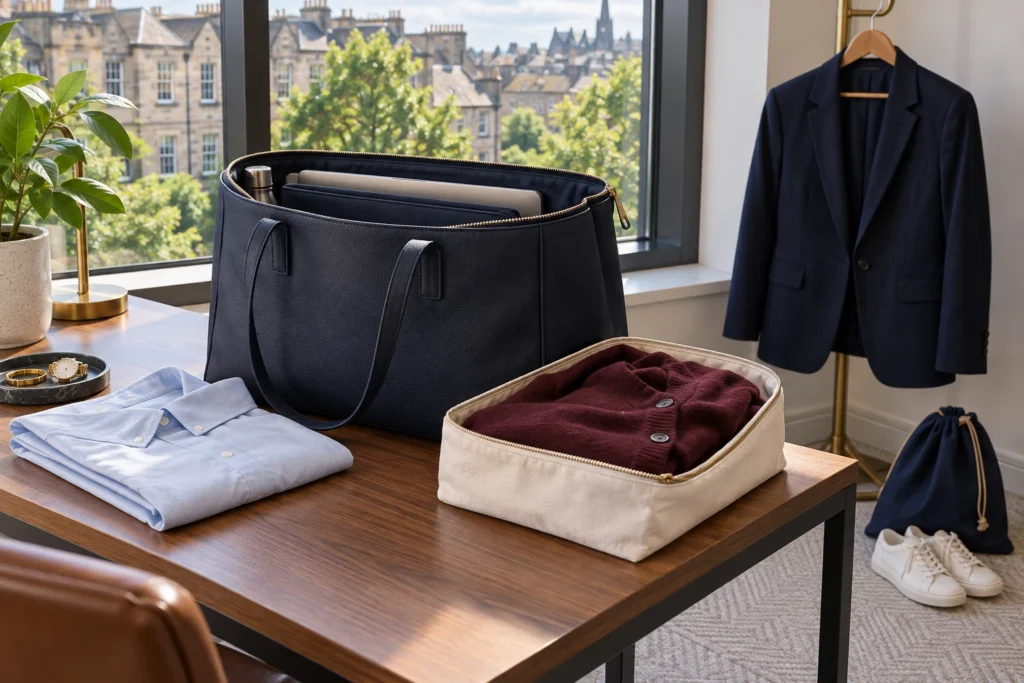
Test your bag with those items inside. Our everyday handbag guide covers usable space, closures, and loaded carrying comfort. A bag that holds a jacket but leaves no room for your work essentials is unlikely to solve the morning routine.
When you arrive, change a damp top if needed, smooth any tucked fabric, and put on the indoor layer. Check the fit while seated before heading into a meeting.
Frequently Asked Questions
How can I make a small summer work wardrobe cover a whole week?
Start with two bottoms, three tops, and an indoor layer that fits over all three. Add a dress if you wear them. Try every top under the layer before buying more: compatible sleeves and necklines make a small wardrobe easier to repeat. Adjust quantities to your laundry schedule.
Can a sleeveless top work in a summer office outfit?
Yes, where the dress code allows it. Choose the neckline, armholes, and opacity you want when the top is worn alone. If sleeves are required, use a short-sleeve blouse or put on the required jacket before entering the relevant work area.
What if I cycle or walk a long distance to work?
A separate commuting top or a change of clothes may be the more practical choice, especially if you arrive damp. Pack work clothes separately and allow time to change. For cycling, keep loose trouser hems clear of the drivetrain and use clothing suited to riding.
How can I reduce creasing without buying a whole new wardrobe?
Look at how you carry the layer first. Keep a jacket at work if you can, and give folded garments their own space in your bag. Some linen creasing is part of the fabric’s appearance. Follow each garment’s care label before ironing or steaming; blends and linings can have different requirements.
Choose Tomorrow’s Layer Tonight
Begin with one base outfit you already like and try it with the layer you need at your desk. Sit down, reach forward, and take it off again. When the sleeves, waistband, and shoes work through that small routine, you have a useful starting point for the next warm morning.