

By Olivia Parker
A hem that falls neatly over sneakers can sweep the pavement when you change into ballet flats. The trousers have not changed; their relationship with the shoe has.
For everyday, full-length wide-leg pants, start by pinning the back hem about ½–1 inch (1.3–2.5 cm) above the floor while wearing your intended shoes. Let the front fall over the shoe without a pile of folds. Then walk, turn, and check that neither edge slips beneath your foot.
That clearance is a practical fitting range to try, not a universal tailoring standard. A fluid evening trouser, a cropped linen pair, and structured wide-leg jeans can all need different finishes. The useful question is where this particular hem lands with the footwear you actually wear.
Start With the Length You Want
First decide whether you want full-length trousers, an ankle-length finish, or a shorter crop. These are different silhouettes; the shortest option is not automatically a fitting mistake.
| Trouser finish | Where the hem falls | What it emphasizes |
|---|---|---|
| Full-length | Down over part of the shoe, with clearance beneath the back hem | The fall of the fabric and the long trouser shape |
| Ankle-length | Around the ankle bone, depending on the design | More of the shoe, plus socks or the ankle |
| Cropped | Above the ankle; the exact position varies by cut | The hem shape and the footwear as separate elements |
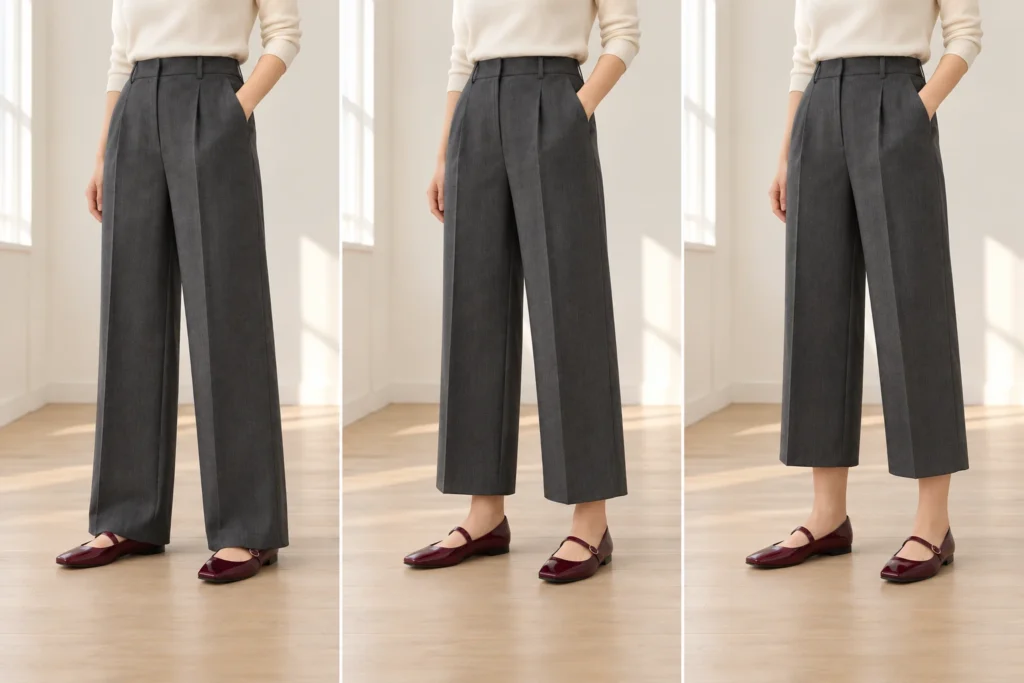
For a full-length pair, use the floor as one reference point and the shoe as another. At the back, look for clearance. At the front, check whether the material falls cleanly or collapses over the toe. A break is the fold that forms where a trouser leg meets the shoe; a wide leg can hang smoothly or have a soft break without needing several stacked folds.
Published recommendations are not identical. For example, Ripley Rader’s fitting advice suggests about ¼ inch of clearance for its Long Wide Leg Pant. That is a closer finish than the everyday starting range above. Choose enough room for your walking conditions rather than treating the smallest gap as the goal.
If you are still choosing footwear, our guide to shoes to wear with wide-leg pants compares the shapes. Here, the aim is to get the length right once the shoes are on your feet.
With Flats: Let the Fabric Clear the Heel
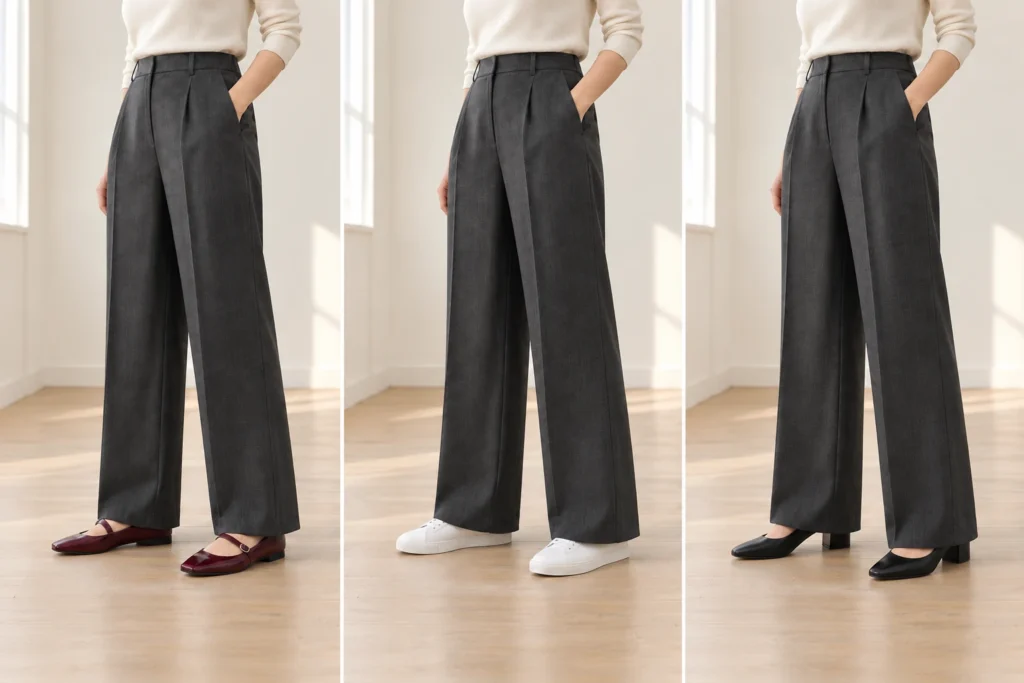
Full-length wide-leg pants can work with ballet flats, loafers, or flat sandals. They need to be fitted for that relatively low shoe height.
Start within the ½–1-inch clearance range and check the back while standing normally. The hem should fall outside the shoe rather than folding underneath it. At the front, some of a ballet flat’s toe may show while its strap remains covered. You do not need to reveal the entire shoe to make the combination work.
A loafer creates a different meeting point: its raised upper can catch the front of the leg and create a fold. Shorten the trial hem slightly if the fabric repeatedly catches there, or choose an ankle-length finish that clears the upper altogether.
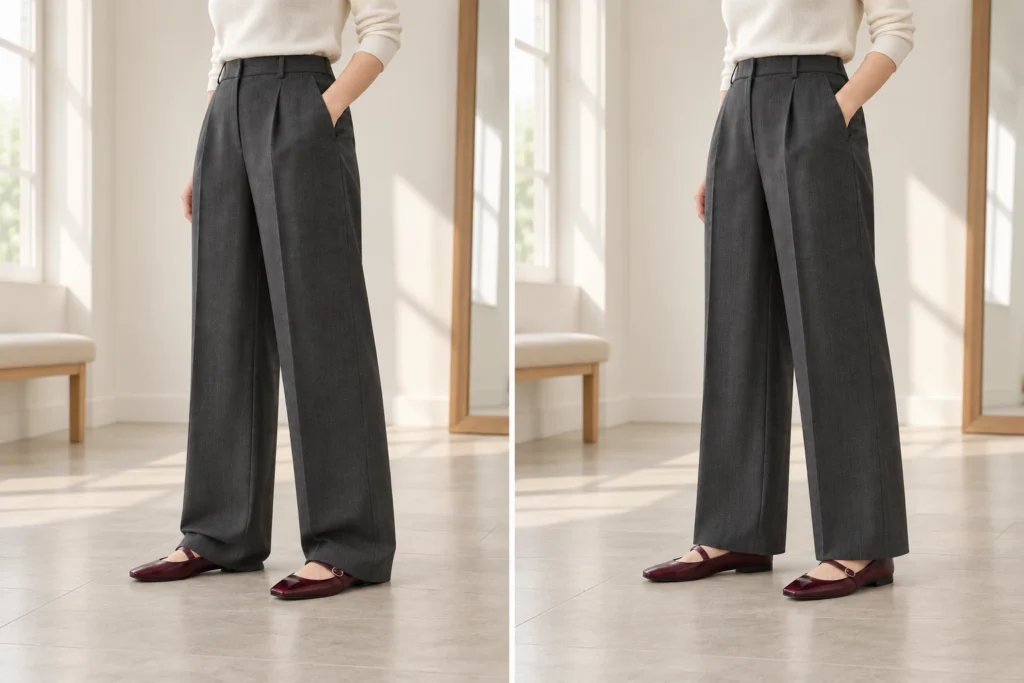
Try charcoal trousers, an ivory fine-knit top, and burgundy flats. The dark red adds a visible detail when you move, while the knit keeps the outfit relatively light around the waist. For work, the same combination can sit comfortably within a women’s smart casual wardrobe, depending on your workplace.
Shop the inspiration: Madewell’s Greta Mary Jane Flat has a squared-off toe and an elastic strap—a similar flat-shoe option to consider when checking how much footwear you want the hem to reveal.
View the Greta Mary Jane Flat at Madewell
Shopping links in this guide lead to US storefronts. Check local sizing, delivery, returns, and the specifications of your selected version. The linked products are suggestions for recreating these combinations.
With Sneakers: Check the Toe and the Back of the Sole
Sneakers vary too much to share one automatic hem length. A thin-soled court shoe and a substantial running-style sneaker can lift the same trousers differently. The height of the upper matters too: fabric may rest on the laces even when there is plenty of clearance at the back.
With a full-length trouser, let part of the toe remain visible and check that the back edge hangs outside the sole. One shallow fold over the upper can suit relaxed cotton or denim. Several compressed folds usually mean there is more length than you need for that shoe.
Pay attention to a sole that projects beyond the heel. If the fabric lands on that ledge, it may appear clear of the ground while standing, then slip or catch as you move. Walk forward and turn before deciding the length is finished.
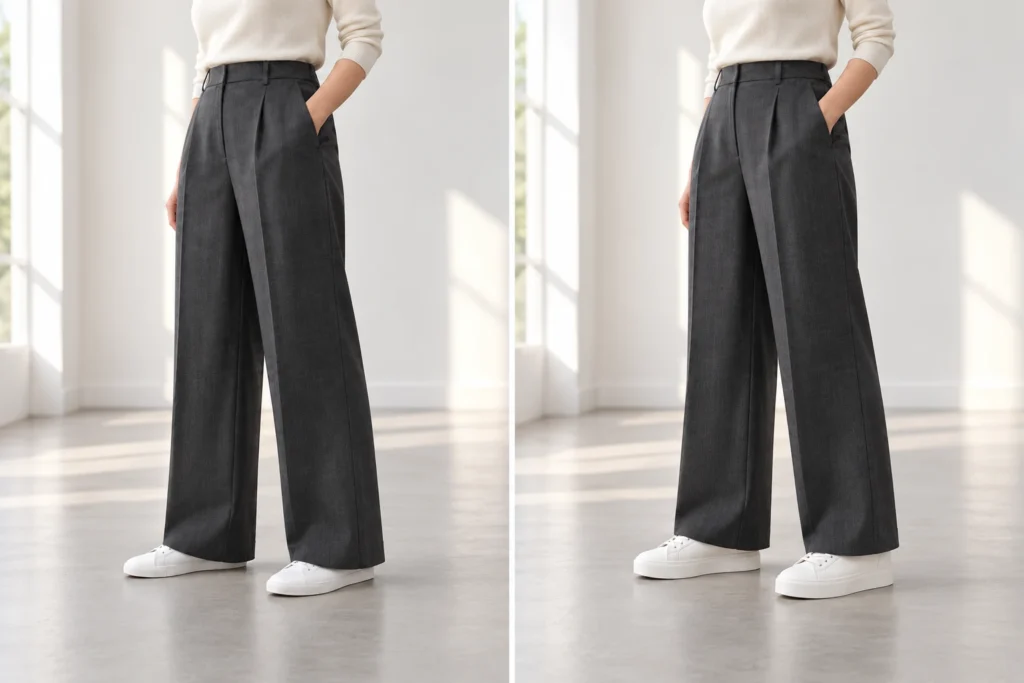
For an everyday outfit, pair navy wide-leg pants with a striped cotton tee and white sneakers. An ankle-length version makes the socks part of the outfit; a longer hem leaves a smaller section of the shoe visible. Our white sneaker outfit guide offers more combinations once you have settled the length.
Shop the inspiration: The adidas Stan Smith is a court-style alternative for this outfit. Fit the hem over your own pair instead of assuming it will fall exactly as it does over another white sneaker.
With Heels: Fit the Hem in the Exact Pair
Put the heels on before anyone marks the trousers. A label such as “three-inch heel” cannot tell you exactly where the fabric will land: the sole beneath the forefoot, the shoe’s shape, and your stance also affect the result.
For a long evening finish, let the leg extend over much of the shoe while keeping its lowest edge clear of the floor. A pointed toe can remain visible beneath fluid tailoring; a block heel may be mostly covered. Showing the heel is optional. Keeping the fabric from catching beneath it is the practical requirement.
Stylist Marcia Crivorot’s wide-leg length guidance also emphasizes choosing length with your shoes in mind, particularly when switching between flats and taller heels. Bring both pairs to an alteration appointment if you hope to wear the trousers with each.

Try black wide-leg trousers with a cream blouse and black block-heel shoes for dinner or an indoor event. Check the outfit again with your coat and bag on; the fitting should reflect how you stand and move when dressed.
Shop the inspiration: Ripley Rader’s Black Ponte Knit Long Wide Leg Pant is an option to compare if you need extra length for heels. Its published inseams vary by size, so read the measurement for your chosen size before ordering.
View Ripley Rader’s Long Wide Leg Pant
Compare Three Hem Lengths With the Same Shoes
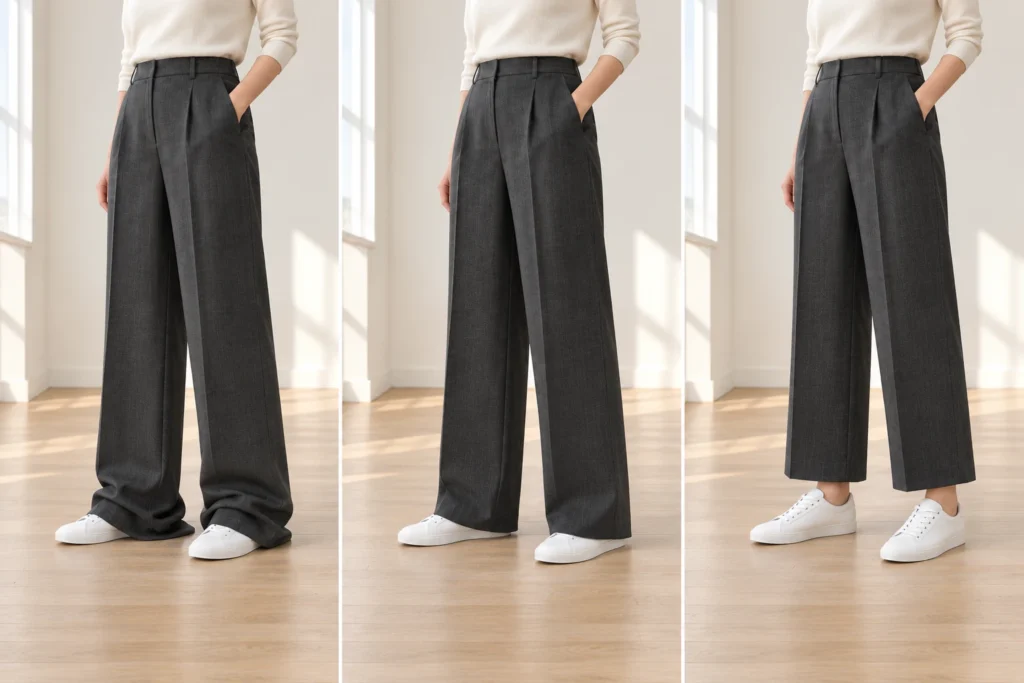
The clearest way to choose a length is to change one thing at a time. Keep the same trousers, waistband position, shoes, and stance. Fold the excess inward and compare three temporary hem positions.
| Trial hem | What to look for | What the result tells you |
|---|---|---|
| Longer than needed | Fabric rests on the floor, catches on the shoe, or forms several folds | Shorten the trial hem for this footwear |
| Full-length with clearance | Fabric falls over part of the shoe and stays clear as you walk | A useful everyday full-length option |
| Ankle-length | The hem clears the shoe upper and reveals more sock or ankle | A distinct styling choice if you prefer the shoe visible |
Take front and side pictures from the same distance, with the camera level rather than tilted down. Include the floor beneath both shoes. A high mirror selfie can make it difficult to judge the space at the back.
Compare all three positions with flats first, then repeat with sneakers or heels. This separates two decisions: the amount of shoe you like to show and the amount of clearance the outfit needs. Keep your preferred position for each shoe instead of looking for one photograph that settles every combination.
Let Fabric, Width, and Rise Refine the Length
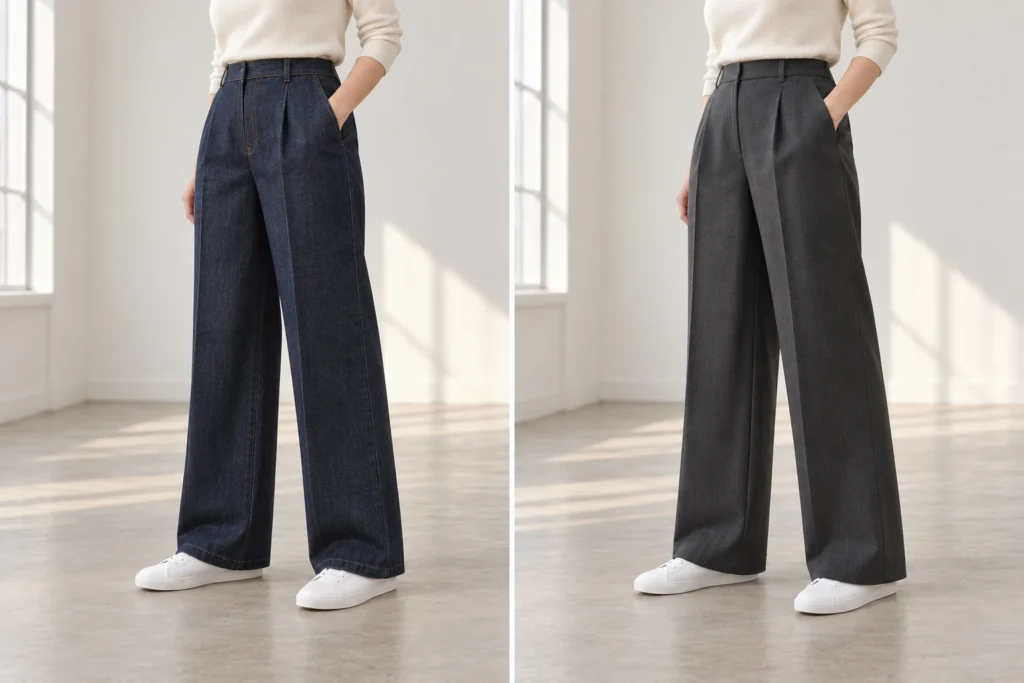
Structured Denim and Cotton
A firm fabric tends to hold a fold where it meets the shoe. If the lower leg forms a pronounced shelf over the laces or loafer upper, try a slightly shorter pin position. For denim outfit ideas beyond the hem, see our guide to styling wide-leg jeans.
Fluid Tailoring and Linen
A softer trouser may drape around the shoe, making excess length less obvious from the front. Check the back and sides as well. Linen creases can interrupt the line without the trousers being too long; look at the finished edge rather than treating every wrinkle as a length problem.
Very Wide Legs
An especially broad opening can swing around the foot. A tidy standing fit is only the first check. Turn, sit, stand, and use a few stairs if those are part of your day. Choose more clearance if the edge repeatedly gets in your way.
Waistband Position and Rise
Settle the waistband where you will actually wear it. Hiking it upward for the mirror changes where the hem lands. If the waistband slips down during wear, address that fit before finalizing the length.
Likewise, matching inseam numbers does not guarantee matching hems across different cuts. The position of the crotch seam and the way the trousers sit on your body affect where the leg finishes.
How to Measure and Pin a Wide-Leg Hem
You need the intended shoes, a tape measure, a full-length mirror, and a way to hold the folded hem securely. Another person makes the floor check easier because bending down changes your stance.
- Prepare the trousers. Once you have decided to keep them, follow their care instructions before permanent alteration. Washable trousers should be measured in the condition in which you plan to wear them; follow the label for garments requiring professional care.
- Dress for the fitting. Put on your usual underlayers, fasten the waistband, and add a belt if you normally wear one. Wear both shoes.
- Stand on a level, hard floor. Keep your weight balanced and let the fabric settle. Carpet can hide the lowest edge.
- Fold inward to the proposed finished length. Begin with the back clearance, then check the front and sides. Keep the fold secure, with no exposed pin points before moving.
- Check both legs separately. Do not assume that matching a single measurement will make both hems sit correctly on your body.
- Walk, turn, sit, and stand. Recheck where the hems settle afterward. Raise the trial hem if it catches beneath a shoe or brushes the floor.
- Record the garment inseam. Remove the trousers and lay them flat without stretching. Measure along the inside seam from the crotch-seam intersection to the proposed finished edge. Record each leg if the lengths differ.
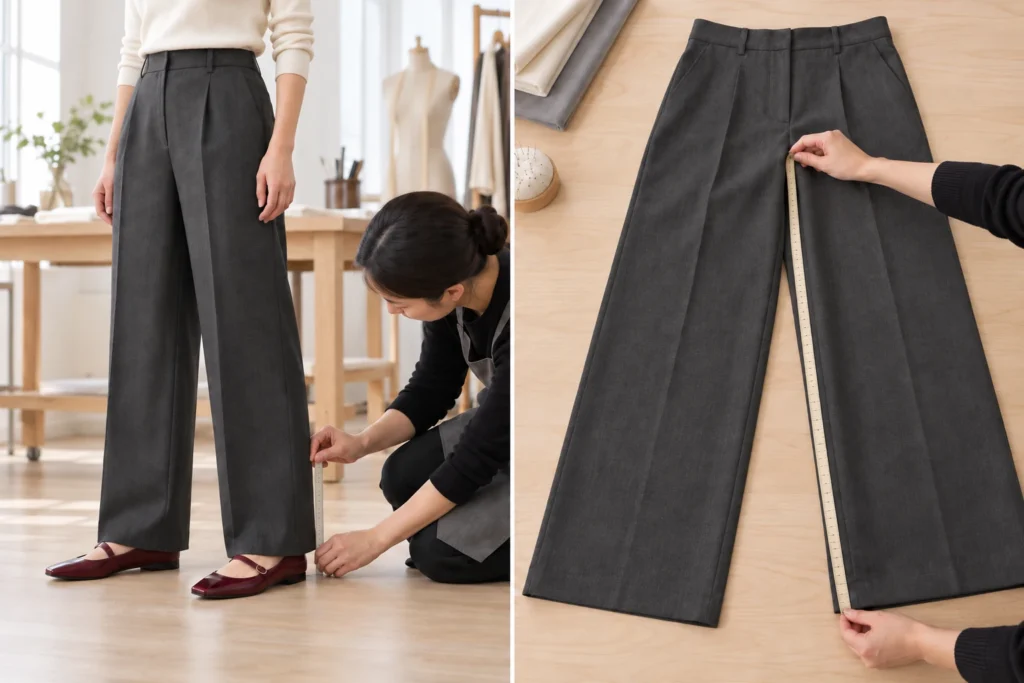
Singer’s hemming instructions likewise advise pinning and trying on jeans with the planned shoe heel height before cutting. The finished edge and the cutting line are different: a sewn hem needs an allowance beyond the finished length.
For tailored trousers, discuss the finish with your alterations professional. A blind hem can keep stitching discreet on the outside, while denim may call for visible topstitching or preservation of the original hem.
Keep a Simple Hem Record
| Record | Your measurement or note |
|---|---|
| Trouser brand, style, and size | __________ |
| Intended shoe pair | __________ |
| Garment inseam: left / right | ____ / ____ inches; ____ / ____ cm |
| Back hem clearance while wearing shoes | ____ inches; ____ cm |
| Preferred finish | Full-length / ankle-length / cropped |
| Walking check | Clears floor / needs adjustment |
One inch equals 2.54 centimeters. Keep garment inseam and floor clearance in separate fields: they measure different things.
If the waist, rise, or seat also feels wrong, shortening may solve only part of the fit. For denim shoppers comparing length options, our petite versus short jeans guide explains why proportions deserve attention alongside the inseam.
Can One Hem Work With Flats, Sneakers, and Heels?
Sometimes, particularly when the shoes hold your feet at similar heights. Try the lowest pair first, then every other pair you intend to wear. A hem that clears ballet flats may look shorter with a platform sneaker; whether you like that extra shoe exposure is a styling decision.
A large change in shoe height is harder to accommodate if you want the same full-length effect. You have several options:
- Hem for the shoes you wear most and accept a different amount of shoe showing with the others.
- Choose an ankle-length design that leaves the footwear visible.
- Keep separate lengths for everyday flats and dressier heels.
- Ask a tailor about a temporary, hand-basted adjustment before committing to a permanent cut.
For rainy commutes, snowy sidewalks, or long days on foot, allow the conditions to influence the choice. A close-to-floor hem that works indoors may be inconvenient outside. You can choose a shorter finish without changing the rest of the outfit.
Frequently Asked Questions
Should Wide-Leg Pants Touch the Floor?
For everyday walking, keep the finished edge off the floor. A deliberately pooled hem is a styling effect, but it brings extra fabric around your feet and more contact with the ground. If the hem drags during your normal stride, shorten it for that pair of shoes.
How Much of the Shoe Should Show?
There is no required percentage. Full-length pants may reveal mainly the toe; ankle-length pants show much more. Judge the fall of the fabric, clearance at the back, and whether you can move comfortably.
Is There a Standard Inseam for Petite or Tall Women?
No single inseam works for everyone in either group. Compare your preferred garment measurement with the exact product’s size chart, then account for its rise and your chosen shoes. Height alone is not enough to choose a finished length.
Are Wide-Leg Pants Too Short if They Rise When You Sit?
Trousers normally move upward when you sit. Check the hem again after standing and letting it settle. Investigate fit if the waistband pulls, the thighs feel restricted, or the leg repeatedly catches and stays raised.
Should Both Hems Be Perfectly Horizontal?
They should hang as intended when you wear them. A tailor may adjust the finished line to accommodate the shoe and the garment’s balance. An angled hem is a fitting option to discuss, not something every wide-leg trouser needs.
Before authorizing a permanent alteration, put on the shoes you reach for most and take one final walk. The right hem gives the fabric room to fall and leaves your feet free to move. Record that combination; it is a more useful reference for the next pair than the length shown on a model.



2 thoughts on “How Long Should Wide-Leg Pants Be With Flats, Sneakers or Heels?”