
By Olivia Parker
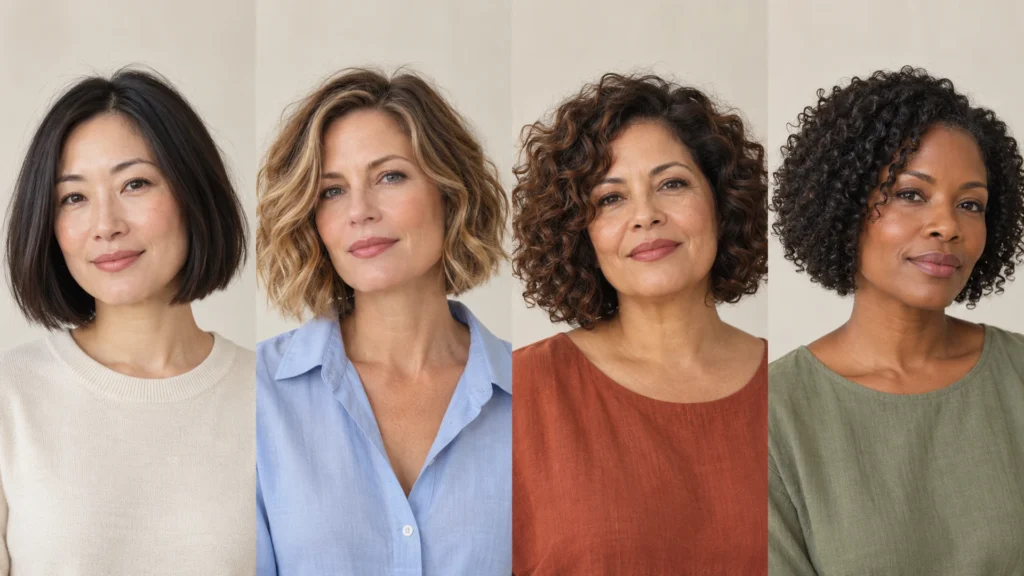
A jaw-length bob can look crisp and compact on straight hair, softly undulating on waves, or rounded and sculptural on curls. Those differences matter more than the name attached to the haircut. The useful questions are where your hair settles when dry, how much fullness you want at the ends, and how much styling you will realistically do.
Choosing bob haircuts for different hair types starts with your own combination of strand thickness, density, and natural movement. Fine hair can be plentiful, while tightly coiled hair can have delicate strands. A good consultation takes all of those details into account.
Quick answer: A strong perimeter often suits fine or low-density hair. Selective internal shaping can help dense hair move. Waves, curls, and coils need a length and outline planned around their natural dry shape. These are starting points to discuss with your stylist, rather than fixed rules.
How to Choose Bob Haircuts for Different Hair Types
Begin with three separate observations: how thick each strand is, how much hair you have, and whether it falls straight, wavy, curly, or coily.
Redken’s explanation of fine hair and density makes the distinction clear: strand diameter and the number of hairs are different characteristics.

That distinction changes the haircut conversation. Fine, dense hair may benefit from discreet shaping inside the cut while keeping the outside edge full. Fine hair with lower density may look better with much less layering.
| Hair characteristic | A useful starting point | Discuss before cutting |
|---|---|---|
| Fine or low-density hair | Blunt bob with a substantial perimeter | How much fullness the ends can retain |
| Dense hair | Longer bob with selective internal shaping | Where the hair feels bulky |
| Straight hair | Clean blunt line or softly graduated bob | Parting, crown growth, and outward-flipping ends |
| Wavy hair | Soft bob with restrained longer layers | Where the bends sit after drying |
| Curly hair | Bob shaped around individual curl patterns | Dry length and preferred volume |
| Coily hair | Rounded or angular bob tailored to your usual finish | Shrinkage, stretch, and preferred silhouette |
These categories overlap. Use the rows that describe your hair together.
Bring front, side, and back references with a texture similar to yours. Aveda’s haircut consultation guidance also recommends bringing examples of what you dislike. That can be especially useful when words such as “soft” or “textured” mean different things to different people.
Agree on the finished dry length. Then explain whether you need to tuck both sides behind your ears, tie your hair back, or leave home without blow-drying.
A collarbone-length long bob, often called a lob, may preserve more styling options, although a ponytail still depends on the shortest layers.
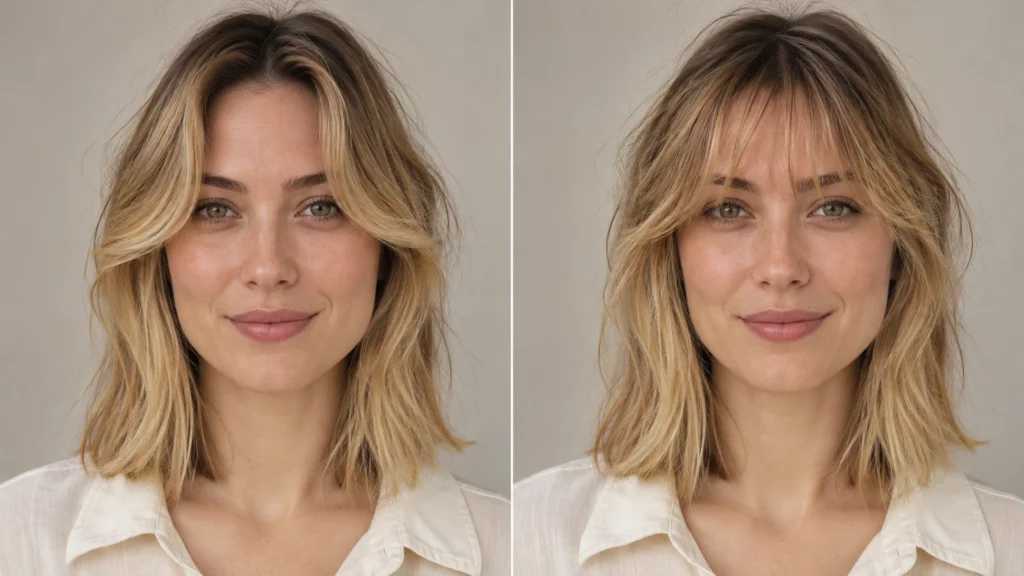
Treat bangs as a separate decision. A fringe uses hair that would otherwise contribute to the sides, and a cowlick can change how it sits. Ask the stylist to show how much hair the proposed fringe would take.
Straight Hair: Let the Line and Parting Do the Work
Straight hair makes the perimeter easy to see, so small differences in length and finish carry weight. A chin-length blunt bob gives a clear horizontal line; a slightly longer front creates a more angled frame.

Choose the parting before the final shape is checked. Hair cut around a fixed center part may sit differently when swept deeply to one side.
A softly graduated back can introduce fullness at the nape, while a more even length keeps the outline simpler. Ask to see the back as well as the front. Two bobs can look similar around the face and quite different behind the ears.
What to ask for: “I usually wear this parting. How will the back sit, and will the ends need daily blow-drying?”
A full fringe can make the cut more graphic, but it adds its own maintenance. If you want fewer adjustments around the forehead, consider a longer front section that joins the sides.
For a softer result, ask about a small bend at the ends instead of assuming every straight bob needs to be flat-ironed. The best finish is one you can comfortably recreate.
Fine Hair: Keep a Full Edge and Add Movement Selectively
For fine hair, particularly when density is lower, a bob with a continuous bottom edge is a useful starting point. Ends that meet along one line can create a more substantial-looking outline than a heavily feathered finish.

A chin-length or slightly longer blunt bob keeps that outline visible. On straight hair, a small inward bend can emphasize the edge without requiring a large, rounded blowout.
What to ask for: “I want the ends to look full, with only the movement my density can support.”
That does not rule out layers. Fine, dense hair may need some interior movement; fine curls may need shaping to avoid a bottom-heavy outline. The important question is how much hair remains at the perimeter after the layers are cut.
Be cautious about combining a thick fringe, short crown layers, and heavily textured ends in one appointment. Each changes where the available hair sits. If you are unsure, begin with the stronger outline and discuss adding movement later.
For styling, start with a light application of a foam you already tolerate. Distribute it evenly rather than concentrating a large amount near the part. If your hair feels coated or loses movement, try using less before adding another product.
Shop the Inspiration: Aveda phomollient styling foam is a light-to-medium-hold option marketed for fine to medium hair. Follow the current label directions and adjust your routine to your hair’s response.
Dense or Coarse Hair: Balance Weight With Shape
“Thick hair” can describe densely packed hair, coarse individual strands, or both. Explain which issue you want to address: a heavy feeling at the nape, width through the sides, or ends that resist the finish you want.

A longer bob can leave room for the hair to bend and settle. Selective internal layers may introduce movement while preserving a substantial outer line.
If you prefer a shorter, fuller silhouette, that can also be intentional. The aim is a shape you enjoy wearing.
Ask where the stylist proposes to remove weight. Short layers near the crown create a different result from longer layers hidden beneath the surface. Graduation, where the back is built up through shorter lengths, can add fullness around the nape—useful when that is the desired shape.
Coarse strands do not automatically need aggressive thinning. Discuss how texturizing will affect the ends, surface, and grow-out, especially if you usually air-dry.
An undercut deserves a separate conversation because its shorter section will need to grow back into the surrounding length.
What to ask for: “Please show me where you would reduce weight and how the cut will sit without a salon blowout.”
Check the length with your everyday shirt collar or coat in mind. Hair ending directly on the shoulders may flip as it rests against clothing. You might enjoy that movement, or prefer a line that finishes clear of it.
Wavy Hair: Leave Room for the Bends
A wavy bob works best when its length leaves enough room for your natural bends to show. The same person may have a stronger wave underneath and a straighter surface, so one reference photograph cannot predict every section.

A neck-length bob or lob is a useful option when you want to keep visible S-shaped movement. A shorter French-style bob can also suit waves, but its finished shape depends on where the strongest bends land.
Long, restrained layers can encourage separation. Very short layers may create more lift than you want, while extensive texturizing can make the ends look diffuse.
Tell your stylist whether your priority is a clearer outline, more volume, or a deliberately tousled finish.
What to ask for: “Please work with my strongest and weakest waves, and keep enough length for the bends I want to retain.”
At home, distribute your chosen styler through damp hair, arrange the part, and encourage the wave with gentle scrunching. Avoid repeatedly disturbing it as it dries.
If the roots look flat but the ends feel coated, try using less product before buying something stronger. You may need a lighter application rather than a more complicated routine.
Shop the Inspiration: Curlsmith Hydro Style Flexi Jelly is a medium-hold gel marketed for lightweight definition. The brand directs users to apply it to soaking-wet hair. It is one option for supporting a wavy finish; results will depend on your hair and application.
Curly Hair: Plan the Outline Around the Dry Curls
For a curly bob, agree on where the curls should sit after they have dried and sprung back. Hair pulled straight during a consultation can give a misleading impression of the visible finished length.

A rounded bob can distribute volume around the head, while a more angular shape keeps a different balance through the sides and front. Neither requires every curl to form an identical ringlet.
Discuss the areas separately. You might want a little lift at the crown, less width beside the cheeks, and enough length around the ears for comfortable tucking.
Mixed curl patterns may need different treatment within the same haircut. A looser front section and tighter curls at the nape will not necessarily settle at the same visible length.
There is no single cutting method that suits everyone. Ask how the stylist will account for shrinkage and check the final dry outline, whether the service involves wet cutting, dry cutting, or both.
What to ask for: “I wear my curls in this finish most days. Can we agree on the dry length and where the volume will sit?”
For detangling, the American Academy of Dermatology’s curly-hair guidance recommends working through wet, conditioned hair with fingers or a suitable comb or brush, in sections.
A cream and a gel serve different purposes. You may want conditioning slip, styling hold, or both. A short bob does not automatically need several layered products, so keep a familiar routine while assessing a new cut.
Coily Hair: Choose the Silhouette in the State You Wear
A coily bob can have a rounded outline, a softly angular edge, or a longer front. Its visible length depends on how you wear it: unstretched, in a twist-out, stretched, or straightened.

Tell your stylist which finish should guide the haircut. A shape designed around stretched hair may sit differently after washing, and a dry natural silhouette may show a different perimeter when straightened.
Bring references with a similar degree of coil and fullness. Agree on where you want the visible edge to finish without pulling the hair downward to demonstrate it.
The amount of shrinkage varies, so avoid relying on a standard allowance.
If you alternate between natural and stretched styles, say so before cutting. Discuss the compromise between those finishes and ask to see examples of the stylist’s work on comparable textures.
What to ask for: “My usual finish is this one. I want the visible length around here, with this much fullness at the sides.”
Product weight still depends on strand thickness and preference. Tightly coiled hair can have fine strands, so a heavy butter is not an automatic requirement. Choose conditioning and hold according to how your hair responds.
For a short bob that cannot be gathered comfortably, ask for a nighttime routine that preserves the shape without pulling it into a tight ponytail. You should not need to stretch the hair forcefully just to fit a particular sleep style.
Make Your Bob Work Between Salon Visits
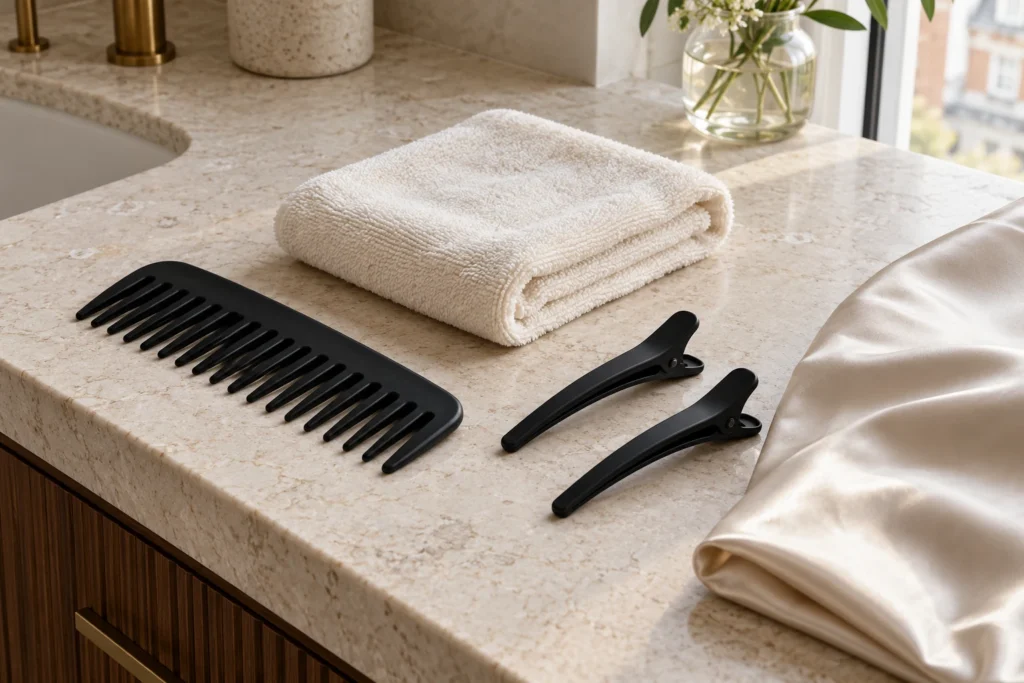
A useful home routine begins with the finish you can repeat. Ask your stylist to demonstrate that routine with the tools and time you actually have, including how to handle the back.
Keep the Product Routine Simple
Begin with your normal cleansing and conditioning, then one styling product if needed. Adjust the amount before adding several more products.
For finer hair, concentrate richer conditioner where it is needed rather than automatically coating the roots. For curls and coils, distribute products carefully so that some sections are not overloaded while others receive very little.
Detangle for Your Texture
Straight hair and curls do not always need the same approach.
The AAD’s healthy-hair advice recommends letting straight hair dry somewhat before combing, while thick curly hair can be combed with conditioner still in. Work gently from the ends upward.
Use Heat With Restraint
When blow-drying, use a heat-protective product as directed and a low or medium heat setting. The AAD recommends limiting heat styling because excessive heat can damage any hair type.
A gel chosen for hold is not automatically a heat protectant. Check the product’s stated purpose rather than assuming one styler covers every step.
Plan Around Weather and Clothing
In humid conditions, decide whether you are comfortable with a softer, fuller version of the cut. In cold weather, check how the nape sits above a scarf or coat collar.
A finish that needs constant correction may be a poor match for your routine. Discuss those everyday conditions before committing to a particularly precise shape.
Agree on Upkeep Before Booking
A precise jaw-length edge may need reshaping sooner than a softer lob. Ask for an interval suited to your growth, shape, budget, and tolerance for change. “Every six weeks” is not a universal requirement.
Take a few photographs after styling the cut yourself. They give you and your stylist useful information about where the hair flips, separates, or becomes fuller as it grows.
Shopping note: Product links lead to US brand pages. Check the appropriate local storefront or authorized retailer for current prices, formulas, and availability in Canada, the UK, Australia, or elsewhere.
Frequently Asked Questions
Is a Blunt Bob or Layered Bob Better for Fine Hair?
A blunt perimeter is often a useful choice when you want fuller-looking ends, especially with lower density. Fine hair with plenty of density or natural curl may still benefit from selective layers. Ask how the proposed layering will affect the outside edge.
Can Thick Hair Have a Short Bob?
Yes. A short bob can be deliberately full or shaped to sit closer to the head. Discuss the location of the volume, the amount of weight removal, and how the cut will grow out. Dense hair does not automatically require an undercut.
Will a Bob Make Curly Hair Look Shorter Than Expected?
It can if the planned length is judged mainly while the hair is wet or stretched. Agree on where the curls should sit when dry and ask how the stylist will check that result. Shrinkage varies between people and across the same head.
What Is the Easiest Bob to Air-Dry?
Usually, one cut around your existing texture, parting, and growth patterns. A softly shaped wavy bob or a bob designed around your curls may need less reshaping than a finish that requires daily straightening or curling. “Easy” depends on your preferred result.
Can I Have a Bob With Bangs and Still Tuck It Behind My Ears?
Possibly, but check the shortest front pieces separately. Bangs and short face-framing layers may fall forward even when the rest tucks back. Explain exactly which sections you need to keep out of your face.
Should Face Shape Decide My Bob Length?
Use it as one consideration alongside hair behavior and personal preference. A jaw-level line draws attention to that area, while a longer front changes the framing. Ask the stylist to demonstrate possible lengths near your face rather than relying only on a face-shape label.
Choose a Bob You Can Enjoy Wearing
The best starting point is a clear description of your hair and your priorities: fuller ends, more movement, less weight, a defined silhouette, or a simpler morning routine.
Bring references that resemble your texture, agree on the finished dry length, and ask how the cut will behave at home. Those details help your stylist shape a bob around the way you want to wear your hair.
More Style Guides
A new haircut can be one part of a wider style refresh. For ideas on everyday clothing and accessories, explore these guides:
- How to Find Your Personal Fashion Style — identify the clothing, colors, and details you enjoy wearing.
- How to Layer Necklaces With Different Necklines — choose necklace lengths that work with your tops and collars.
- How to Style a White Button-Down Shirt — explore practical collar, tucking, and layering ideas.


7 thoughts on “Bob Haircuts for Different Hair Types: Find the Right Shape”