

Women’s Fashion | Denim & Style Guides
Finding the perfect pair of jeans isn’t really about discovering which body shape you have. It’s about understanding how the waist, hips, thighs, rise, and inseam work together—and choosing denim that feels comfortable while creating the silhouette you love.
You might have long legs and a shorter torso, fuller hips with a smaller waist, or a petite frame that makes standard-length jeans difficult to wear. These differences can affect how the same pair of jeans looks and feels on different people.
The good news? You don’t need to follow restrictive body-shape rules to find great denim.
The best jeans for different body proportions are the ones that fit your waist and hips comfortably, suit your preferred silhouette, and have a rise and inseam that work with your proportions. Straight-leg jeans are a versatile starting point, while wide-leg, bootcut, flare, relaxed, and slim styles offer different ways to shape an outfit.
Here’s how to find your ideal pair.
Quick Guide: Which Jeans Should You Try?
| Your fit preference or proportion | Jeans worth trying | What to look for |
|---|---|---|
| Petite frame | Straight, cropped, slim, petite wide-leg | Appropriate inseam and knee placement |
| Long legs | Full-length straight, flare, wide-leg | Tall inseams and comfortable rise |
| Shorter legs, longer torso | High-rise straight, bootcut | Waist placement and uninterrupted leg line |
| Longer legs, shorter torso | Mid-rise straight, relaxed | Comfortable waistband position |
| Fuller hips, smaller waist | Curvy straight, bootcut, wide-leg | Contoured waistband and hip room |
| Straighter waist-to-hip proportions | Straight, relaxed, barrel | Comfortable waist and desired volume |
| Fuller midsection | Mid-rise, high-rise, relaxed straight | Soft waistband and seated comfort |
| Defined waist | High-rise straight, flare, wide-leg | Waist shaping without pinching |
These are starting points, not rules. Every silhouette can work across different body proportions when the cut and size feel right.
1. Understand Your Body Proportions Before Buying Jeans
Clothing sizes describe garment measurements, but they don’t tell the whole story of how jeans will fit.
Two people who wear the same labeled size may need completely different rises, inseams, or waistband shapes.
Before shopping, consider four important details.
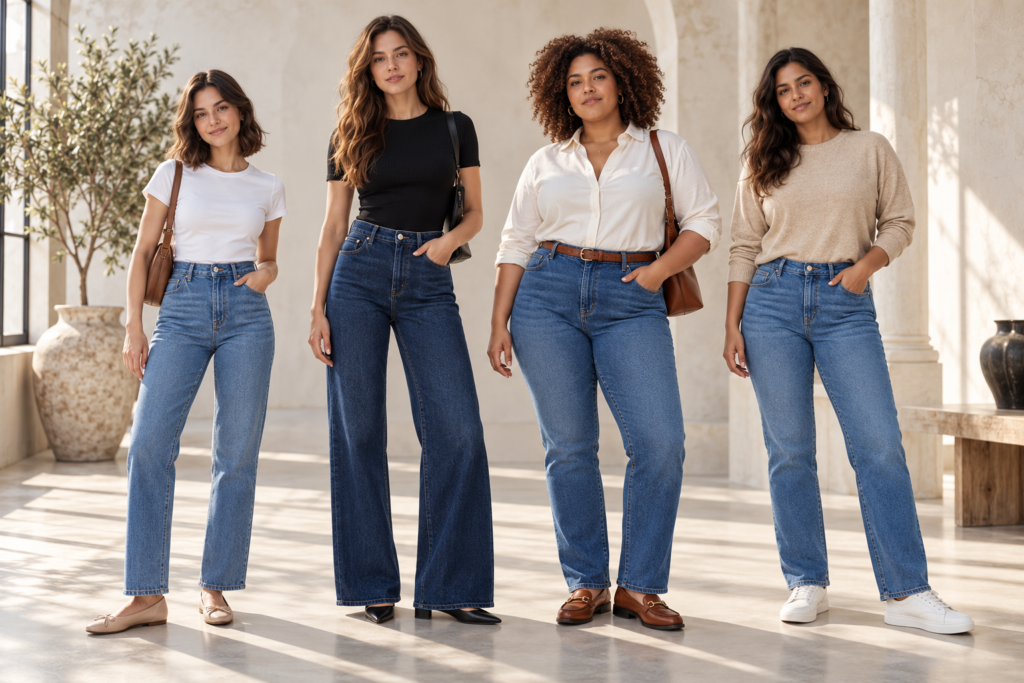
Waist-to-hip proportions
If your hips are noticeably fuller than your waist, a regular straight-cut waistband may gap at the back even when the jeans fit comfortably through your hips.
Curvy-fit denim is often designed with more room through the seat and thighs relative to the waist.
If your waist and hips have a smaller measurement difference, traditional straight or relaxed fits may be easier to wear.
Torso-to-leg proportions
A high-rise waistband changes where the eye perceives the lower body to begin.
This can create the appearance of a longer leg line, particularly when paired with a tucked top or a similar color at the waist.
Mid-rise jeans can be a useful alternative if a high waistband sits uncomfortably close to your ribs.
Thigh and seat fit
Jeans should allow you to walk, bend, and sit without uncomfortable pulling.
If the waistband fits but the thighs feel restrictive, try a different cut rather than automatically choosing a larger waist size.
Your preferred silhouette
Some people prefer fitted jeans, while others enjoy relaxed denim with more movement.
Neither preference is more correct.
A great fit should reflect your lifestyle and personal taste—not just a set of styling recommendations.
2. Best Jeans for Petite Women
Petite sizing generally focuses on shorter vertical proportions rather than a particular clothing size.
For petite shoppers, the most useful details are often the inseam, knee position, rise, and pocket placement.

Shop inspiration: UNIQLO straight jeans.
Straight-leg jeans
Straight-leg denim offers a clean line from thigh to hem without excessive volume.
An ankle-length pair can look polished with ballet flats, loafers, or low-profile sneakers.
Styling idea: Pair dark straight-leg jeans with a fitted white T-shirt, a cropped cardigan, and pointed flats.
Petite wide-leg jeans
Petite women can absolutely wear wide-leg denim.
The key is choosing a cut where the rise, knee, and length are designed for a shorter frame—or having the jeans altered.
Try a fitted or tucked top if you want to emphasize the waist.
Cropped jeans
A cropped hem can highlight footwear and reduce fabric bunching.
However, cropped lengths vary by height. Jeans marketed as cropped may fit like regular-length denim on some petite shoppers.
Shop the inspiration
Browse Madewell’s women’s denim collection for straight-leg styles and petite-oriented fit options.
3. Best Jeans for Tall Women
Tall shoppers often face a different challenge: finding enough inseam length without compromising the waist and hip fit.
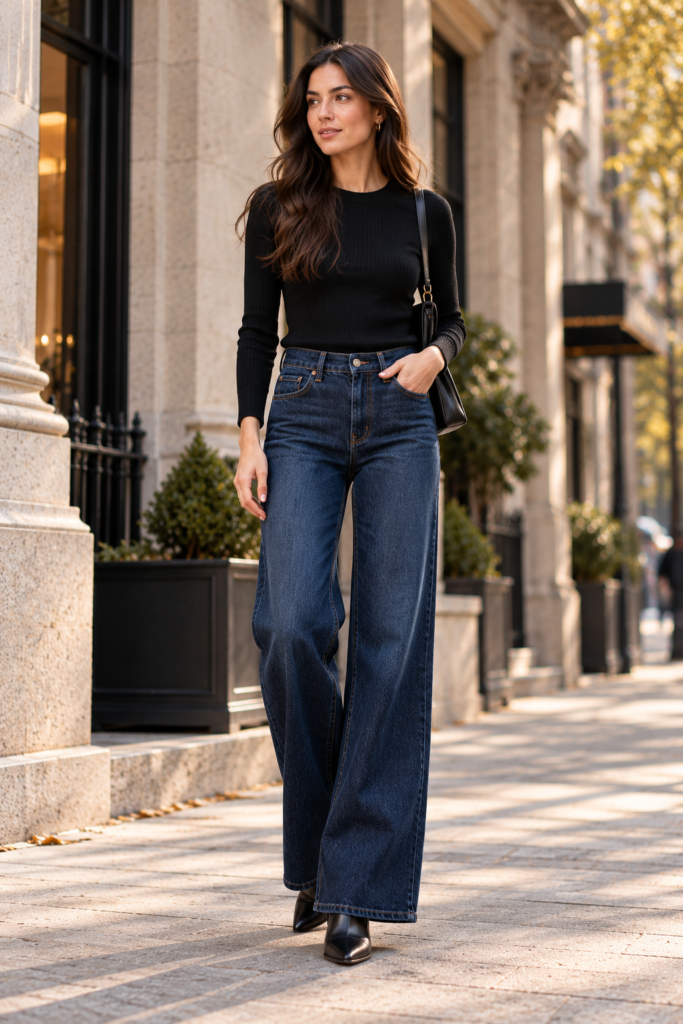
Shop inspiration: Madewell wide-leg denim.
Full-length wide-leg jeans
Wide-leg jeans can create a dramatic, relaxed silhouette while making use of longer inseams.
Pair them with a fitted knit top or structured jacket for contrast.
Flare jeans
Flared denim is fitted more closely through the upper leg before widening toward the hem.
On longer legs, a full-length flare can create a striking shape with ankle boots or heeled shoes.
Relaxed straight-leg jeans
For everyday dressing, relaxed straight jeans offer room through the leg without requiring an exaggerated silhouette.
Fit tip: Check the actual inseam measurement instead of relying on labels such as long or tall. These measurements differ between brands.
4. Best Jeans for Curvy Hips and a Smaller Waist
If your jeans fit across the hips but leave a noticeable gap at the waistband, the problem may be the garment’s proportions rather than its overall size.
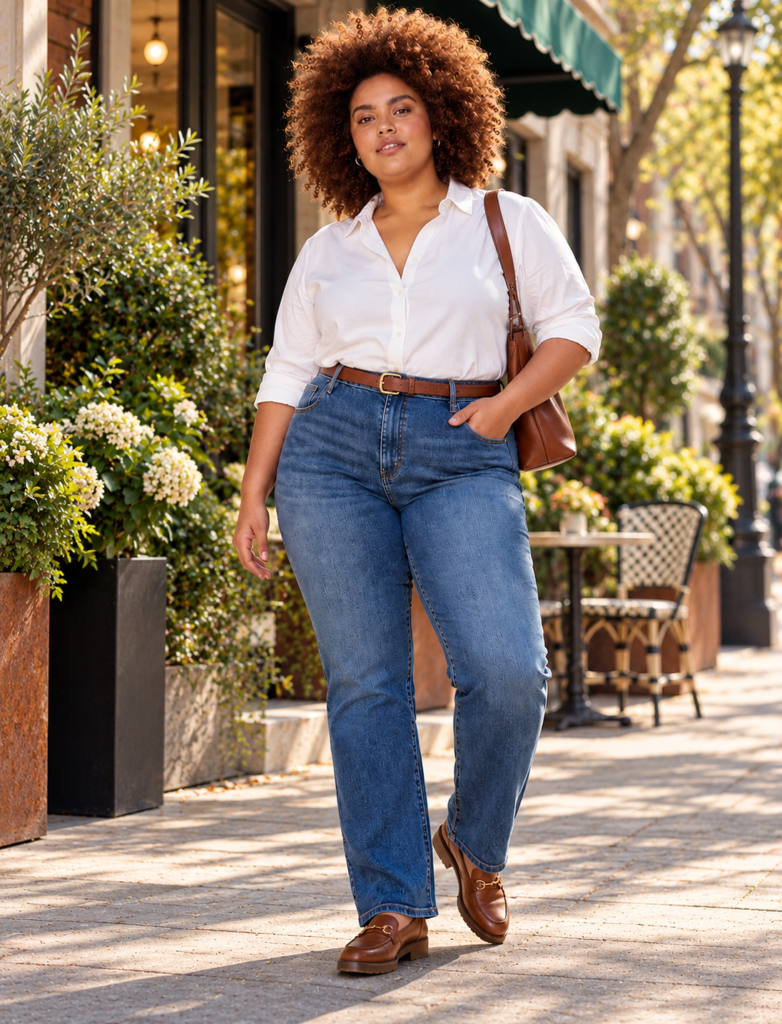
Look for jeans designed with a greater waist-to-hip difference.
Curvy-fit straight jeans
Curvy-fit straight jeans combine a classic leg shape with additional room through the hips and seat.
They are especially useful when standard straight jeans pull across the hips or gap at the waist.
Bootcut jeans
Bootcut jeans are relatively narrow through the thigh and widen gently below the knee.
The wider hem creates a different visual balance from slim or tapered denim.
Wide-leg jeans
Wide-leg styles offer more room throughout the lower body, making them worth trying if you dislike tight fabric around your thighs.
Styling idea: Combine medium-wash wide-leg jeans with a tucked cotton shirt and structured leather belt.
Shop the inspiration
Explore the Levi’s 501 women’s denim collection for Original, ’90s, Curve, and other fit variations.
5. Best Jeans for a Fuller Midsection
Comfort should come first when selecting jeans around the waist and abdomen.
A waistband that looks smooth while standing may feel restrictive when sitting.
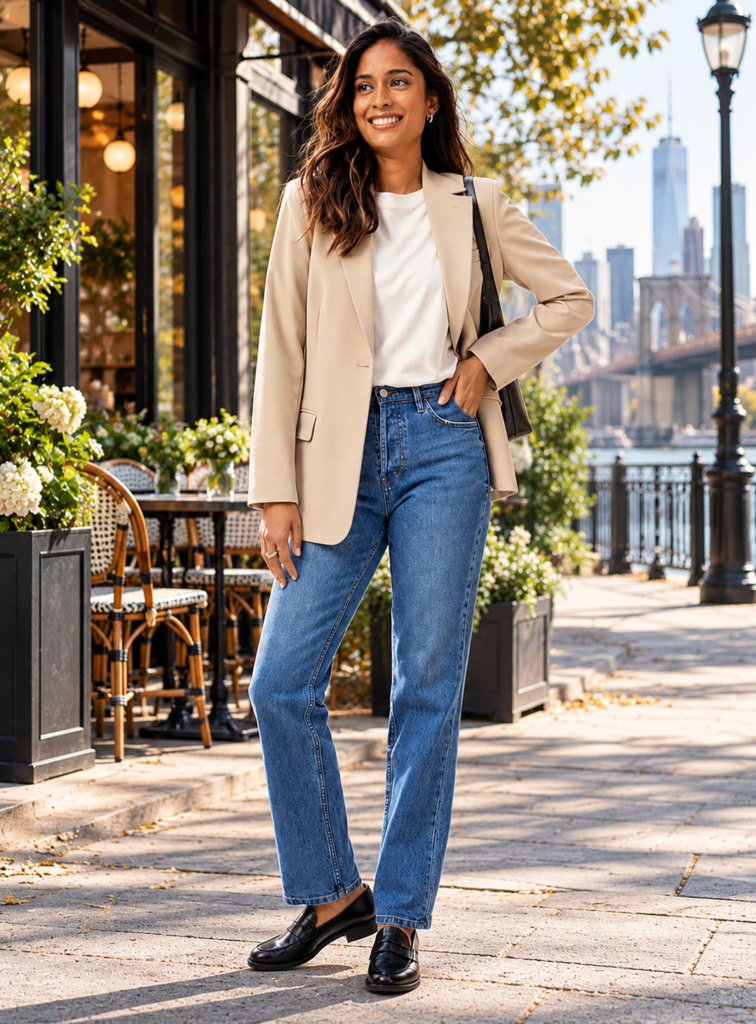
Mid-rise straight jeans
Mid-rise jeans can be a comfortable option when a very high waistband presses against the upper abdomen.
Look for a rise that rests naturally on your body.
High-rise jeans with a comfortable waistband
High-rise denim can also work beautifully when the waistband is properly shaped and the fabric has an appropriate amount of give.
Avoid assuming that a tighter waistband will create a better fit.
Relaxed jeans
Relaxed straight and loose-fitting jeans can offer more freedom of movement, particularly for long days involving sitting, walking, or travel.
Styling idea: Wear dark relaxed straight jeans with a softly draped blouse, an open blazer, and loafers.
The most important test is whether you feel comfortable after sitting for several minutes.
6. Best Jeans for a Short Torso and Longer Legs
If your waist sits relatively close to your rib cage, some high-rise jeans may feel unusually tall.
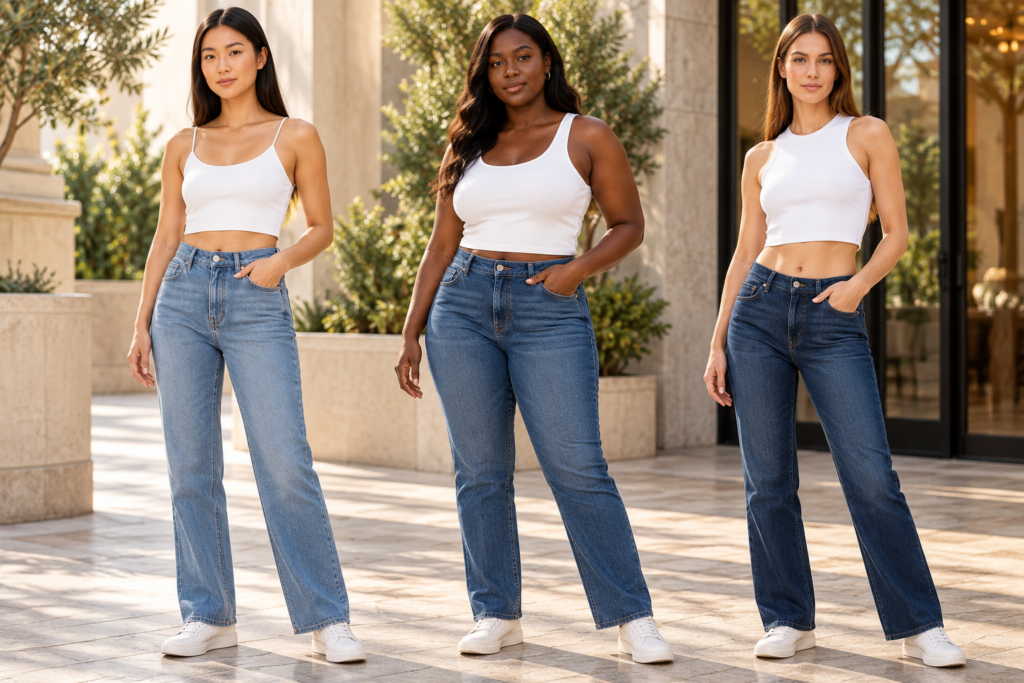
Mid-rise straight-leg jeans
A mid-rise cut can create more visual space between your waistband and upper body.
This is especially useful if high-rise jeans bunch when you sit.
Relaxed low-rise jeans
A relaxed lower rise may feel comfortable for people who prefer the waistband below their natural waist.
Choose a fit that stays secure without requiring constant adjustment.
Bootcut jeans
A subtle bootcut creates shape through the lower leg without necessarily emphasizing waistband height.
Styling tip: Try wearing your top untucked or with a relaxed front tuck rather than automatically tucking everything into a high waistband.
7. Best Jeans for Shorter Legs and a Longer Torso
If you enjoy creating the visual impression of longer legs, rise and hem length are particularly useful styling tools.
High-rise straight jeans
A higher waistband can shift the perceived starting point of the legs upward.
Pairing jeans with a tucked shirt or shorter jacket can reinforce this effect.
Full-length bootcut jeans
A full-length bootcut that falls neatly over shoes can create an uninterrupted vertical line.
Avoid hems that drag on the floor or bunch heavily around the ankles.
Dark-wash jeans
A consistent dark wash can produce a visually streamlined outfit, especially when paired with shoes in a similar tone.
This is a styling effect rather than a rule about what anyone should wear.
8. Best Jeans for Straighter Waist-to-Hip Proportions
If your waist and hips have relatively similar measurements, many classic denim cuts can be comfortable.

Straight-leg jeans
A straight-leg fit is an easy everyday foundation for casual and smart-casual outfits.
Barrel-leg jeans
Barrel jeans have a curved silhouette, with volume through the leg and a narrower hem.
They can add sculptural interest to a simple outfit.
Try them with a fitted T-shirt and minimal sneakers.
Relaxed jeans
Relaxed denim offers an effortless silhouette that works well with oversized shirts, fitted tank tops, and cropped jackets.
Choose the amount of volume that feels intentional rather than overwhelming.
9. High-Rise vs. Mid-Rise vs. Low-Rise Jeans
The rise is the distance from the crotch seam to the top of the waistband.

It affects where the waistband sits and how the jeans feel when you move.
| Rise | Typical styling effect | What to consider |
|---|---|---|
| High-rise | Emphasizes waist placement and can visually lengthen legs | May feel too tall on shorter torsos |
| Mid-rise | Offers a balanced waistband position | Useful for everyday comfort |
| Low-rise | Creates a lower waistline and relaxed look | Check coverage and comfort when sitting |
There is no universally flattering rise.
A rise that looks high on one person may sit closer to mid-rise on another.
The best choice depends on your torso length, comfort, and outfit preferences.
10. Straight-Leg vs. Wide-Leg vs. Bootcut vs. Flare
Understanding denim silhouettes makes shopping easier.
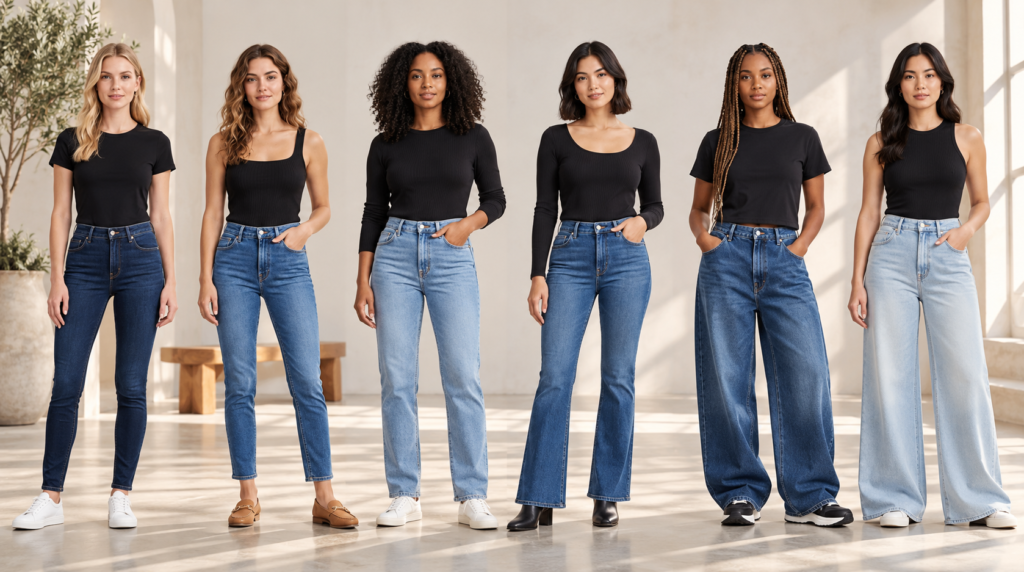
Straight-leg jeans: Maintain a relatively consistent width from knee to hem. A versatile option for everyday outfits.
Wide-leg jeans: Offer greater width through the leg, creating a flowing or structured silhouette depending on the fabric.
Bootcut jeans: Widen subtly below the knee and pair naturally with boots.

Flare jeans: Create a more pronounced widening below the knee.
Skinny jeans: Fit closely through the leg and work well with oversized knits, boots, and long coats.
Barrel jeans: Create a curved shape that adds volume around the leg before narrowing toward the ankle.
Relaxed jeans: Prioritize room and ease, although the exact shape varies by brand.
The most useful approach is to try two or three silhouettes in the same size range and compare how they feel.
11. How to Choose the Right Jeans Inseam
An inseam measures the inside leg from the crotch seam to the hem.
It is one of the most important measurements when buying denim online.

The ideal inseam depends on your height, leg length, shoe choice, and desired hem position.
A cropped jean should end where you want it to—not necessarily where the product photograph shows it.
Full-length wide-leg jeans generally look most intentional when the fabric falls neatly over the shoe without dragging.
Straight-leg jeans can work at the ankle or full length.
Practical tip: Measure the inseam of a pair of jeans you already love, then compare that measurement with the retailer’s size chart.
This is often more reliable than choosing by height alone.
12. Stretch Denim vs. Rigid Denim
Denim fabric composition changes the wearing experience.
Rigid denim
Rigid jeans are commonly made from 100% cotton denim without added elastane.

They may feel firmer initially and develop a more personalized feel with wear.
However, the amount of softening depends on the fabric construction and finish.
Stretch denim
Stretch denim contains elastic fibers that allow the fabric to give as you move.
It can be useful for people who prioritize flexibility through the hips, thighs, and knees.
Which should you choose?
Choose rigid denim if you enjoy a structured, traditional jeans feel.
Consider stretch denim if flexibility is a major priority.
Neither fabric automatically guarantees a better fit.
For example, the Levi’s 501 Original Fit women’s jeans product listing describes a straight-leg, non-stretch, 100% cotton construction for the linked version.
Always check the material composition for the exact wash and product variation you are purchasing.
13. Best Jeans Colors for a Versatile Wardrobe
Denim color can influence how easily a pair of jeans works with the rest of your clothing.

Dark indigo
Dark indigo jeans are useful for polished outfits, especially with blazers, knitwear, and leather shoes.
Medium blue
Medium-wash denim offers a classic casual look and works with white, beige, black, navy, and many brighter colors.
Light blue
Light-wash jeans are particularly appealing for relaxed spring and summer outfits.
Black
Black jeans can create a streamlined look and transition easily between casual and dressier settings.
Ecru and off-white
Light neutral denim pairs beautifully with camel, chocolate brown, gray, navy, and soft pastels.
If you’re building a smaller wardrobe, start with the wash that complements the tops and shoes you already own.
14. How to Style Jeans for Different Occasions
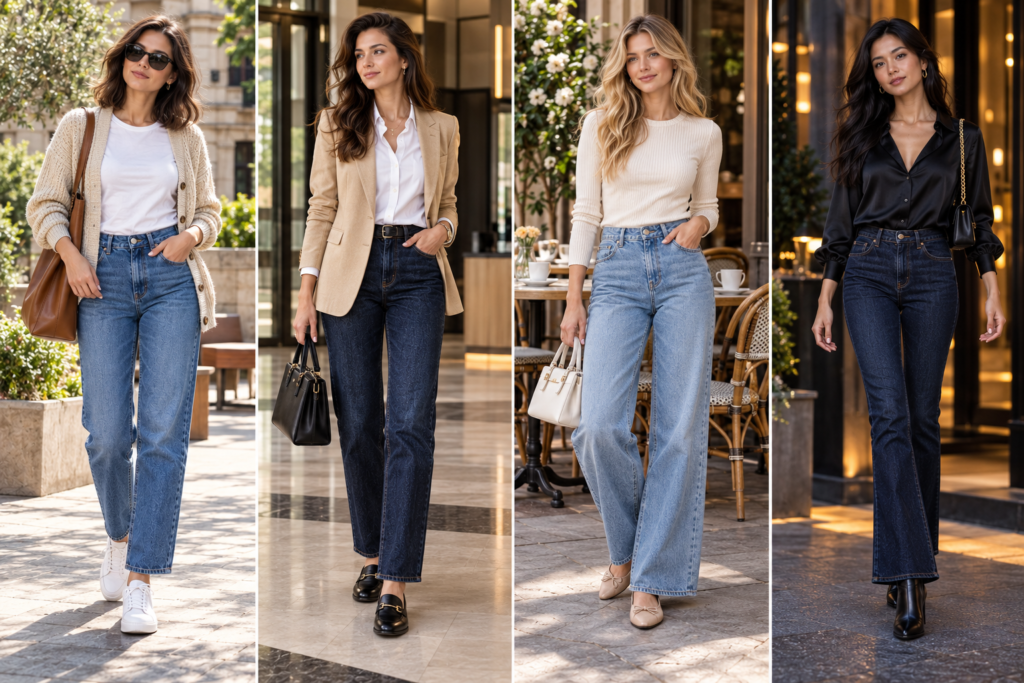
Everyday casual
Wear straight-leg jeans with a cotton T-shirt, lightweight cardigan, and sneakers.
This combination is comfortable and easy to repeat.
Smart casual
Pair dark denim with a crisp white button-down shirt, tailored blazer, and loafers.
Choose clean hems and minimal distressing when you want a more polished result.
Weekend brunch
Style relaxed wide-leg jeans with a fine-knit top, leather belt, and ballet flats.
Evening outfits
Combine dark bootcut or flare jeans with a satin-look blouse, small shoulder bag, and heeled ankle boots.
Fall and winter
Wear straight-leg or wide-leg jeans with a wool coat, soft knitwear, and boots.
Make sure the hem works with your winter footwear.
Spring and summer
Try light-wash straight or cropped jeans with breathable cotton shirts, tank tops, and flat sandals.
The most wearable outfits are usually built around a combination of comfortable proportions, practical shoes, and clothing that suits the weather.
15. Common Jeans Shopping Mistakes
Even a beautiful pair of jeans can become frustrating when important fit details are overlooked.
Choosing only by waist size. A correct waist measurement doesn’t guarantee enough room through the hips and thighs.
Ignoring the rise. Jeans can feel uncomfortable if the waistband sits too high or low for your torso.
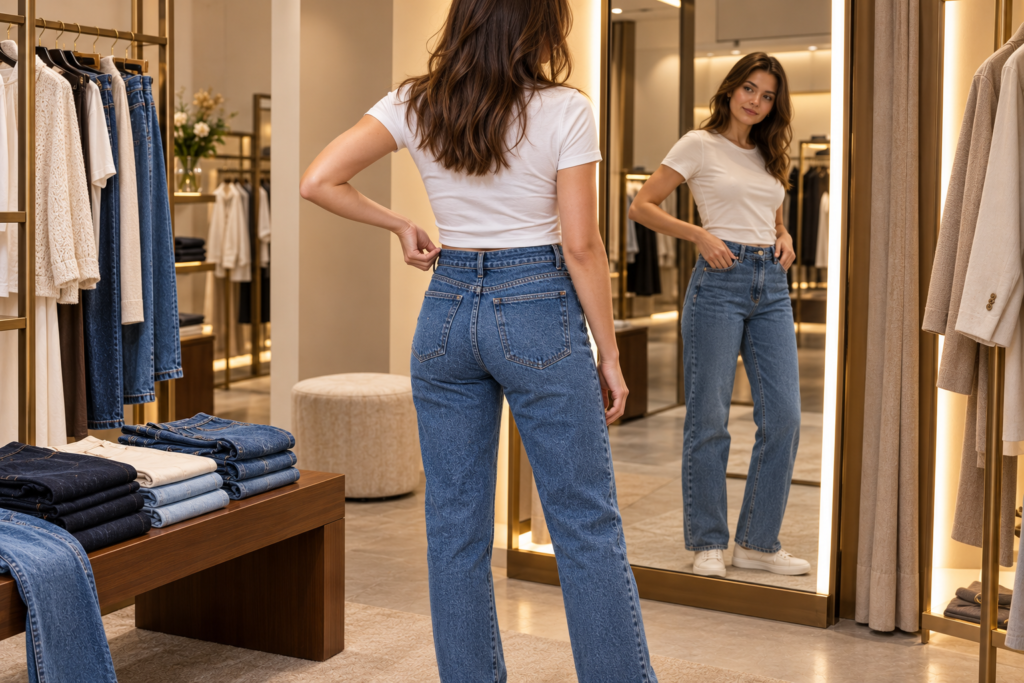
Buying the wrong inseam. Excess fabric at the ankle can change the intended silhouette.
Assuming every brand uses identical sizing. Denim sizing and fit blocks vary considerably.
Buying jeans that feel painfully tight. Some denim relaxes with wear, but that doesn’t justify buying an uncomfortable pair.
Overlooking pocket placement. Back-pocket size and position influence the visual appearance of the seat.
Ignoring the seated fit. Always sit, bend, and walk before deciding that jeans fit well.
Following body-shape rules too strictly. Personal preference matters more than any generalized fashion recommendation.
16. The Five-Minute Jeans Fitting-Room Test
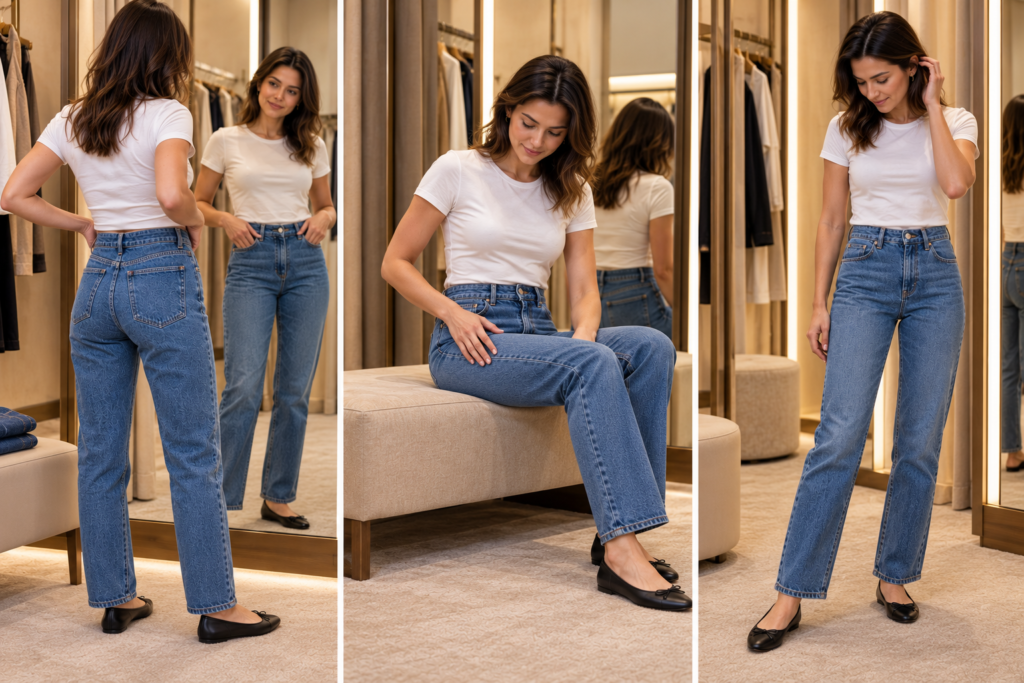
Before buying a pair of jeans, try this simple checklist.
- Stand naturally and check whether the waistband feels secure without digging in.
- Sit down and notice whether the rise feels comfortable.
- Walk several steps and check for pulling across the thighs.
- Bend gently and make sure the waistband stays where you want it.
- Look at the hem with the shoes you intend to wear.
- Check the back waistband for unwanted gaping.
- Examine the fabric around the crotch and seat for excessive pulling.
- Ask yourself whether you’d comfortably wear the jeans for several hours.
If the waist fits but another area doesn’t, experiment with a different cut before changing sizes.
17. Frequently Asked Questions

What jeans are most versatile for different body proportions?
Straight-leg jeans are a useful starting point because their relatively consistent leg width works with many outfit styles. However, the right rise, waist shape, and inseam are just as important as the silhouette.
Are high-waisted jeans flattering for everyone?
High-rise jeans can create a visually longer leg line, but they aren’t universally more comfortable or flattering. People with shorter torsos may prefer mid-rise styles.
What jeans work well for fuller hips and a smaller waist?
Curvy-fit straight jeans, bootcut jeans, and appropriately shaped wide-leg jeans are worth trying. Look for enough hip room and a waistband that doesn’t gap.
Can petite women wear wide-leg jeans?
Absolutely. Petite-specific cuts or tailoring can help ensure the rise, knee placement, and hem length suit a shorter frame.
Are skinny jeans still a good option?
Yes. Skinny jeans remain a practical choice for people who enjoy a close-fitting silhouette, especially with boots, oversized sweaters, and longer outerwear.
Should jeans feel tight when first purchased?
Jeans should feel secure, not painfully restrictive. Rigid denim may soften with wear, while stretch denim offers more immediate flexibility. Don’t rely on substantial stretching to correct a poor fit.
How do I know whether my jeans are too long?
If the hem drags, catches under your shoes, or bunches more than you want, the inseam may be too long. Some silhouettes intentionally pool slightly, so personal styling preference matters.
Is expensive denim always better?
No. Price alone doesn’t guarantee superior comfort, construction, or fit. Compare fabric, stitching, waistband shape, inseam options, and return policies before buying.
Final Thoughts: The Best Jeans Are the Ones That Fit Your Life
There is no single perfect pair of jeans for every body proportion.
The most successful denim wardrobe starts with understanding your measurements, knowing which silhouettes you enjoy, and recognizing how rise, inseam, fabric, and waistband construction affect comfort.
If you’re unsure where to begin, try a well-fitting straight-leg jean in a medium or dark wash. Then experiment with wide-leg, bootcut, relaxed, or flare styles to discover what you enjoy wearing.
Fashion should give you more choices—not more rules.
The best jeans don’t require you to change your body. They simply need to fit it well.
Shopping note: Product links are provided as editorial shopping references. Availability, pricing, and regional options may change.



4 thoughts on “Best Jeans Styles for Different Body Proportions: The Complete Fit Guide”