

By Olivia Parker
The most useful low-maintenance haircuts for fine hair keep a clear outline and work with the way your hair already falls. For many people, that means a blunt bob, a collarbone-length lob, or a softly shaped crop. If your hair has waves or curls, selective layers may make more sense than keeping every strand the same length.
The catch is that an easy morning and an infrequent salon appointment are different things. A pixie can need very little daily styling yet lose its outline quickly. A longer lob may take more drying time but tolerate growth more comfortably. Before choosing a cut, decide which kind of maintenance you want to reduce.
Quick answer: Start with a chin-length blunt bob if your straight hair settles neatly at that length, a collarbone lob if you want more styling flexibility, or a soft pixie if you welcome regular reshaping. Keep layers restrained when the ends already look sparse. Choose bangs only if their daily attention fits your routine.
1. Decide What “Low Maintenance” Means for Your Hair
Fine hair describes the small diameter of individual strands. Thin hair describes lower density: fewer hairs across an area of scalp. As Redken’s explanation of fine versus thin hair makes clear, these are separate characteristics. You can have fine strands and plenty of them.
That distinction changes the haircut conversation. Someone with dense, fine waves may benefit from internal shaping; someone with fine strands and sparse ends may prefer to preserve more of the perimeter, the bottom outline of the cut. Our guide to choosing a haircut for your natural texture explains how texture and density affect that decision.
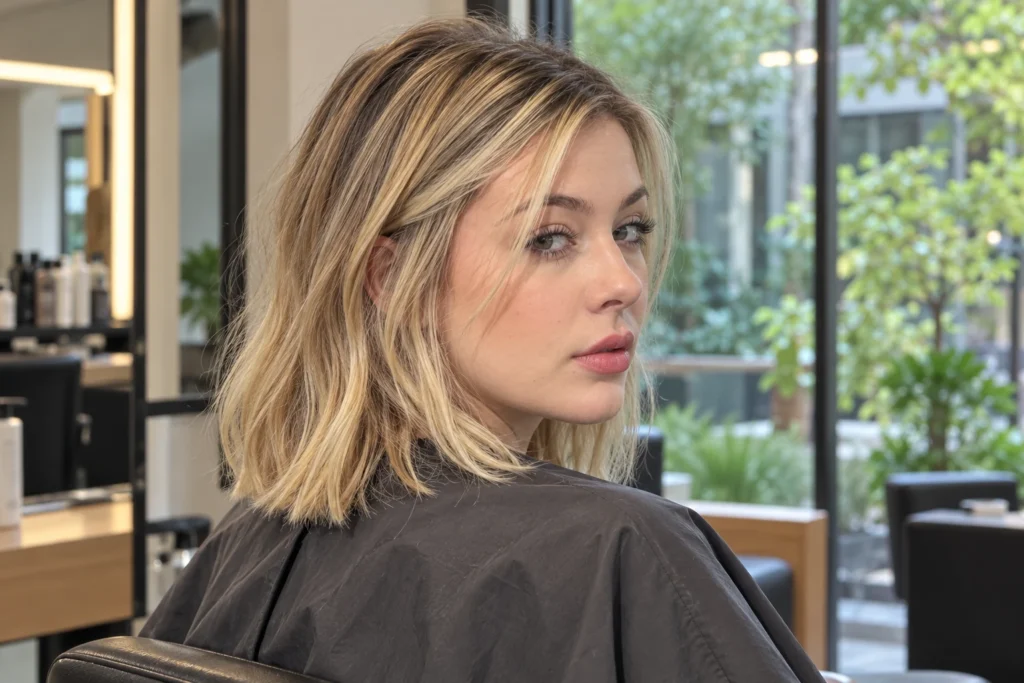
Use these priorities to narrow the options:
- For a continuous, fuller-looking edge: Consider a blunt bob. The compromise is that a precise outline needs refreshing.
- For more flexibility as it grows: Consider a collarbone lob. The ends may turn where they meet your shoulders.
- For less length to manage: Consider a soft pixie or bixie. Cowlicks and growth can become more noticeable.
- For wearing natural waves or curls: Consider a softly layered shape. Layer placement needs to suit your density and dry texture.
A haircut changes shape, not the number of hairs growing from your scalp. If you notice a newly widening part, sudden shedding, or patchy loss, seek a dermatologist’s assessment rather than treating the change as a styling problem. The American Academy of Dermatology explains why identifying the cause of hair loss matters.
2. A Chin-Length Blunt Bob Keeps the Ends Visually Together
A blunt bob brings the ends into a relatively continuous line. On fine hair that becomes wispy through the lower lengths, this can make the outline look more substantial without requiring a heavily layered crown. Hairstylists interviewed for Harper’s Bazaar’s guide to bobs for fine hair also emphasize the visual weight of a full perimeter.

Ask your stylist to choose the exact length with your hair resting naturally. A chin-length cut that falls smoothly may need little correction; one that catches at the jaw or fights a strong growth pattern may require a brush every morning. “Short” alone does not tell you how it will behave.
If you tuck your hair behind your ears throughout the day, demonstrate that habit during the consultation. The cut should still feel intentional once you release the tucked sections.
For a broader comparison of straight, wavy, and curly versions, see our guide to bob shapes for different hair types. Here, the important question is whether the edge looks good with the styling you will actually do.
3. A Collarbone Lob Offers More Room to Grow
A lob, or long bob, is worth considering if you want a clear outline without committing to a short crop. Keeping the back mostly one length gives the cut a defined base; a little shaping around the face can soften it without removing weight throughout.
Collarbone length also appears in Marie Claire’s hairstylist guidance on low-maintenance cuts as an option for fine hair that can grow out comfortably. Treat the length as a starting point, though. Your shoulders, natural bends, and preferred parting all affect where the ends settle.
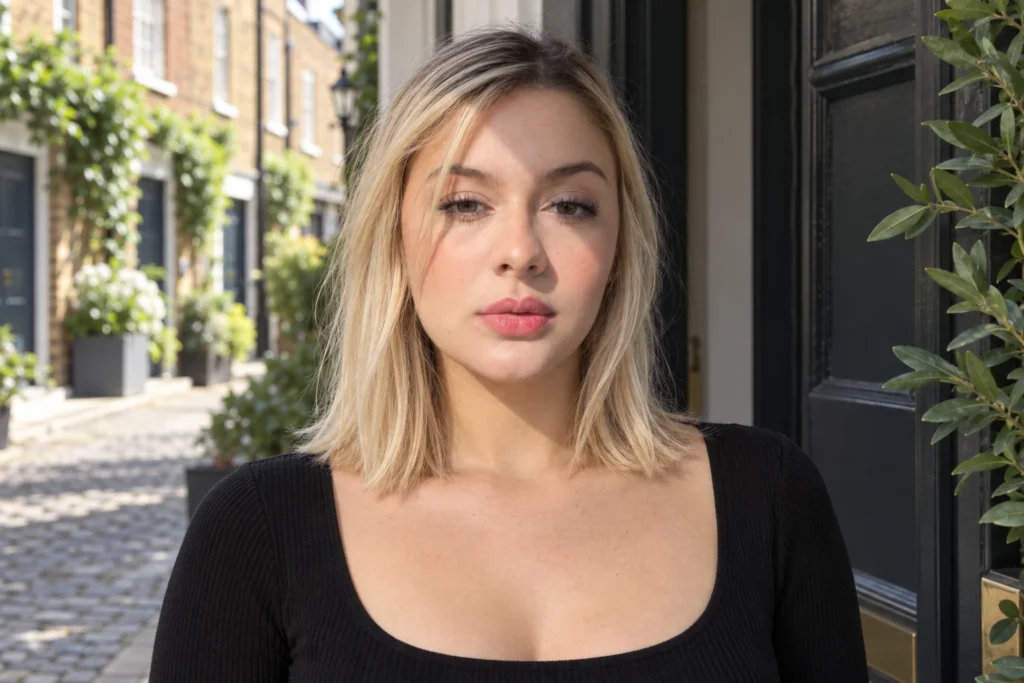
If a slight outward flick bothers you, tell your stylist before choosing a shoulder-skimming finish. Otherwise, allowing that turn can save you from straightening the same section repeatedly.
For ponytails, confirm that the shortest pieces reach the fastening point. A collarbone-length back does not guarantee that shorter front layers will stay gathered. Our easy hairstyles for medium-length hair offer useful alternatives when you prefer a loose half-up style.
4. A Soft Pixie or Bixie Reduces Length, With a Salon Tradeoff
A pixie keeps the sides and back short, with enough length on top to create the chosen shape. A bixie sits between a pixie and a bob, usually retaining more length around the ears and nape. Both can suit someone who dislikes managing longer hair.
The easiest version follows your growth pattern. If your crown naturally moves forward, a cut designed to sweep backward may create a daily task. Ask the stylist to inspect your hairline and cowlicks before deciding how short to go.

Keep the finish soft if you do not want to recreate a sharply sculpted outline. A little separation can show the shape; aggressive thinning is a different decision and deserves a conversation, particularly where density is already low.
Hair.com’s maintenance guide notes that some pixies and bobs need touch-ups around every four to six weeks. That is the central tradeoff: less length to arrange, but a silhouette that can change noticeably between appointments.
5. Use Layers Where They Solve a Specific Problem
For Fine, Straight Hair
If the bottom already looks transparent against your clothing, preserving a fuller edge is a sensible starting point. You can still discuss a small amount of face framing. The useful question is what each shorter section will do once your hair is dry.
Ask the stylist to explain the proposed texturizing before it happens. Scissors, razors, and thinning shears are tools; the amount and placement of hair removed matter more than declaring one tool unsuitable for everyone.
For Fine Waves and Curls
A completely uniform length is not automatically the easiest choice. Selective layers can help distribute the shape, but too many short sections may leave less hair at the bottom. Bring photographs showing your ordinary waves or curls, including any areas that behave differently.
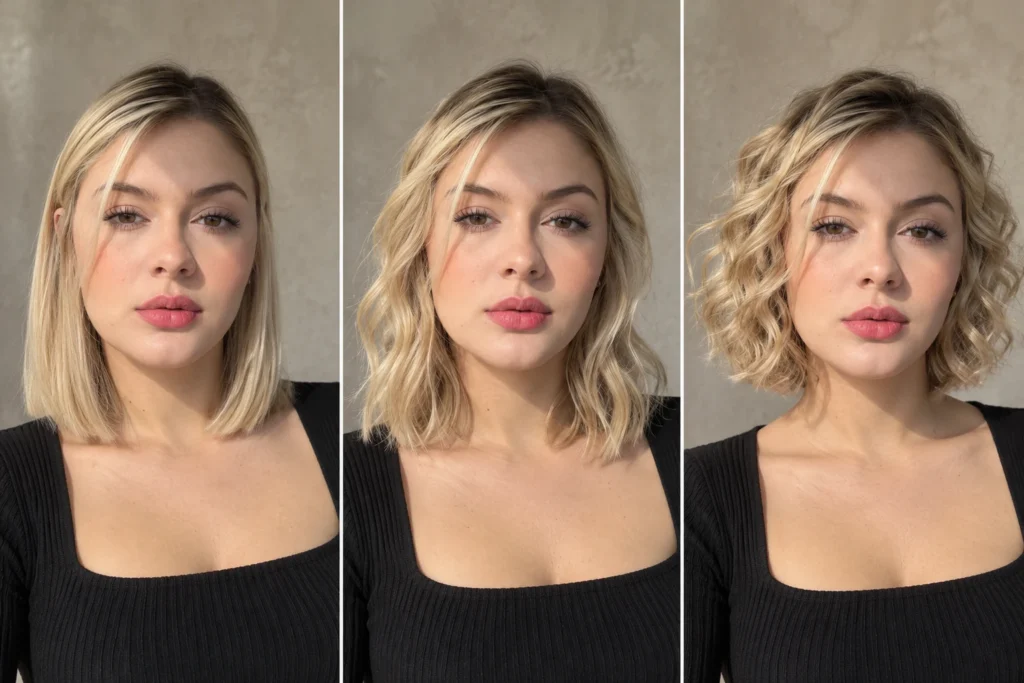
Agree on the finished dry length. Wet hair can give a misleading impression of where a curl will sit once it contracts. If you alternate between natural texture and a straightened finish, tell the stylist which one you wear most.
If You Want to Keep Long Hair
Fine hair does not have a universal length limit. Keep the length you enjoy, and assess whether the ends still form the outline you want. Long, softly blended layers may be an option when there is enough density to support them; a mostly one-length cut may suit sparser ends better.
Choose a reference with a finish you can reproduce. A photograph built around a large round-brush blowout tells you very little about how the same cut will air-dry.
6. Treat Bangs as a Separate Maintenance Decision
Bangs can change the character of a simple haircut, but they also add another area to arrange. A short fringe may need attention while the rest of your hair is perfectly wearable.
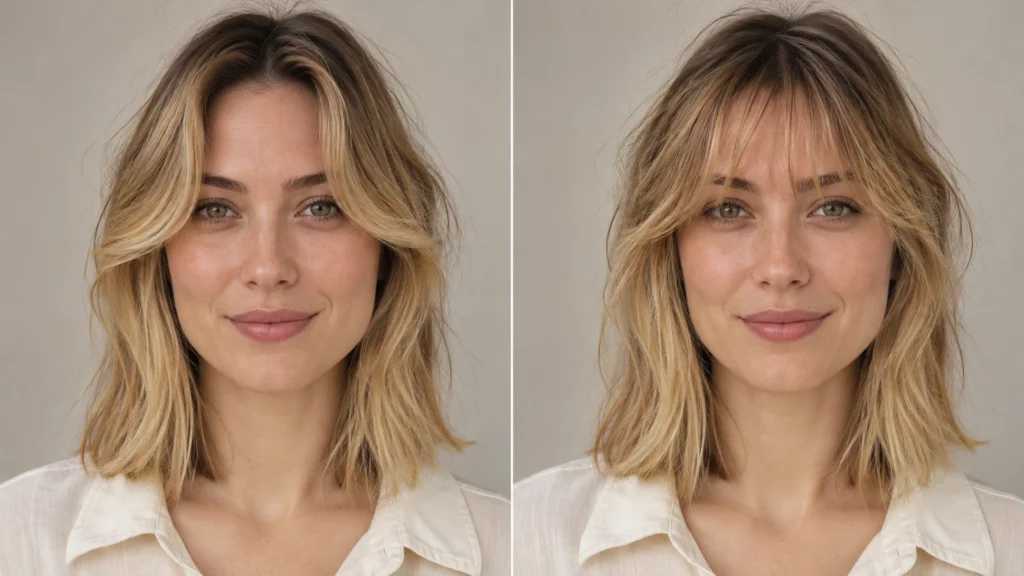
For a more flexible starting point, consider longer side-swept pieces or face framing that blends into the sides. Curtain bangs are another option if your parting and growth pattern cooperate. Their shape still needs assessment; a center opening is not something every hairline naturally produces.
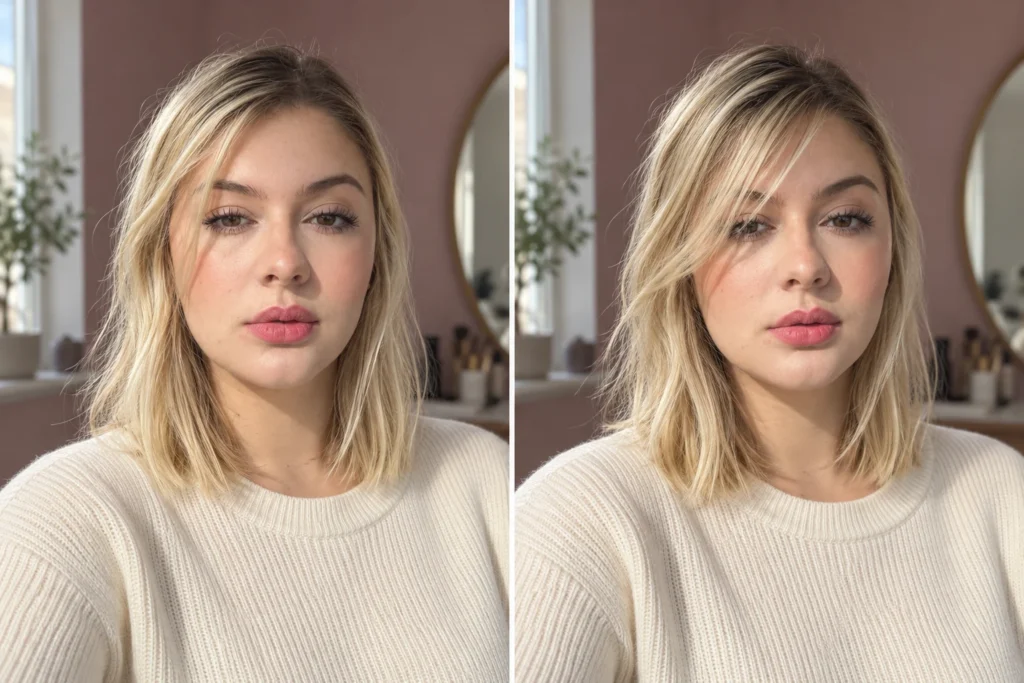
Discuss how much hair will be brought forward. A wide, deep fringe section takes hair from elsewhere in the cut, which matters when you want to preserve fullness at the sides.
If you like the look but are uncertain about the routine, read our guide to styling curtain bangs at home before booking. It makes the daily commitment easier to judge than a finished salon photograph.
7. Give Your Stylist a Routine, Not Just a Reference Photo
Bring one photograph of the shape you like and one showing your own hair on an ordinary day. Then explain how you wear it: air-dried, briefly blow-dried, tucked behind your ears, or tied back for work.
A useful salon brief might be:
“My strands are fine, and I want an outline that works with my natural texture. Please assess how much density I have before adding layers. I need to be able to tuck the front behind my ears, and I don’t want a full blowout to make the cut sit properly. Can you show me the simplest way to finish it?”
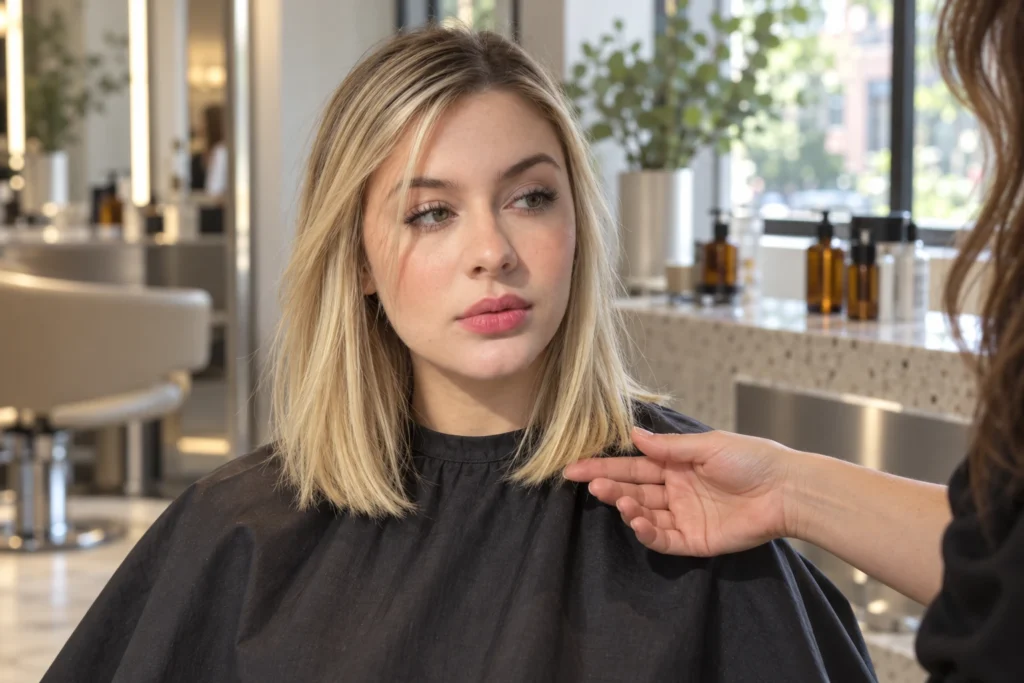
Change those details to match your habits. Also ask what the reference requires: extensions, heat styling, a particular parting, or more product than you want to use.
Before leaving, check the cut from the back and sides as well as the front. Ask to see how it settles when you move your head and release any styled sections. The goal is a useful understanding of the cut, not a promise that it will look identical every day.
8. Keep the Styling Routine Small and Purposeful
A low-maintenance cut should not need several products to compensate for a shape you dislike. Start with care, then add a styling product only where it solves a specific problem.
- Wash according to your scalp. Follow how oily or dirty it becomes rather than a fixed schedule for all fine hair.
- Condition where needed. For fine, straight hair, concentrate rinse-out conditioner on the ends. Fine curls or processed hair may need conditioning through more of the length.
- Remove moisture gently. Blot or wrap with a towel or T-shirt instead of rubbing vigorously. Detangle gently, using a method suited to your texture.
- Choose your finish. Air-dry if you like the natural result. If you blow-dry, use low or medium heat and a suitable heat protectant; focus the styling where you need it.

These basics follow the American Academy of Dermatology’s healthy-hair guidance. Its separate advice on leave-in conditioner recommends lighter formulations for fine, straight hair and using only the amount needed.
Shop the Inspiration: An Optional Mousse for a Blow-Dried Finish
John Frieda Volume Lift Kickstarter Thickening Mousse is the name currently displayed on the brand’s US product page. The brand describes it as a lightweight volumizing mousse and directs users to distribute it through towel-dried hair before blow-drying.
Consider that format if you want body through the style; skip the extra step if you already like your natural finish.
Shop the inspiration: John Frieda mousse
Shop the Inspiration: A Primer for Heat-Styling Days
Philip Kingsley Perfecting Primer Heat Protection Spray is a different format to consider if you want a spray before styling. The brand directs application through freshly washed, damp mid-lengths and ends.
Follow the product instructions rather than treating every styling spray as interchangeable, and keep the heat setting modest.
Shop the inspiration: Philip Kingsley primer
You do not need to buy both. These are optional product suggestions, not products demonstrated in the haircut illustrations. Product names and formulas can differ by country, so check the local label and directions.
9. Plan Upkeep Around What Changes First
Ask for an initial appointment interval based on your particular shape, then adjust it after living with the cut. The clearest signal is often a specific change:
- For a pixie or bixie: The sides or nape no longer sit as you prefer.
- For a precise bob: The outline loses the length or angle you chose.
- For a lob or longer cut: The ends stop forming a satisfying edge, or the layers become harder to arrange.
- For bangs: The fringe interferes with your eyes or no longer falls where you want it.
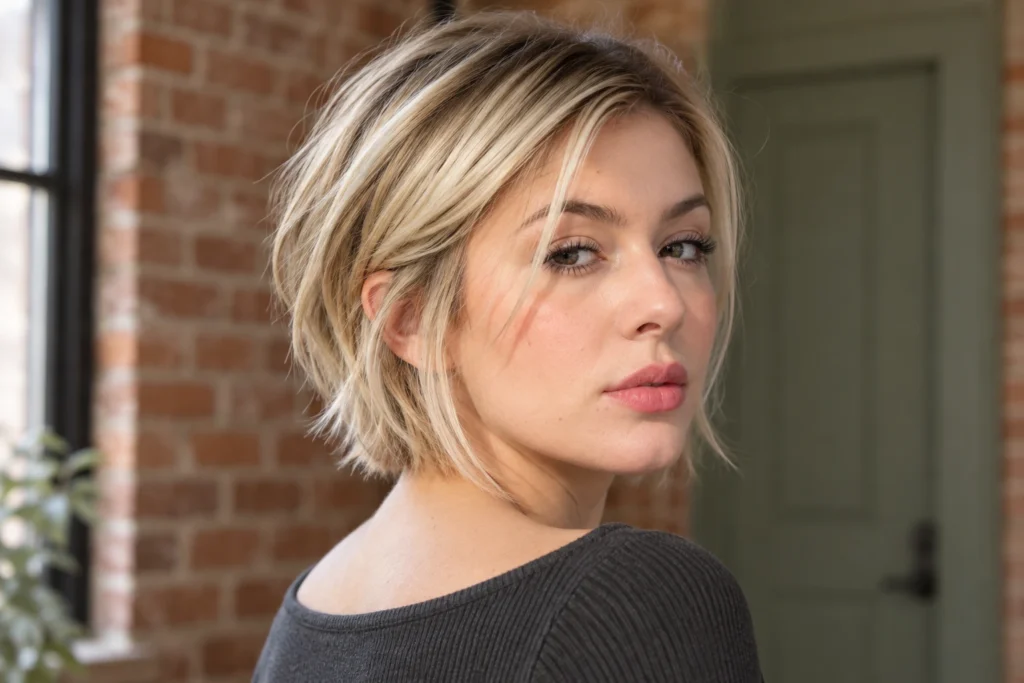
Tell your stylist whether you want to preserve the haircut or grow it longer. Those are different briefs. A tidy nape may be useful during a pixie grow-out, while repeatedly shortening every section would work against keeping length.
Also notice when the extra work occurs. If you straighten a shoulder flip every morning, a slightly different length may be more useful than another styling product. If you reshape bangs after every wash, longer front pieces might suit your routine better.
Frequently Asked Questions
What Is the Easiest Haircut for Fine Hair Without Daily Heat Styling?
A mostly one-length bob or lob is a reasonable starting point for fine, straight hair that settles smoothly. Fine waves or curls may benefit from selective shaping.
Ask to see a finish close to the one you will wear at home; a curled salon blowout cannot establish that a cut is wash-and-wear.
Is a Blunt Cut or Layered Cut Better for Fine Hair?
A blunt outline often suits ends that look sparse. Layers can be useful where they improve movement or distribute natural texture. Decide according to density, curl pattern, and the amount of hair that will remain at the bottom.
Can I Keep My Fine Hair Below My Shoulders?
Yes. Keep the length if you enjoy it and the ends behave as you want. If the last section looks much sparser than the hair above it, discuss a modest trim or fewer layers before assuming you need a short crop.
Are Low-Maintenance Haircuts Different After 50 or 60?
Your current density, texture, growth pattern, and routine are more useful than an age rule. Reassess those features if they change, and choose the length you want. A birthday does not create a requirement to have short hair.
Will Cutting Fine Hair Make It Grow Back Thicker?
A shorter, fuller outline can change how substantial the ends look. Cutting the visible length does not increase the number of hairs growing from your scalp.
The right choice is the cut whose ordinary finish you enjoy. Before booking, settle three details: the length you want to live with, the styling steps you will repeat, and the salon schedule you can sustain. That gives your stylist a clearer brief than “make it look thicker” alone.


1 thought on “Low-Maintenance Haircuts for Fine Hair: Shape, Layers, and Upkeep”