
By Olivia Parker
A haircut can feel heavy around your face even when the ends look a little sparse. Equally, the layers you love in a blowout might be the pieces you struggle to gather into a ponytail. Choosing between a blunt cut and layers means deciding which of those details you want to change—and which you want to keep.
Quick answer: In the blunt cut vs. layers decision, a mostly one-length cut is a useful starting point when you want a defined, fuller-looking bottom edge. Layers introduce shorter lengths to change the shape and movement. They can help redistribute bulk, but their placement matters more than the label. You can also combine a substantial outline with selective layers.
Before booking, consider your strand thickness, overall density, natural texture, and everyday styling habits. A reference photo becomes much more useful when those details resemble your own.
What a Blunt Cut and Layers Actually Change
In a classic one-length cut, the ends meet along a shared outline when the hair falls naturally. That bottom edge is called the perimeter. A blunt finish leaves the edge looking solid rather than feathered.
Layers introduce different lengths within the haircut. Those shorter sections might sit around your face, through the back, or underneath a longer surface layer. Their position determines where the shape changes.
| Detail | Mostly blunt, one-length cut | Layered cut |
|---|---|---|
| Bottom edge | More hair reaches the outline | Some sections finish above the longest edge |
| Visible shape | Emphasis on the overall line | Emphasis on transitions between lengths |
| Movement | Often a more continuous sweep | More separation between sections |
| Main tradeoff | May retain bulk you would prefer to reduce | May leave less fullness at the longest ends |
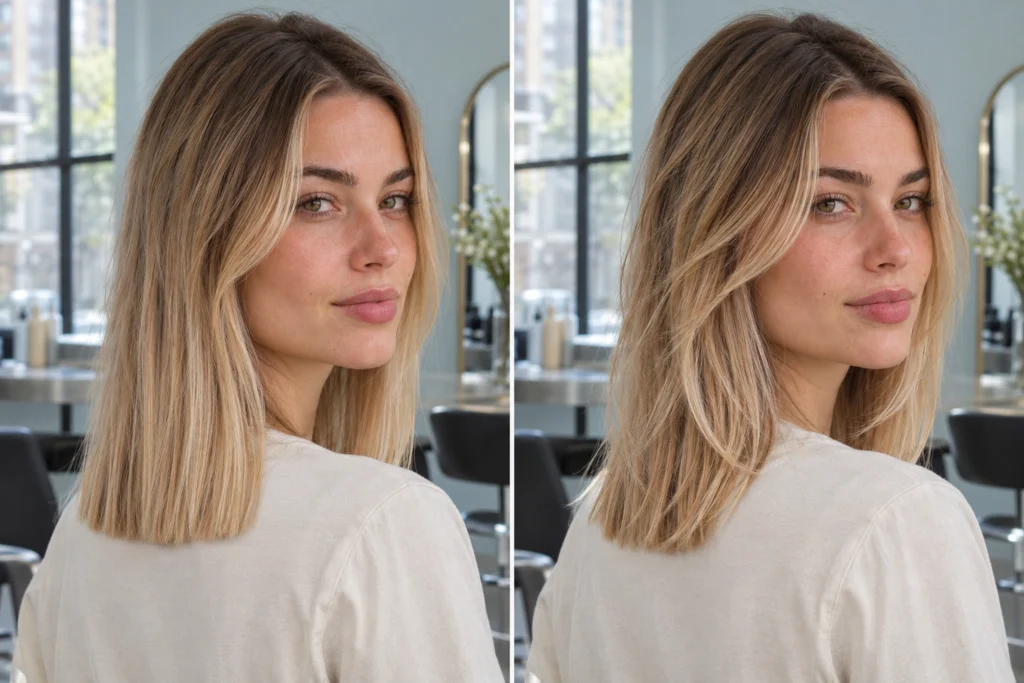
L’Oréal’s overview of layered and one-length haircuts describes several approaches, including face framing and internal layers. That variety matters: a few long layers and a heavily layered shag are very different commitments.
Neither technique changes how many hairs grow from your scalp. A fuller-looking edge is a visual effect, rather than an increase in hair density.
Fine, Thin, or Thick Hair: Check Two Different Qualities
Fine hair describes individual strand diameter. Low-density hair means fewer strands across an area of scalp. You can have many fine strands, or relatively few coarse ones. Redken’s explanation of fine versus thin hair separates these characteristics clearly.

If your ends already look light
Start the consultation with the bottom edge. In ordinary daylight, let your dry hair fall over a plain, contrasting shirt. Notice where the outline looks continuous and where it breaks into isolated pieces. This is a way to describe the appearance you want to change, rather than a test of scalp density.
A blunt bob, lob, or longer one-length shape may give those ends a more substantial appearance. If you still want shorter pieces, discuss a limited area around the face before layering throughout the back.
Sam Villa’s professional guidance on cutting fine hair emphasizes retaining weight at the perimeter and keeping layers long where fullness is a priority.
If your hair feels bulky
Explain where the bulk bothers you: beside your cheeks, underneath at the nape, or across the lower lengths. Those are different shaping problems.
Dense hair can support a strong blunt outline if you enjoy that silhouette. If you want a lighter shape, ask the stylist to identify where layering would help before agreeing to remove weight everywhere.
Match the Shape to Straight, Wavy, Curly, or Coily Hair
Straight hair: decide how visible you want the cut to be
A clean edge is easy to see on straight hair. That makes a blunt bob appealing if you like a clear outline, while longer layers can add interest through the lengths.
Look closely at the finish in your reference photo. Ends bent with a round brush can make layers appear more curved and separated than they will when they hang straight. Choose that result because you enjoy styling it, or ask how the cut would look without the bend.
Wavy hair: bring an air-dried reference of your own
Show your stylist where your waves bend on a normal day. Selective layers may help change the distribution of movement, but adding layers does not guarantee a particular wave pattern.
If you prefer a substantial bottom edge, say so. You may want movement around the upper lengths while keeping the longest section relatively intact. Include any areas that dry straighter than the rest in the conversation.
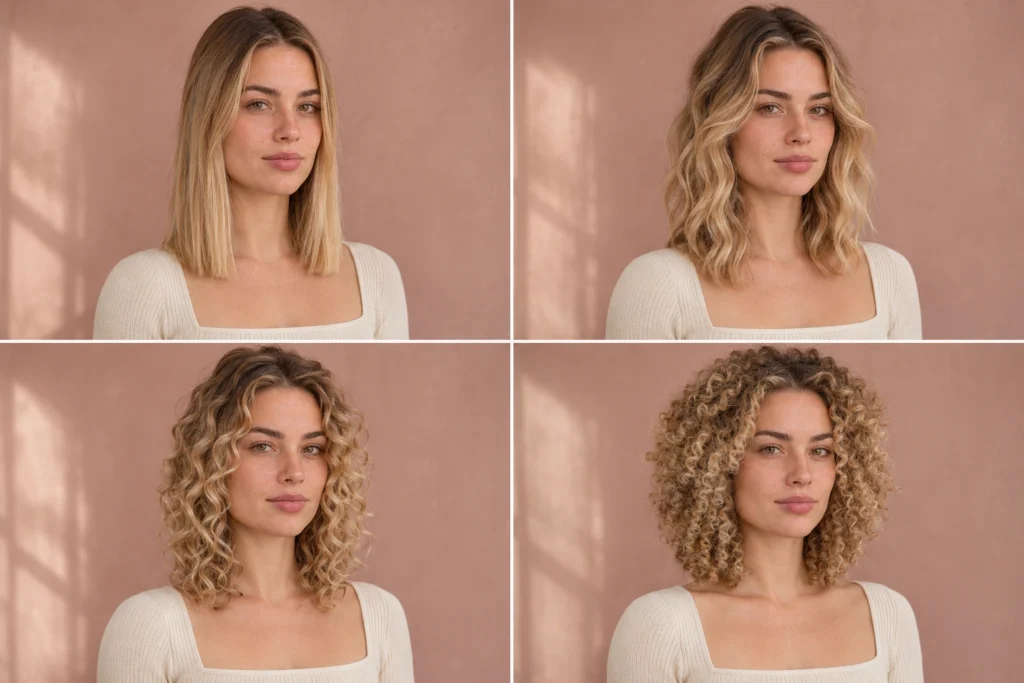
Curly and coily hair: agree on the dry silhouette
Consider where you want the finished shape to sit: close around the sides, rounded above the shoulders, or longer through the back. Layers can form part of any of those plans.
A curl can have a bluntly finished end within a layered haircut. “Blunt” does not always mean a completely unlayered shape.
Sam Villa’s curly-hair cutting guidance stresses assessing shrinkage and checking the finished dry shape. Explain whether you usually wear your hair natural, stretched, or straightened, especially if you alternate between them.
Our guide to choosing a haircut for your hair texture explores those wearing habits in more detail.
Consider Your Length—and Whether You Tie Your Hair Back
A short bob
Compare a blunt bob and a layered bob at a similar finished length. Otherwise, it is easy to mistake your preference for a shorter cut for a preference about layers.
A jaw-length outline puts the edge on display. Layering changes the shape above it, so ask to see both the side and back of a reference. A front-facing photograph may conceal the stacked or rounded back you would prefer to avoid.
For more shapes to compare, see our guide to bob haircuts for different hair types.
Shoulder-length hair and lobs
Check where the dry ends will meet your shoulders. Contact there can turn the ends outward; layers will not necessarily remove that behavior.
If tying your hair back matters, show your stylist the height of your usual ponytail or bun. The shortest front and side pieces need enough length to reach it. Our easy hairstyles for medium-length hair can help you identify which styles you want the new cut to accommodate.
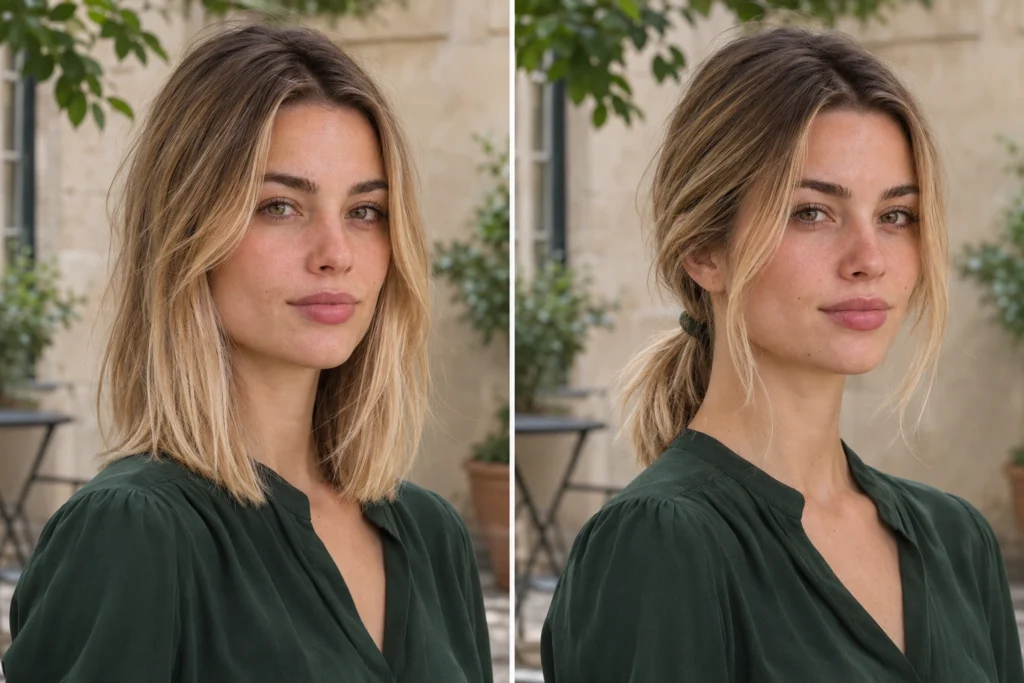
Long hair
Keeping the longest point does not mean keeping the same overall fullness. Extensive layering can leave the back technically long while changing how much hair reaches that length.
Ask to see where the proposed shortest layer would fall against your body. Then discuss how much of the remaining hair would stay near the bottom edge. This makes “keep my length” a much clearer instruction.
Choose the Cut You Can Wear Between Appointments
Separate daily styling time from salon upkeep. A precise blunt bob may settle easily each morning yet need reshaping when the outline grows beyond your preferred point. Long layers may tolerate extra length while still needing styling to resemble a particular blowout.
Describe your usual routine honestly. If you air-dry, ask to discuss the shape in that finish. If you enjoy a round-brush blowout, explain which sections you are willing to style and how often.
Think about practical details, too. Do you tuck both sides behind your ears? Wear a hat on the commute? Need your hair gathered away from your face during work? Short pieces should earn their place in that routine.

Our low-maintenance haircuts for fine hair guide compares morning effort with appointment demands.
Treat a fringe as a separate choice. You can have blunt ends without bangs, or layers without a short face frame. If your reference includes curtain bangs, review how to style curtain bangs at home before committing to the complete look.
When a Blunt Outline With Subtle Layers Makes Sense
A combined approach is worth discussing when you like a defined edge but want one particular area to behave differently.
Long layers through dense lengths can introduce a change in shape while leaving much of the haircut close to its original length. Ask how noticeable the difference will be when the hair is worn straight.
Selective face framing changes the front without requiring the same treatment throughout the back. Choose where you want the opening to begin, then check whether those pieces will tuck or tie back.
Internal layers sit within the haircut, beneath longer outer sections. They may be useful when you want less bulk without an obviously layered surface. They still remove hair, so they deserve the same discussion about density and the finished outline.

Sam Villa’s fine-hair layering lesson shows why placement near the sides and ears requires care when preserving the appearance of fullness.
You do not need to select the stylist’s exact technique. Describe the result you want, ask where hair would be shortened, and agree on the limits before cutting begins.
Bring Three Views to Your Haircut Consultation
Take a few current photographs in even light, with your hair prepared as you normally wear it. Together, these three views give your stylist more context than a single inspiration image:
- The front: Show your normal part and the way the hair falls around your face.
- The back: Show the complete bottom outline, with the ends visible against your clothing.
- Your everyday tied-back style: Show the ponytail, bun, or half-up style you want to keep—or explain that you prefer wearing it down.
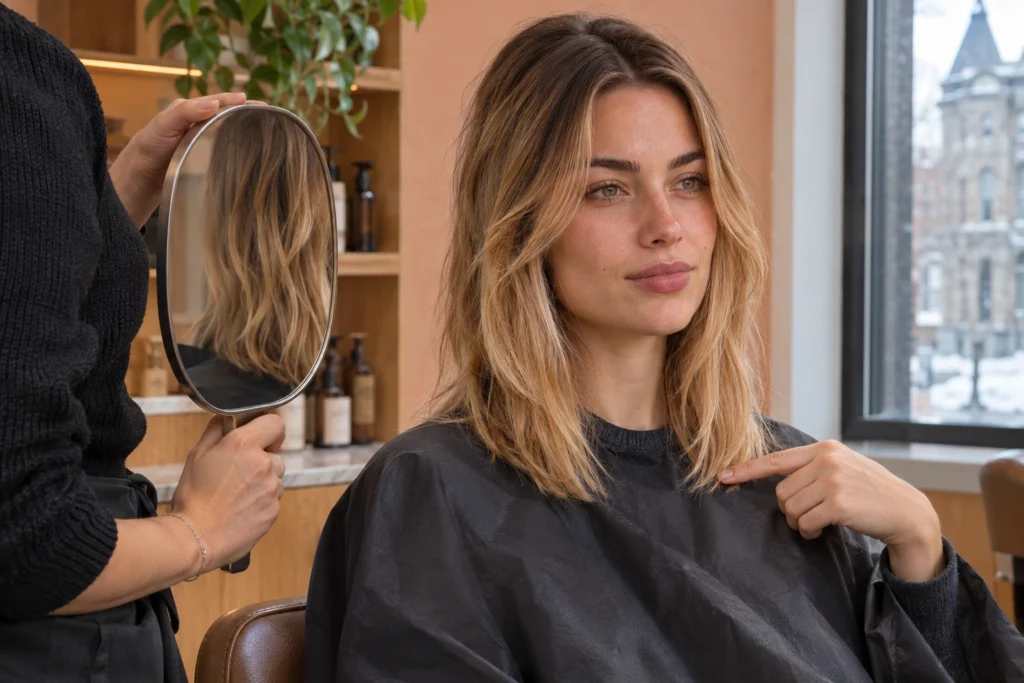
Add a reference haircut with a similar texture and a visible back view where possible. Point out the specific detail you like: the unbroken edge, the cheekbone-length opening, or the movement below the shoulders.
A useful brief could sound like this:
“Most days I let my hair dry naturally and put it in a low ponytail. I like the outline in this photo, but I want less hair falling across my face. Can we check which front pieces would still reach my ponytail before deciding where to shorten them?”
Before the first cut, confirm the intended dry length, the shortest proposed layer, and the amount of fullness you want at the ends. Ask the stylist to show you these points rather than relying on terms such as “soft,” “light,” or “just a little.”
If you are uncertain, discuss making a smaller change first. You can assess the shape before deciding whether you want more layering.
Keep the Styling Kit Small
Choose products around your routine rather than buying a new collection because the haircut has changed.
The American Academy of Dermatology’s hair-care guidance recommends conditioning after shampooing, gentle detangling, and reducing heat exposure. It distinguishes straight hair, which can dry a little before gentle combing, from textured hair and tight curls, which should be detangled while damp with a wide-tooth comb.

Shop the inspiration: a detangling option for fine hair
The Tangle Teezer Ultimate Detangler Fine & Fragile is a specific option to consider if you prefer a brush. The brand describes its teeth as softer than those on the original Ultimate Detangler and says to keep it away from heat. It is a detangling tool, rather than a blow-drying brush.
An existing wide-tooth comb may already cover what you need. Whichever tool you choose, work gently rather than pulling through resistance.
View Tangle Teezer brush details
Shop the inspiration: an option for heat-styling days
ghd Bodyguard Heat Protect Spray is an option to consider if you already blow-dry or use heated tools. Check its official application directions and ingredients against your routine before buying. A heat-protection product is an addition to careful styling; continue to limit heat and use the lowest effective setting.
These are product options for the routine, rather than products shown in the editorial illustrations. No new purchase is needed if your current tools and products already suit your hair.
View ghd heat-protect spray details
Frequently Asked Questions
Do layers make hair look thicker or thinner?
They can change the appearance in either direction. Shaping may create a fuller silhouette in some areas, while shortening sections means less hair reaches the longest edge. Tell your stylist whether you want more lift, more movement, or fuller-looking ends.
Are layers and thinning shears the same thing?
No. Layers describe differences in length within the haircut; thinning shears are a tool used to remove some hair within a section. Ask what the proposed technique will change rather than assuming a particular tool guarantees a result.
Can you grow layers into a blunt cut without losing all your length?
Often, you can work toward a more uniform outline gradually. Your stylist can discuss maintaining the longer edge while shorter sections catch up. An immediate one-length result may require a shorter cut; a gradual plan preserves more length along the way.
How often should you trim a blunt cut or layers?
There is no single interval for either label. Plan around how precisely you want to maintain the outline, how the shape changes as it grows, and the condition of the ends. Ask what change should prompt your next appointment.
Does a round, oval, or square face need a particular cut?
Face shape can guide an aesthetic preference, but it does not decide the haircut on its own. Consider where you enjoy seeing openness or volume around your face, alongside texture, density, and the routine you want.
Before your next appointment: Identify one feature to preserve and one to change. That might be a full bottom edge with less hair across your cheeks, or your current length with a different shape through the back. Those two priorities give your stylist a useful starting point for choosing blunt ends, layers, or a considered combination.